Why Loving Music Feels Harder Online
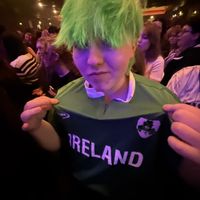
There was a time when being a fan was simple; you loved an artist or a band. You bought records if you could afford them, waited months for interviews to appear in magazines, stayed up late to catch a music video on television, or swapped MP3 files or burned CDs among friends. Fandoms existed in bedrooms, record stores, concert queues, and in long conversations with friends that did not need to be validated or witnessed by anyone else.
That version of fan culture was slower and more private. It was shaped by discovery and emotional connection rather than visibility. Loving an artist didn’t require proof or validation; you didn’t have to constantly demonstrate your devotion or defend it to strangers online. Today, fan bases exist almost entirely online, social media has diminished the distance between artist and audience, and while that closeness can feel exciting, it has fundamentally changed what it means to be a fan in this day and age. Fan spaces have now become competitive and, for many, a source of anxiety.
Social media is not just reshaping and changing fan culture; it’s slowly hollowing it out. It has transformed how we connect with musicians and their art. It has brought fans closer to their favourite artists and allowed musicians who were unknown the day before to become chart-topping names overnight. But humans desire constant connection, and in doing so, something vital has been lost. Interactions between artists and fans were once intimate and rare. Now they are transactional and hyper-visible. With every TikTok, comment, or tweet, the line between artist and audience begins to erode, and the joy of being a fan often gets caught in the crossfire.
While platforms such as TikTok have undeniably boosted artists' exposure, they have also flattened true music discovery. Taste has been replaced by trends; it is no longer about panicking when you hear a song on the radio and miss the song or artist’s name. It’s about whatever fifteen-second clip the algorithm decided to serve you on a silver platter.
Fan spaces have always existed online, but something has shifted. You used to be able to love a band intensely without leaving a trail of evidence behind. Conversations happened in person or on fan forums that reset or disappeared. Your love and enjoyment of music didn’t need to be archived.
Now, fandom spaces exist in a permanent public view, platforms encourage fans to document everything in real time, such as first thoughts, first listens and instant rankings. There is little room for reflection with the demand being so immediate; this immediacy has completely altered the emotional rhythm of what it means to be part of a fandom. Music is no longer something you sit with; it becomes content to be reacted to and processed publicly. A certain type of pressure is felt to have an opinion straight away – and not just any opinion, it has to be the correct one.
In this environment, fan bases greatly resemble competitions. Fans are constantly measured and pitted against one another, such as who discovered the artist first, who owns the rarest vinyl, and who has been noticed or replied to by the artist the most. Proof becomes currency. Screenshots of old tweets, timestamps on posts and streaming statistics are used as evidence of legitimacy. Passion is no longer assumed; it has to be demonstrated publicly.
Within many fan bases, informal hierarchies emerge, archivists, update accounts, and large fan pages play important roles, but unintentionally concentrate power. These accounts shape narratives and determine what information circulates, often defining the boundaries of acceptable opinions, even when that influence is unintentional.
Disagreements in fan spaces are rarely gentle; one unpopular take or minor mistake can trigger a mass backlash or correction. Knowledge becomes a weapon rather than something beautiful to be shared. Over time, fans begin to feel like they are never doing enough, never posting enough, or not proving their devotion to an artist enough. What should be something joyful becomes exhausting.
Somewhere along the way, genuine connection gets lost. Fan spaces are more crowded and louder than ever, yet they often feel isolating. You can be surrounded by thousands of people and still feel like you’re saying nothing at all. Interaction is constant, but intimacy in these spaces is rare. Conversations are reactive rather than exploratory, shaped by visibility instead of understanding. When every thought and opinion is public and permanent, fans become guarded, vulnerability gives way to carefully curated opinions designed to survive scrutiny. Being surrounded by people who love the same artist does not automatically mean feeling connected to them.
Connection relies on curiosity, but modern fan spaces discourage it; asking questions can be read as ignorance. Expressing mixed feelings can be framed as disloyalty, and many fans choose silence over true sincerity. They lurk rather than engage with others; they’d rather consume than participate. What could be an interesting conversation becomes a performance where the goal is not understanding but avoiding embarrassment or correction.
This pressure also flattens emotional experience. Fan spaces tend to reward the same reactions, such as maximum excitement, instant praise and unwavering enthusiasm. Anything more complicated or slower struggles to survive. Over time, fans stop expressing how they truly feel and begin mirroring what the larger population rewards. Connection weakens when everyone is expected to feel the same way at the same time. The difference that should enrich fan culture becomes a risk.
Stan culture sits at the centre of this shift. There is absolutely nothing wrong with being a 'stan'. I am one myself. But the meaning of the word has changed drastically, where it once implied passion and enthusiasm, it now often suggests militancy. Scrutiny is often reframed as malice, and nuance is treated as betrayal.
You are either a ride-or-die fan or a hater; there is no middle ground in spaces like these. While intense devotion can benefit artists, attempts to protect them from criticism often turn fans into the very thing they claim to hate: bullies. I have witnessed pile-ons sparked not by genuine wrongdoing but by fans expressing mild criticism or asking uncomfortable questions. Bullying gets reframed as loyalty.
In many fan spaces, you are expected to love an artist correctly; loving them is no longer enough. Fans are questioned for not instantly connecting with a new release or accused of being fake for preferring one album over another. In these moments, fan culture stops being about music and starts being about obedience.
This is especially visible on the social media platform ‘X’, where joining new fan spaces can feel like breaking into an elite inner circle rather than entering a welcoming community. High follower counts and artist interactions elevate certain fans to near-micro celebrity status. Their opinions are treated as gospel, and the culture becomes performative with fans quietly competing for proximity to the artist rather than connection with one another.
Miss one niche fact or take a step back from posting, and you risk being classified as a bandwagon fan; discovery gives way to status. Over time, the constant comparison leads to burnout. I have spoken to fans who feel anxious about opening social media during release weeks, worried about saying the wrong thing or failing to show the right level of enthusiasm.
Music, which is supposed to offer refuge for many, becomes another point of pressure. Listening becomes secondary to performing a reaction, and enjoyment is delayed by the need to document it. Because if you didn’t post about an album, did it even happen?
Despite all of this, fan culture is not disappearing; it endures. Even with daily arguments, burnout and pile-ons. Fandom spaces continue to thrive because the impulse behind them is deeply human. People want to connect through music; they want to feel understood and less alone. Social media, for all its flaws, is not inherently the enemy. It can facilitate real connection. I have discovered artists I now deeply love through online platforms, musicians I may never have found otherwise. Algorithms may flatten discovery in some ways, but they also open doors.
More importantly, I have seen firsthand how powerful fan spaces can be when they work as intended; some of my closest friendships exist because of shared love for music. At its best, stan culture gives people a language to find one another. It creates spaces where strangers bond over lyrics, inside jokes, tours, and emotional moments only other fans truly understand.
I have watched friendships form in comment sections, group chats and concert queues that began online and grew into something real and lasting. For many people, especially those who feel isolated offline, fan spaces can provide routine, community and belonging. These connections are not shallow or insignificant; they matter intensely.
That is what makes the current strain on fan culture so frustrating: the same spaces that foster connection are warped by surveillance and the pressure to perform passion in approved ways.
The problem is not being a stan. It is not loving something loudly. It is the expectation that love must always be defended and displayed. Reclaiming fan culture might even mean letting opinions be a little unpolished or controversial. Maybe even private.
At its core, fan culture is about love. Love for music, for art, and for the people we find through it. That love has survived every shift in the media before, and it will survive this one too, even as the way we engage with it continues to change.
WRITTEN BY
Will
I've always loved writing, but music and pop culture gave me something to write about. I've been fascinated by the cultrual impact of music for years and I love bringing those topics to light.