The Math and Magic of Making Art

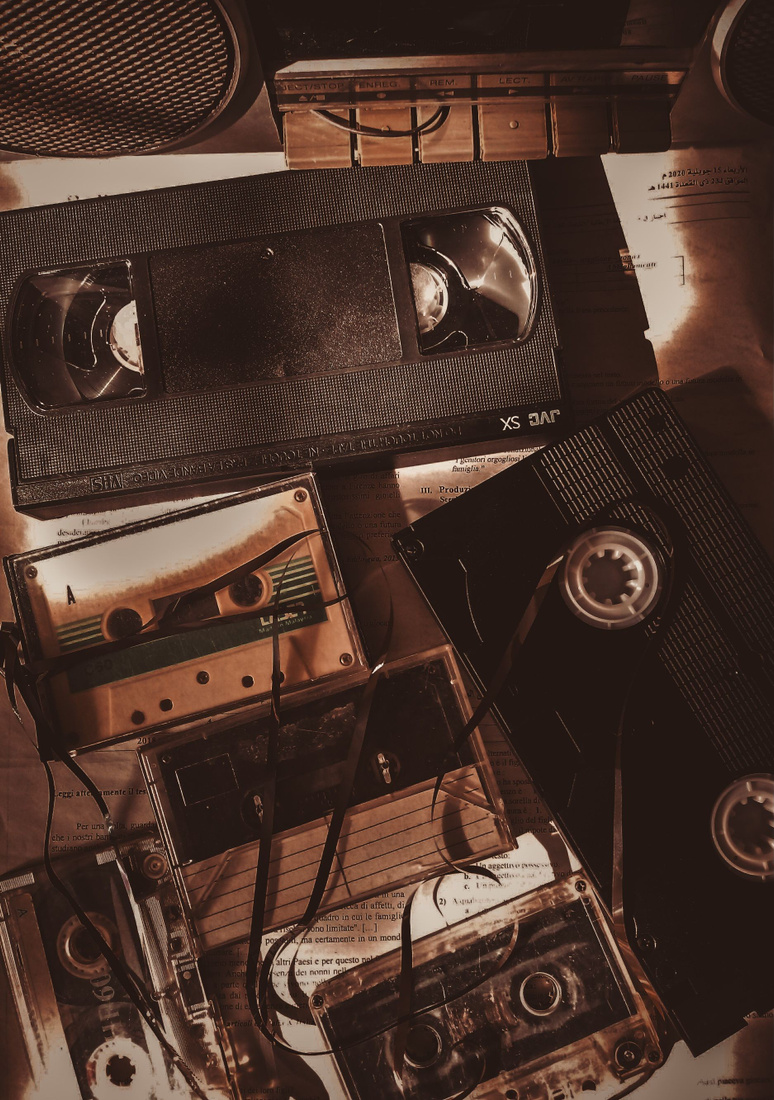
As a writer, I often find my pen freezing over paper for various reasons during my usual spurts of writer's block.
Personally, the most frequent reason for this is that I start critically assessing my words even before there is a successful (or even an average) output of syllables. This wasn't something I was used to encountering as a budding writer new to playing around with words — I wasn't afraid of failing to inspire feelings through my work, because I was simply inspired enough within, with a goal to structure my emotions in the most apt way I could. Back then, the simple act of writing was special enough in itself to determine the worth of the end product. And while I still looked over and edited my work in those days, I was, at the same time, still finding my footing, and there was no self-set standard to compare against it — in other words, lesser or finer degrees of quality didn't exist yet, and any kind of progress counted as real progress by my own prior standards.
But now, after doing this for a couple of years, I've developed a strong internal critical lens toward what I consider good quality work. On one hand, I believe this discerning eye is crucial for judging my own writing, and I'm proud to have sharpened it over time as I've written more and more. But on the other hand, it's almost bittersweet to have such a fine-tuned personal standard — an internal artistic compass that ruthlessly separates my lazy work from my high-effort writing. It's almost fascinating how, even in the middle of a crisis, a writer like me (and I'm sure many others) can find myself tearing up over the blurry pages of a notebook, yet still rejecting the first words that come to mind because they just don't fit my expectations — even in a moment of emotional delicacy.
This experience was really well put by Javed Akhtar, the renowned Indian lyricist, in one of his interviews (in Hindi) on Jashn-e-Rekhta, where he talks about art being inherently contradictory in its creation. These two coexisting contradictions in an artist's mind, as he calls them, are passion and feeling versus what he terms "cold-blooded logic." A brilliant example — almost diabolically accurate in how it called me out personally — is one Akhtar gives: there could be tears falling from the writer's eyes, and yet they'll pause and think, "this word isn't quite right, it's not fitting the metre, let me quickly think of something else." Citing Pythagoras, Akhtar says that music being mathematical is just as true as it being emotional and passionate. Our minds are complex, and while capable of deep feeling, they're equally capable of holding the calculation that goes into the making of art.
Akhtar's take on art being mathematical might not sit right with everyone (depending on the day, I, too, have a love-hate relationship with the truth in his words); however, it isn't as devoid of emotion as it may sound at first glance. Even while calling art both calculated and emotional at once, he arrives at his conclusion in such a beautiful way that the passionate side seems to win out in the end. "Poetry is created on no-man's land," Akhtar elaborates, a land that exists within our subconscious. Creativity is a "magical" thing, as he puts it, since writers often surprise themselves with the vocabulary or thought they naturally arrive at in the moment — words they didn't even know they possessed, or don't fully understand until they piece it together later. He brings it full circle: the material a writer arrives at during this artistically charged process comes from an ambiguous, almost magical part of the subconscious — and so the value of art ultimately lies in passion, emotion, and that mystical undercurrent assisting the mathematics of it.
And as proud as I am to value my craft enough to be this precise about it, this same precision can also be too overpowering sometimes, getting in the way of creating simply for the sake of creation — art for art's sake. I often struggle to find that balance: I try to write during the peak of my emotions, yet end up ruling my well-thought-out poems as better reads than the ones I actually crafted in that same emotional peak. This brings me to the most commonly quoted definition of poetry, from William Wordsworth — poetry as
the spontaneous overflow of powerful feelings: it takes its origin from emotion recollected in tranquility.
It sounds strangely familiar — the same contradiction Akhtar pointed to within an artist. There's a paradox in something "overflowing," which brings to mind a flood, restless water; yet Wordsworth calls it "tranquil," the very opposite, closer to the stillest, calmest lake. Another contradiction within this definition is "spontaneous," which suggests something unplanned, untimely, or unexpected, whereas something "recollected" is intentional and planned — you'd have to sit down and put yourself deep in thought to recall a memory.
So here's my interpretation of what Wordsworth is really trying to say: art stems from an overflow of emotion, but it's only recalled in a state of tranquility — and it's this act of recollection that invites the calmer, more analytical side into the craftsmanship required to shape the final work. It's really the same tension Akhtar was describing, just in different words — the passion arrives first, overflowing and unfiltered, and the mathematics only steps in afterwards, once the poet sits down to recollect and give it shape.
Do with that what you will — the making of art is either a constant battle or a peaceful coexistence between two contradictions, i.e. passion and calculation, depending on the day. And that's okay.
And as I've come to learn after plenty of wins and losses, there's no point fighting either side. I don't see the mathematical side as a bad thing, and that shift in perspective has helped me a lot, because now I welcome it even during moments of despair. It shows up to remind me that there's still something bigger, something almost like a companion during hard times — and that something is my craft, the one that naturally sets these wheels in my mind turning, churning up something new. My art calls to be made beautifully, no matter how messy everything else gets; it demands that beauty, and it comes from within me.
It's also helped, strangely, to let myself be unproductive with my craft sometimes — to take the pressure off entirely, rather than treat every sitting as one more test of my own standards. And just as importantly, I've had to accept the flip side too: the absence of tranquil recollection, and the chaotic drafts that come from it, deserve to be welcomed as well.
Because art, like us, is imperfect.
Restoring a perfect balance between mathematics and passion — much like achieving balance in most areas of life — isn't a fixed state of "being" so much as a constant act of reaching for it.
The scale will keep tipping from one side to the other, and that's exactly as it should be.
WRITTEN BY
Ravgun Kaur
I believe in the simple brilliance of philosophical rambling, and how a single thought can lead to completely unexpected territory. I tend to start writing about one thing and end up sharing deeper thoughts on something else entirely — unexpected, and hopefully worthwhile. I want to delve deeper into everyday things — literature, music, life in general — and share whatever I find along the way. Sometimes you'll find me writing experimental poetry, or short stories, too.