Why We Should Prioritise Friendships in Our Lives – Interview with Ubin Eoh
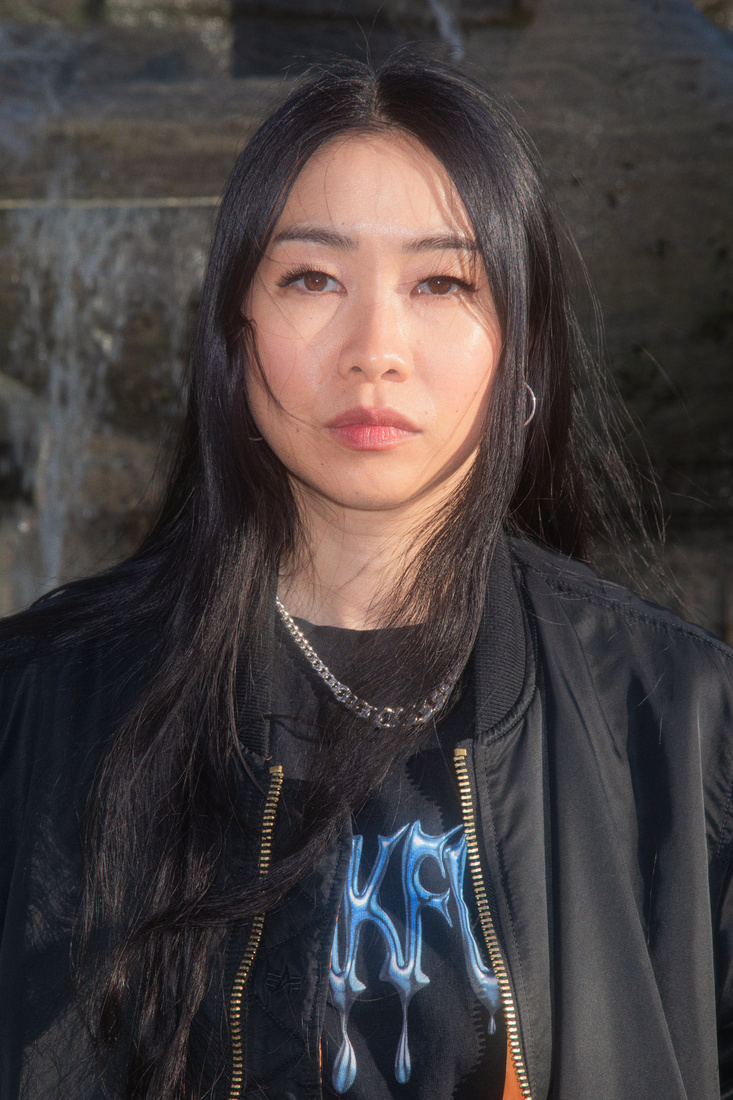
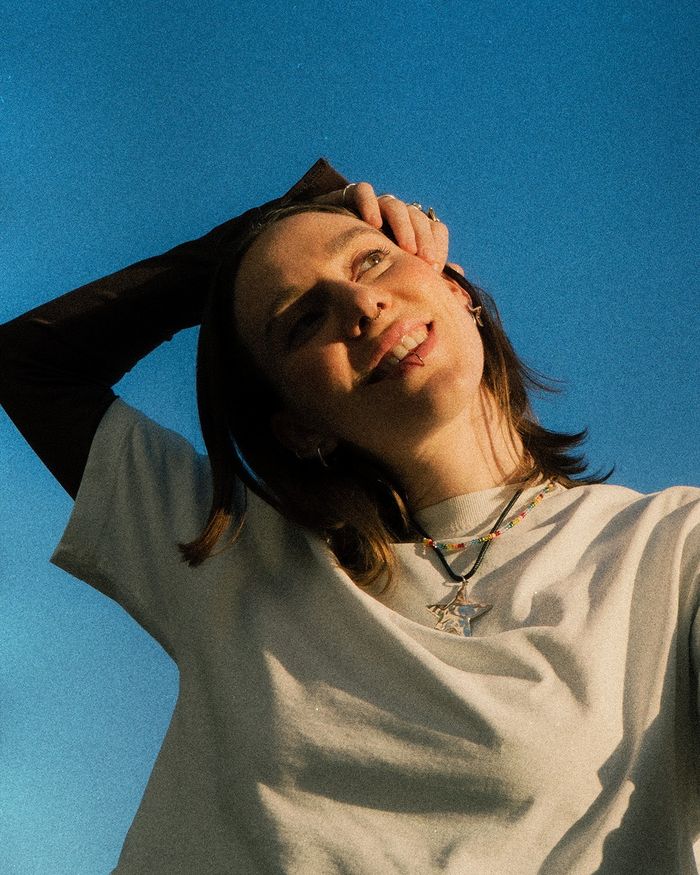
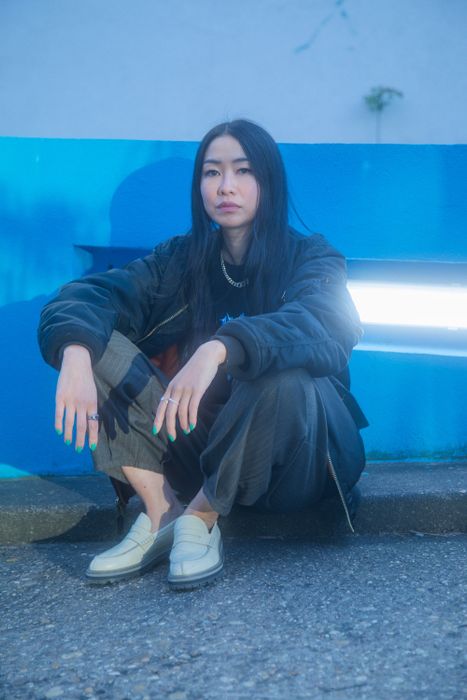
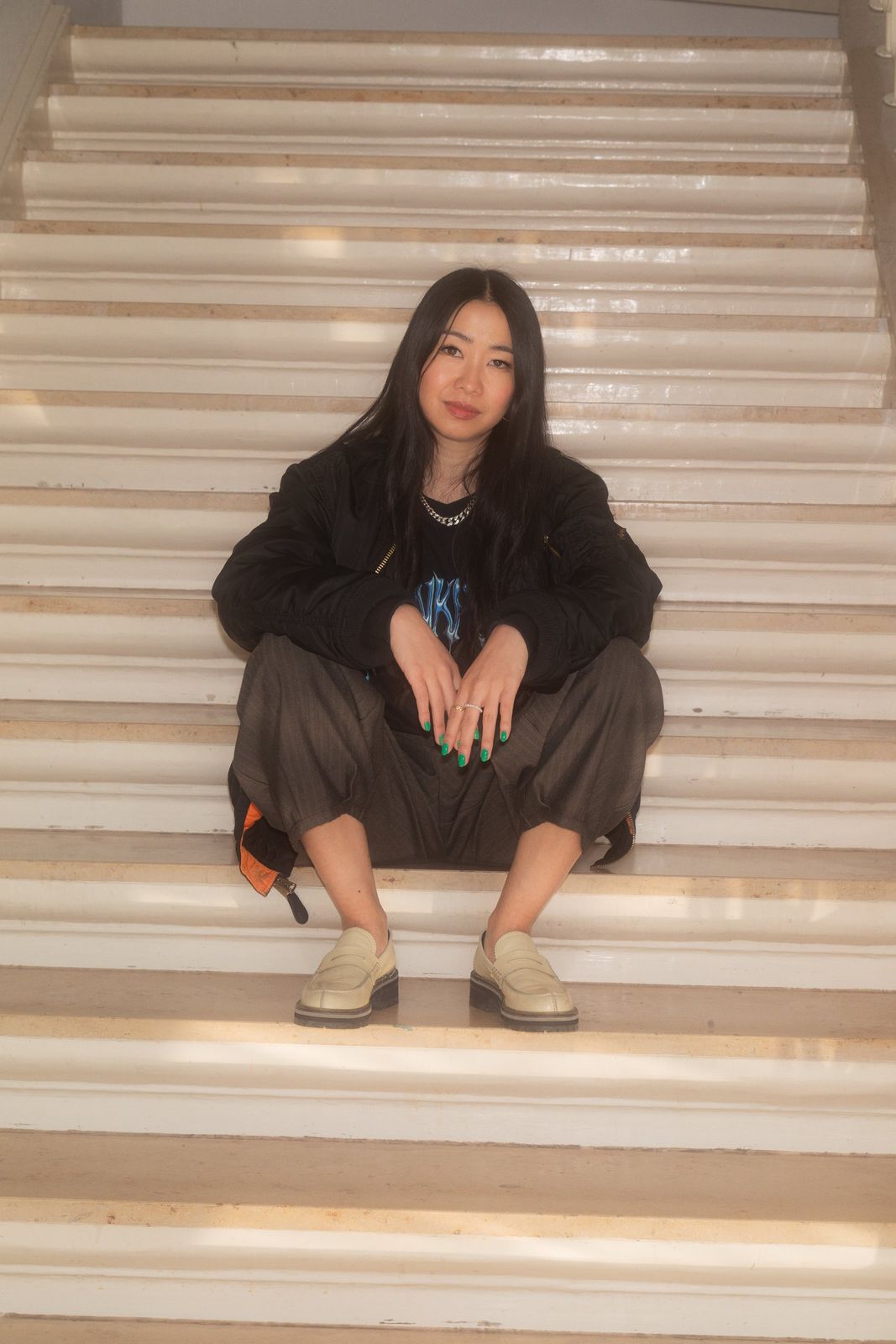
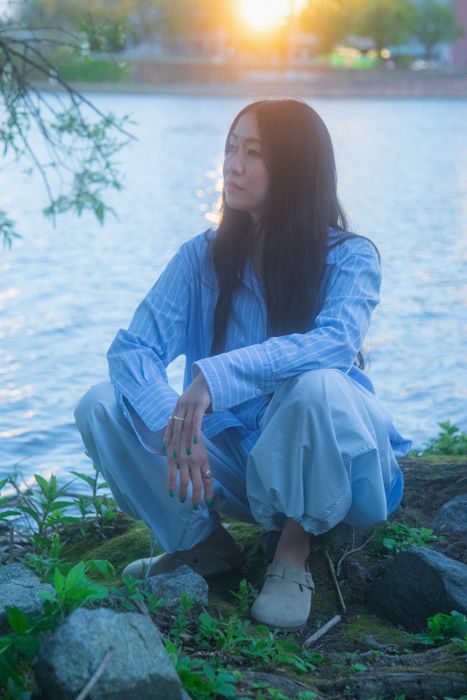
Ubin Eoh, born in 1987, is a German author, journalist and podcaster. She grew up in Berlin-Kreuzberg and now lives with her family in Frankfurt am Main. Honey und Blondie is her debut novel. It is currently only available in German. You can read the full review of the book here.
THE UNSEEN talked with her about her book, the importance of friendships and who she would like to switch bodies with for a day. Please be aware of possible spoilers.
Like what? (Wonach?)
Ubin Eoh: Well, my hands smell of that Kinder chocolate santa I’ve just eaten. And I can smell the scent of my shampoo. But unfortunately, it’s Head & Shoulders. My shampoo had run out, so I had to use the Head & Shoulders that is always just standing there.
Philine: So no Garnier Fructis?
Ubin Eoh: No, unfortunately not.
Philine: I have to say, I think the way you’ve described the friendship between the two main characters of your book, Honey and Blondie, is lovely. I recognised so much of my best friend and myself in them, and I actually gave it to her as a birthday present.
Was there a specific source of inspiration for this book? Is there a particular ‘Honey’ or a particular ‘Blondie’ in your life who inspired you to write it, or is it a combination of lots of different people in your life?
Ubin Eoh: It’s a combination of many, but I think one particular ‘Honey’ or ‘Blondie’ inspired me – the one from kindergarten. I was a very shy child and didn’t speak at all back then; I really didn’t get on very well as a four-year-old. It was also a relatively gloomy time in Kreuzberg. And then, suddenly, there was my best friend – well, my new best friend – whom I actually got to know in the sandbox. And she saved that kindergarten period for me, because we went through everything together. That’s why she really was my inspiration for the book.
Philine: What a lovely story. I recently reconnected with my best friend from nursery after nearly 20 years. It was really cool because we’d lost touch when we went to different schools. And then it just fizzled out, and at some point, we found each other again on social media.
Ubin Eoh: It’s so lovely when you’ve spent such a hugely formative time together. And there’s no one else who was there at the time, so to speak, who knows those specific details like your best friend from back then.
Philine: Absolutely.
Ubin Eoh: And that’s why, I think, it’s totally worth reconnecting. I’ve just done that myself with my nursery friend thanks to the book.
Philine: Yeah, it’s so cool, especially because we realised we had somehow led very similar lives, but completely independently of one another, without ever being aware of what the other was up to. Sort of ‘at the same time but separate’ – kind of magical.
I think that’s a good bridge to my next question: How did you come up with this little bit of magic? The sort that runs through the whole book.
Ubin Eoh: Well, when I was sitting together with my editor, she told me, "You can write whatever you fancy. I mean, really, you don’t have to write some sort of non-fiction book about everyday racism or something, which might be expected, or about motherhood, as in your ‘Hi Baby’ columns. You can really let your creativity run wild." Somehow that immediately gave me this idea: I want to explore this long-held desire, once more in a literary way – to be able to step into someone else’s body, or, above all, into that of my best friend. It was really this freedom that I was given, which I then immediately filled with this primal need of mine.
You’ve already mentioned your column: How different was the writing process for you to write something so entirely fictional this time, rather than in the more journalistic style you usually adopt?
Ubin Eoh: It was really enjoyable, because I realised, "Okay, wow, I can be completely free." Journalistic writing is, of course, always very constrained. It has to be fact-based and maintain a certain tone. You’re operating within a relatively narrow scope. And yes, with literary writing, you can do absolutely anything. You can range from slang to the most highbrow language; you can cover that whole spectrum – and, above all, in terms of content, too. You can simply make up the stories entirely from scratch, without any connection to reality. That’s why it felt like a bit of a liberating experience for me, deep down.
I’ve gathered from what you’ve said that, because it was so new, it was quite exciting for you – but is there a particular type of writing you prefer?
Ubin Eoh: I’m just thinking about it – I think I find that variety really cool. Writing columns, for example, is a different kind of writing altogether compared to writing an article about a design object or something like that. And I find that when writing columns, it really is an associative, stream-of-consciousness style of writing. So, I can just jot down my thoughts as they come and then structure them a bit. But the stream of consciousness, as it flows naturally, already dictates the structure of the text. And that’s what I really enjoy. It’s similar with literary writing, although there you come up with a plot line beforehand. I think, fundamentally, I do like this sort of truly listening to that inner flow and my own rhythm, and feeling free within it. But even so, there were times when I was writing the book when I did miss journalistic writing. Because even though you’re drawing on facts, you have to piece them together in such a way that they form a coherent whole – ideally one that yields some insights. And yes, that’s exactly what I’ve been missing. In other words, I think it's precisely the switch I like.
You play around a lot with 90s/2000s memorabilia. Did you go through a memory box like that at home? One where you opened it and thought: "I had completely forgotten about that."
Ubin Eoh: Yeah, well, I’ve got a bit of a problem with my cellar at the moment – I can’t actually get in there. It’s been like that for the whole time I’ve been writing the book. But I did manage to get hold of one box – it contained letters and faxes from back then. I really got lost in that. Whether it was old emails or little notes we used to pass around at school and stuff like that. And that was my research material. But I also have a folder on Instagram called ‘Nostalgia,’ where I always save things that make you think, "Wow, that’s right, this actually existed." What my school bags looked like, or what I used to have in my pencil case. Just yesterday, I saved something in there – a Fisher-Price doctor’s case, one of those leather ones. It had completely slipped my mind, but I found it again on Instagram. And that’s because my algorithm’s really well-trained by now. So, I’ve got this folder where I could keep going back to for the book.
Philine: Yeah, I was really into all that Y2K stuff. I was born in 2001, so for me, the late 2000s and early 2010s are the period I remember most vividly. Then there are all those little things you’d just forgotten about. Even bits from TV programmes where you think, "Oh my God, that programme existed – I used to watch it all the time on KiKa." I had completely blocked that out. I love that.
Ubin Eoh: That’s just the thing – you tend to block those things out. Yet, at some point, they played a huge role in your life. I always find it so fascinating to go back there and instantly be able to rekindle that sense of life within yourself, just through something like a doctor’s bag.
I love it. On a completely different note, the Frankfurt Book Fair has just taken place. Were there any particular experiences or memories that stuck in your mind?
Ubin Eoh: Well, obviously I had a thousand events and so on that I had to rush to. And to round things off, I had a reading at the Römer as part of the Open Books Festival. I had an interesting encounter with an elderly gentleman there who came up to me after the reading and asked if I remembered him. I once wrote down a few little anecdotes about everyday racism for the FAZ. There were about ten of them. Just bits and pieces – comments I’d been receiving on the underground and so on – but presented in a relatively humorous way. It’s been nearly ten years since I published them in the FAZ magazine, though. And this gentleman said to me back then – he’d written to me on Facebook or something – "Well, what’s racist about asking a pretty Asian lady where she’s from?" And then we’d had quite a bit of a back-and-forth about it. And apparently, I said that the question itself is already racist, or that it reveals the racism in his mind. And he said he’d needed that time to realise that I was right. He wanted to come to the reading that evening to tell me that in person. And I found that really touching, because I couldn’t even remember that conversation. But it made me so happy, somehow, that this exchange had apparently taken place and that he’d now somehow linked it to my book. Now I can say, "Yes, I was able to teach him a great deal about racism." And I thought that was absolutely lovely.
Philine: It’s really fascinating how long it can sometimes take for something like that to have an effect.
Do you think that platonic love sometimes has a slightly lower status in our society than romantic love, and perhaps even gets pushed to the back when people are starting a new relationship?
Ubin Eoh: Yes, absolutely. I think that’s why I was so keen to really highlight this kind of friendship-based love. And above all, this unconditional, friendship-based love, free from all those negative feelings: judging each other, being envious, or all that jealousy drama. Which is often how female friendships are portrayed. In the novel, it does sometimes come close to happening – for example, when one of the protagonists falls in love with her best friend’s older brother. But you always see that the bond between the two of them prevails. And yes, it is a friendship-utopia, quite clearly. But, fundamentally, as a society, we need to take stock of the value of friendship. At the end of the day, as you get older, it’s usually the one thing that remains. I mean, sure, if you’re lucky, you’ll have a family, too, but a relationship that lasts forever is an illusion. But what can last forever are these friendships. And I also believe that friendship is simply political. It opens up an alternative way of relating to how people can live and love one another; it challenges social expectations and shows that closeness, care and connection don’t always have to be about romantic love. On the contrary. That’s why, when I reflect on this topic in the book, I find that friendship can actually be a form of resistance. Resistance against traditional ideals of commitment or relationships – the things we’re constantly confronted with and told, "this is the ideal." I believe society would function better if there were more of these concepts of friendship-based bonds, if they were more prominent or taken more seriously.
Philine: I think when you look at male friendships, it becomes even a bit clearer. They often don’t have that kind of bond. I text my best friend every day, telling her everything that’s going on. And I sometimes get the feeling that my partner is actually missing something similar in his life. And he doesn’t even know what he’s missing. They don’t realise at all.
Ubin Eoh: And then there’s often an imbalance, because he thinks you’re his best friend as well. No, you can be a close confidante for him, but it’s much more valuable to have someone outside that romantic relationship with whom you can share your life. And I think, ideally, you have that as a child, at school and so on. But as soon as you’re in a relationship, it starts to crumble and can’t really coexist well. And I just think that’s the mistake in thinking. Definitely the wrong balance, yes.
Philine: I reckon this could also tackle the ‘male loneliness epidemic’ – in big quotation marks – because a lot could be achieved if men would just talk to one another a bit more.
Ubin Eoh: Wars could probably have been prevented in the past, too. I hardly know of any male friendships – ‘bromance’ sort of things – where they look after one another in old age, when you’re at an age where you need looking after. It’s usually the women who make up this support network. So that’s why, as a woman, you also have to think about where you stand. If you’re a pensioner, for instance. And relationships come and go. But you still need that support network to catch you when you fall. That’s why, in my opinion, it’s absolutely vital to simply nurture friendships.
We’ve already talked about the relationship between Jihun, Honey’s older brother, and Blondie. Was it important to you that this romantic relationship remained rather vague in the background and was never actually acted upon? And did you ever consider whether there might be an alternative plot where the two of them end up together?
Ubin Eoh: I might even have jotted down a few ideas about them having a fling or something, at least once. Just because, naturally, it itches in your fingers. But it’s precisely this unrequited love that always has its own appeal, and it really shows just what big over-thinkers they both are. Too in their heads for it ever to work out. And that’s why it worked better for me that they never kiss or anything similar – so that these visions they have of each other and this intense longing are preserved. That’s why it’s even more striking when she says, "No, my friendship – this pure friendship I have with Honey – is more important to me than even the love of my life. And maybe I’m missing out on that now, but in return I have the other love of my life, unconditionally."
Did you base certain characters in the book on people in your real life, or draw inspiration from them – perhaps a specific little quirk?
Ubin Eoh: Yeah, absolutely. I grew up with several siblings, you see. Both of the siblings have bits of my own siblings in them. And I have to say, a lot of the inside jokes and stuff like that also come from my sister. I mean, the relationship with my sister. But of course, also from my current ‘Blondies.’ For example, there’s a best friend I’ve known since my university days, Kira – we have our very own language. And that back-and-forth in emails and the way they speak – that can happen exactly like that between her and me. So that’s totally inspired by them and, of course, my mother figure. She inspired the mother figure in the book. Funnily enough, lots of people who know my mum or used to be part of our household, like school friends, have texted me and said, "Damn, that’s a proper ode to your mum." Because Jongja has so many parallels with my mum. My mum also opened a restaurant in Berlin back then. It’s just so incredible what a powerhouse that woman is. And she shows her love through food and that incredible sense of security – even though there wasn’t much money, she always managed to give us that. As a single mum and all. That is something which is a recurring theme in my real life, but also in the book.
Philine: I think this love of food really comes across. I immediately felt like going out for a Korean meal or finding a recipe to try out myself, because that vibe just really came through on every page. I could almost smell it, somehow.
You’re a mother yourself and you write a lot about it in your column. I find it really impressive what you manage to do: a podcast, publishing a book, writing your own column – and on top of that, you’re a mum. That’s so many roles to juggle.
Are there perhaps a few things you’ve learnt as a mum that you’ve incorporated into the character of Jongja?
Ubin Eoh: I’m just wondering if there’s anything specific, but I think she’s totally based on my own mum. When it comes to my own experience of motherhood, it’s probably the pregnancy. At one point, she describes quite precisely how the world feels because of the hormones. As if there was a layer of velvet draped over everything. That’s, of course, something I’ve experienced myself, along with that overwhelming love for that little "piece of mango" still growing inside you. But I think all those aspects of Jongja’s sense of security are very much my mum, because that’s something I’m still trying to learn from her.
If you could swap bodies with someone else for a day – either famous or someone you know – who would it be?
Ubin Eoh: I reckon it’d probably be someone famous. I think there are some amazing female athletes, like figure skaters for example, where you realise, "Okay, that’s incredible – it’s almost like they’ve got a superpower when they spin." So I reckon if I were to swap bodies, it’d probably be with someone like Seth Rogen or something. One of those L. A. stoners, an actor. To experience what it actually feels like to be there. I don’t smoke weed, but I do get a bit jealous of people who do. The way he really gets into it. So it’d probably be Seth Rogen then. Plus, I love his style – I’d wear anything he wears.
Philine: Or Snoop Dogg?
Ubin Eoh: Yeah, Snoop Dogg. But maybe he’s too out of this world sometimes.
Philine: There’s this skit where he tries English tea and scones for the first time. That’s kind of stuck in my head – him trying a scone and going ‘mhm mhm mhm yum-yum-yum.’
Ubin Eoh: That’s true. And then having a proper snack session. Ordering loads of food. Then thinking it’s all absolutely brilliant. I can totally picture that.
Have you thought about perhaps making this rather sad ending a bit happier, giving it a different ending? I cried my eyes out at the end to be fair.
Ubin Eoh: I’ve been in tears over a book today as well. I've finally managed to finish reading Alma and Anton by Dana Fuwinkel. I had a proper sob at that one, too, though. I've actually had quite a few discussions during the writing process – with my partner, too – about whether she should die or not. How awful it actually would be if she died. I really struggled with it myself, but somehow there was no way around it. Anything else would have been too utopian. I wanted to include that kind of reality check in there. But I also wanted to offer hope. After all, life goes on afterwards.
Philine: I also think it’s a real art to draw the reader in like that and make them feel as much as I felt. So that’s a huge compliment to you – as I said, I still had a proper cry, in a good way, but those emotions are also lovely sometimes.
Ubin Eoh: Yes, I felt the same way today. I was, well, I was actually quite grateful, too, you know, that it touched certain parts of my mind and my heart that hadn’t been touched for a long time.
Maybe I should do a collaboration with Tempo or something. Pink on one side and green on the other.
Looking ahead a bit, do you already have a new project planned, or do you need a breather first from all the other things you’ve always got on the go anyway?
Ubin Eoh: Yes, well, of course, my mind’s racing. There are already quite a few ideas for a second novel. But that would go in a completely different direction. That much I can reveal. But I’m trying to chill out a bit now, sort of on the inside, because I think I need that – as you put it – breather. Because, otherwise, I don’t think you can really draw that much out of yourself if you've already squeezed everything out. I actually wrote the book in record time.
What do you mean by "record time?" When did you start?
Ubin Eoh: I only really started it last autumn. And then I carried on at full speed until May. But it was definitely a hectic time because I was sometimes writing through the night and stuff. Especially with a small child, it’s obviously quite intense. But that’s cool, because it was a bit of a rush, somehow. It just flowed. And I think that’s why it reads so well – because I wrote it all in one go, you know?
All right. Thanks a million for your time!
INTERVIEW BY
Philine
I love expressing myself through writing. But also through fashion and art. My body is a museum for all the cool tattoo artists I've come across. As a booklover and helpless (hopeful) romantic I love to indulge in the sweeter stories of life. Writing is my way of empowering women and fighting the patriarchy. I also want to bring the joy and community of female friendships to everyone through my texts. Your online bestie if you will, that shares the best books, crafts and maybe a recipe from time to time.
PHOTOS BY