Beyond the Sparkling Leotards: Why Germany’s Gymnasts Deserve More Than One Weekend of Applause

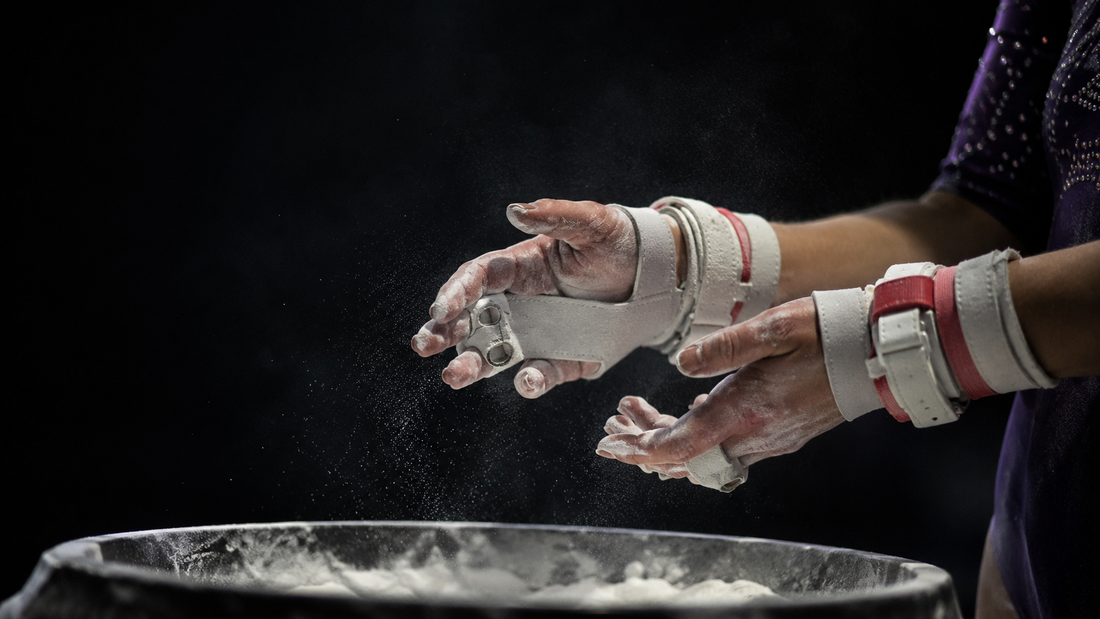
For four days, Hannover became the centre of German sport. Nearly 4,000 athletes competed across 24 disciplines as Die Finals brought 143 national-title decisions to arenas, swimming pools, lakes and public spaces throughout the city. Among the sports receiving a rare moment in the spotlight was women’s artistic gymnastics, which filled the ZAG Arena with sparkling leotards, clouds of chalk and the kind of performances that can make years of training appear effortless for a few carefully controlled minutes.
The women’s competition began with the all-around competition on Friday before the individual apparatus titles were decided upon, across Saturday and Sunday. In the all-around, gymnasts compete on vault, uneven bars, balance beam and floor, accumulating an overall score that crowns the German national all-around champion. Each routine receives a difficulty score alongside an execution score, from which deductions are taken for mistakes. For the apparatus finals, the six highest-ranked gymnasts from Friday returned to compete for individual titles, beginning again without carrying their previous scores into the final.
By Friday evening, the all-around title had developed into a close battle between Silja Stöhr, and defending national champion Karina Schönmaier.
Stöhr established herself as a contender from the opening rotation. Her well-landed Yurchenko one-and-a-half earned 13.767 points on vault before she followed it with an assured uneven-bars routine worth 13.667 points. On balance beam, she adjusted when her usual connections did not unfold exactly as planned, choosing control over unnecessary risk and remaining on the apparatus. Her final floor score was raised to 12.800 following an inquiry, bringing her total to 53.301points, securing her her first senior German all-around title.
Schönmaier, who led the competition within the first two rotations, displayed the power that has made her one of Germany’s strongest gymnasts. Her double-twisting Yurchenko received 14.167 points, the highest vault score of the all-around, and she followed it with confident performances on bars and floor. With 52.933 points, she finished only 0.368 behind Stöhr, turning the final minutes of the competition into a genuine fight for the title rather than a predictable victory.
Pauline Schäfer-Betz completed the podium with 51.800 points in her first full all-around competition since 2023. Where Schönmaier brought power and Stöhr consistency, Schäfer-Betz brought years of experience, carefully considered artistry and the distinctive balance-beam work that has shaped much of her career. Her routine included the Schäfer salto, the sideways somersault with a twist that carries her name, and earned 13.567 points, the highest beam score of the all-around. In Addition, her new floor routine, opening with a powerful double front somersault, also received one of the loudest reactions of the afternoon.
Behind the three medallists, Lea Marie Quaas delivered four competitive routines to finish fourth with 51.467 points. Particularly strong on vault and uneven bars, she remained within touching distance of the podium throughout the afternoon. Lara Baumgartl placed fifth with 50.401 points, combining difficulty with an elegant quality that was especially visible on floor, while Janoah Müller completed the top six with 49.367 points.
The competition also offered plenty of moments that were not fully captured by the final ranking. Local favourite Franziska Roeder competed in front of supporters holding handmade signs, visibly enjoying the opportunity to perform before a home crowd. Furthermore, Julie Klaus took up the floor with a dramatic performance that embraced every part of its music, while Jessica Schlegel’s elegant routine provided a glimpse of the performance quality she will soon take into American collegiate gymnastics.
Helen Kevric’s return was another one of the weekend’s most anticipated stories. After the serious knee injury she suffered at the 2025 European Championships, her work on uneven bars on Friday immediately reminded the audience of the height, precision and difficulty that had previously taken her into an Olympic final.
When Stöhr, Schönmaier and Schäfer-Betz eventually stepped onto the all-around podium, all three were smiling. The medals rested against their glittering leotards as cameras captured the moment and the arena applauded. For one afternoon, their work was impossible to overlook.
The weekend, however, was not yet over.
On Saturday, Schönmaier returned to defend her German vault title. Two strong vaults gave her an average of 14.063 points and a clear victory ahead of Mia Reimann and Madita Mayr. Shortly afterwards, Kevric showed that she is working towards another Olympic bars final by winning the uneven-bars final with exceptional 14.475 points. Stöhr added silver to her all-around title, while Quaas took bronze.
Kevric returned to the top of the podium once more, on Sunday, after winning the balance-beam final. She and Schäfer-Betz both received 13.025 points, with the title going to Kevric through the tie-breaking procedure, while Stöhr finished only 0.075 points behind them in third. Schönmaier then ended the artistic-gymnastics programme by winning the floor title with 12.925 points, narrowly ahead of Stöhr’s 12.850 points. Schlegel completed the podium, earning bronze with a graceful and expressive routine.
Across three days, Stöhr had won the all-around title and three further apparatus medals. Schönmaier left Hannover with two apparatus titles alongside her all-around silver, while Kevric’s two gold medals marked her comeback as more than just successful.
Eventually, the medals had been presented, the photographs taken and the television cameras were redirected towards the next sport.
For one weekend, women’s gymnastics had been treated like a major German sport. It was a moment of light shining on athletes that would soon become largely invisible again.
This pattern, one weekend of praise surrounded by months of silence, reflects a system in which gymnasts are expected to train with the commitment of full-time professionals without receiving comparable financial security, visibility or long-term support.
Surely, Germany does have funding programmes, training centres and initiatives intended to make elite sport compatible with education and employment. Their existence, however, should not be confused with adequacy. For many gymnasts, the available assistance is nowhere near enough to cover rent, food and other basic living costs. At the same time, maintaining a conventional job beside elite training is hardly realistic when so much of the week is already spent in the gym, travelling to competitions or recovering from the physical demands of the sport.
Even the presentation of gymnastics inside the ZAG Arena raised questions about the space the discipline is given. The rhythmic-gymnastics floor remained installed beside the artistic-gymnastics competition area, taking up a considerable section of the venue. Due to that, parts of the arena consequently appeared empty, while some spectators seated on the affected side were left with an uncomfortable viewing experience.
While it may have been a relatively small organisational decision, it still appeared symbolic. Even during a national-championship weekend, artistic gymnastics was expected to adapt itself to the space that remained.
Reaching the highest level of German gymnastics already requires years of sacrifice. Athletes often begin training seriously as young children, gradually increasing their hours until the sport shapes almost every part of their daily lives. By the time they reach senior competition, many dedicate 30 hours or more each week to a discipline that places an exceptional strain on the body.
Repeated landings, high training volumes and the constant repetition of difficult skills create both immediate and long-term injury risks. Although more gymnasts are now extending their careers, many still retire in their early twenties.
Unlike athletes in more commercially established sports, they are highly unlikely to leave their active careers with enough prize money or savings to support the next stage of their lives. Education or professional training outside the gym is therefore not an optional alternative. It is necessary preparation for a second career that may begin before most others have properly started their first.
This creates a double burden. Gymnasts must train like professionals while simultaneously completing school, pursuing a degree or preparing for employment because their sport cannot offer them long-term financial security. Yet the same lack of support that makes this preparation necessary also makes it more difficult to combine with an active career.
The problem is therefore not limited to funding. It extends to almost every part of how gymnastics is organised, presented and made accessible in Germany.
Outside exceptional events such as Die Finals, there is no guarantee that high-level German gymnastics competitions will be available on television or through a professional livestream. Supporters are often left following live scores, short social-media clips or reports published after a competition has already ended.
A sport cannot build a larger audience when people are rarely given the opportunity to watch it.
Geography creates another barrier. Many important competitions, training centres and elite opportunities are concentrated in southern Germany. For both gymnasts and spectators from the northern half of the country, participating in or attending competitions can require journeys of several hundred kilometres, overnight accommodation and significant additional costs.
These conditions make gymnastics less accessible to everyone: athletes, families, supporters and potential new fans. Germany cannot expect the sport to attract more attention while making it difficult to follow, expensive to attend and financially uncertain to pursue.
Increasingly, gymnasts are looking elsewhere for opportunities that make their sporting and academic ambitions easier to combine.
Emma Malewski, Germany’s 2022 European champion on balance beam, moved to Clemson University after receiving a full scholarship. The American collegiate system allows her to continue training and competing while completing her education within a structure in which coaching, medical support, facilities and university study are deliberately organised around one another.
Jessica Schlegel, who recently committed to Michigan State University and will join its gymnastics programme for the 2026–27 season, is preparing to follow a similar path.
Other gymnasts have gone even further and changed the countries they represent internationally. Salina Bousmayo, who previously developed within German gymnastics, now competes for Morocco. Carina Kröll began representing Austria after previously competing for Germany, using her Austrian eligibility to continue pursuing international opportunities.
These decisions are not identical, and it would be unfair to claim that every gymnast leaves for precisely the same reason.
Together, however, their stories point towards a wider failure. When talented gymnasts repeatedly conclude that their best opportunities for combining sport, education and a sustainable future exist outside Germany, the system should not simply congratulate them on leaving. It should ask why it could not provide comparable opportunities itself.
One athlete moving abroad may be an individual decision. A growing list across several generations, however, is a pattern that demands attention.
The weekend in Hannover proved that German women’s gymnastics does not lack talent, dedication or compelling stories. Stöhr’s breakthrough title, Schönmaier’s power, Schäfer-Betz’s experience, Kevric’s return and the performances throughout the field demonstrated how much potential already exists.
What the sport lacks is a structure capable of matching that potential.
The sparkling leotards and shining medals should not be the only parts of gymnastics that catch the light. The training hours, injuries, financial compromises and uncertainty surrounding life after retirement deserve to be visible too. Gymnasts should not have to wait for a multisport event or an Olympic year before their work is considered worthy of serious attention.
If Germany wants medals at major international competitions, including the upcoming World Championships and, in the longer term, the Los Angeles 2028 Olympic Games, it cannot continue relying on the resilience of individual athletes. International success requires long-term investment, accessible competitions, professional coverage and a support system that allows gymnasts to pursue their potential without constantly questioning whether they can afford to continue.
The gymnasts competing in Hannover have already shown what they are capable of under the current conditions.
One can only imagine what they could achieve if those conditions finally matched their ambition.
WRITTEN BY

Michelle
I write about the stories and emotions that shape music, culture and conversations. While exploring the impact of media and pop culture, I like to put a particular focus on the voices of women and their evolving place in the industry. I am especially drawn to interviews that go beyond the surface, uncovering the perspectives and personalities behind the work.