Mark Forster in Lübeck: When the Crowd Became the Choir


On Friday, August 21st, at Lübeck’s Kulturwerft Gollan, Mark Forster turned a summer concert into something considerably more personal.
There was confetti and fireworks, of course. Yet the moments that lingered came from elsewhere: a crowd sampled into a song within minutes, a phone call to a stranger, and an artist repeatedly finding ways to make thousands of people feel part of the same evening.
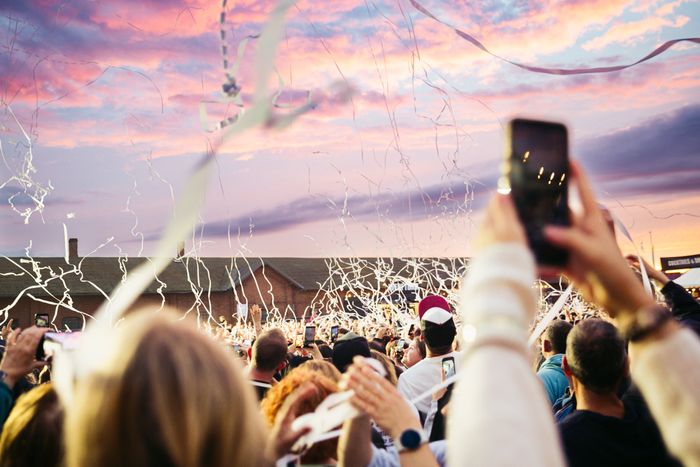
The former industrial site had filled steadily throughout the early evening, and brief moments of rain quickly turned into one of those extra special late-summer sunsets, lighting up the concert grounds.
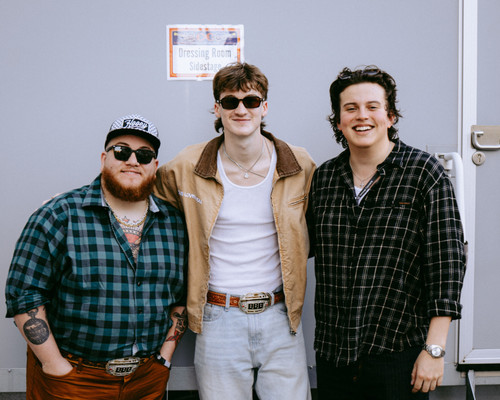
Before Forster arrived, Jonny Mahoro had taken the stage for the opening set. His music occupies the uneasy space between growing up and supposedly having grown up already, a feeling captured particularly well in his viral song "Zwischenphase". A song that calls out the pressure of watching life move quickly around you while still trying to work out where you fit within it. Other songs, such as "Vielleicht", offer something lighter on the other side of all that uncertainty. The audience jumped along as the song opened the possibility that things might, eventually, fall into place. With his debut album "Nichts ist für immer" arriving on October 9th, his set felt like a fitting introduction to an artist whose appeal lies partly in knowing when to articulate a fear and when to offer an escape from it.
Mahoro left the stage around 7:30 p.m., though he would later reappear in a different role, somewhere among the crowd, watching the show alongside everyone else, occasionally stopping for a photo with fans before turning his attention back to the stage like everyone else.
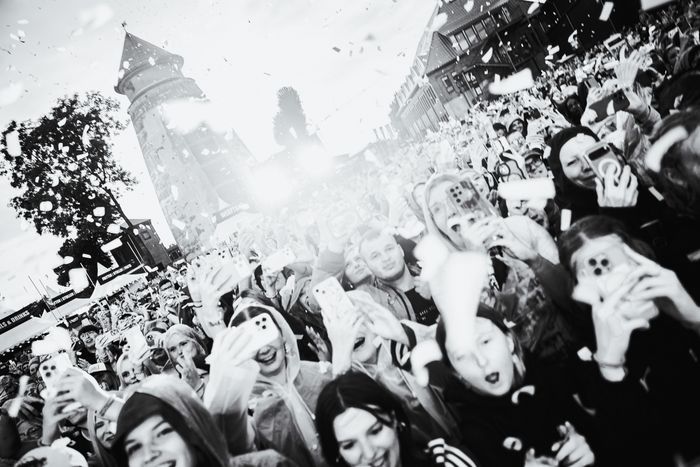
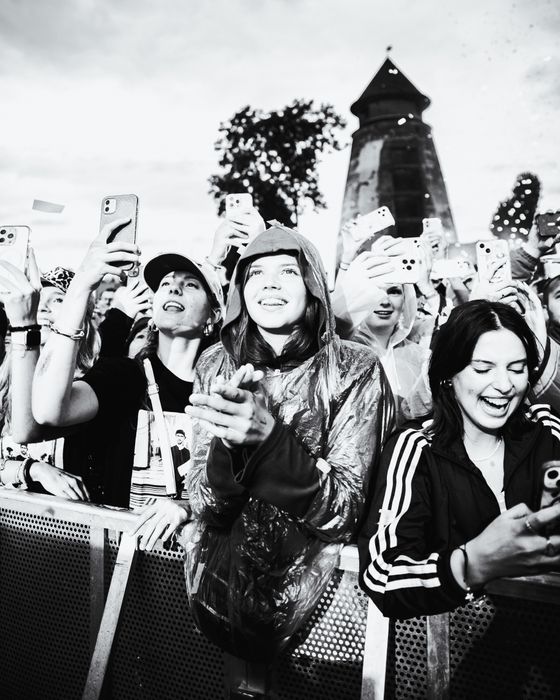
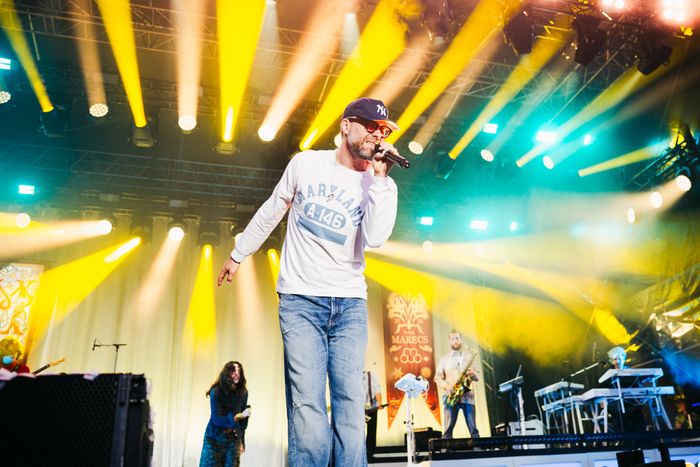
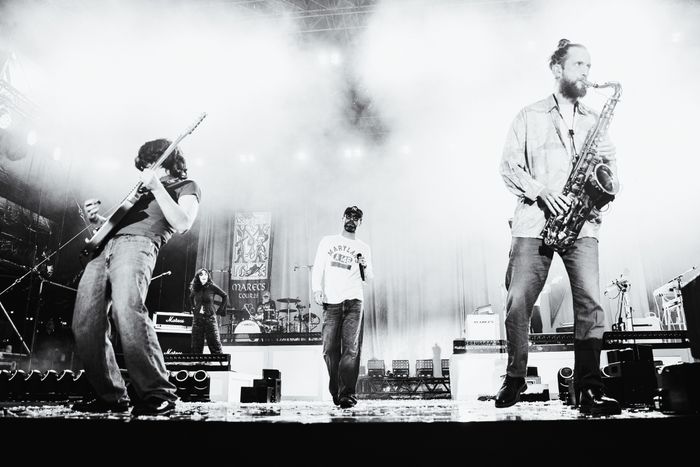
After Mahoro's set had finished, attention turned towards the curtain that had concealed the stage throughout the evening. The anticipation had been building behind it for hours, and when the first notes finally sounded and Forster began to sing, it dropped, revealing him to a crowd that erupted on sight. Cheers rolled across the Kulturwerft, phones shot into the air, and thousands of voices joined him almost immediately.
Forster opened the evening with "194 Länder", accompanied by a shower of confetti and signs rising above heads across the venue. Some referenced the lyrics, others were more interested in the man singing them. Forster noticed both. Throughout the evening, he kept returning to the handmade messages in front of him, reading them out, responding to them and allowing them to steer conversations that ranged from his much-discussed hair to the apparently important declaration that “Marki has swag.”
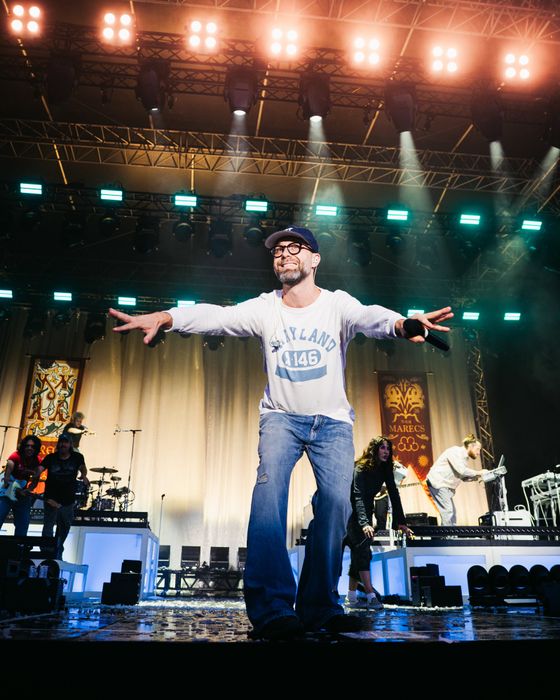
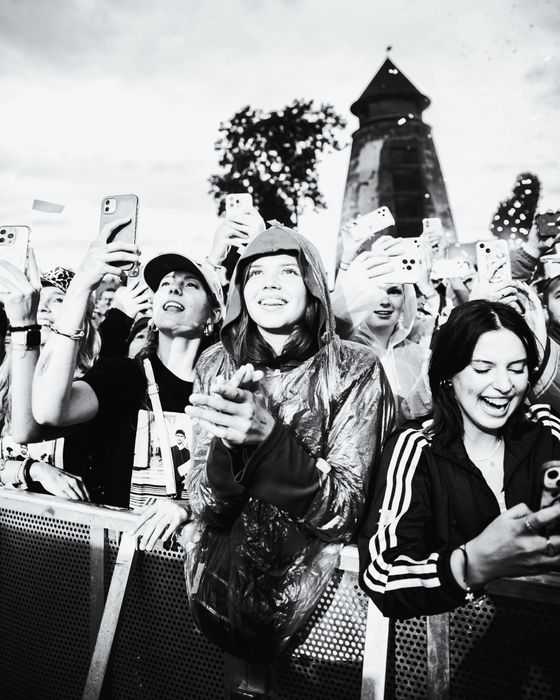
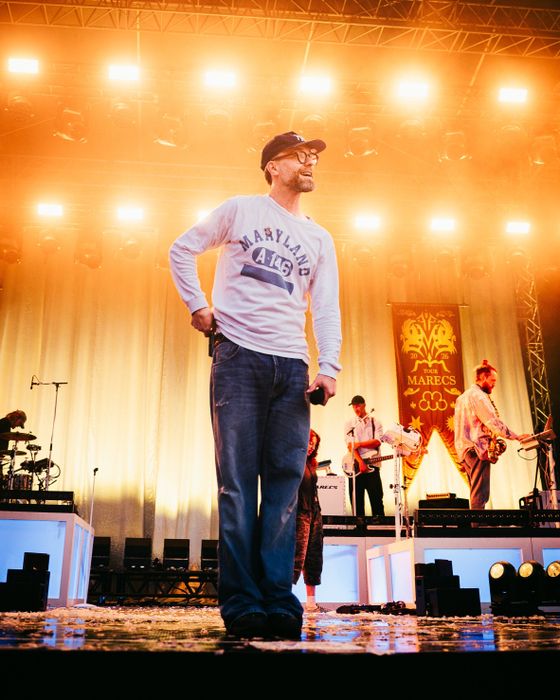
After "194 Länder", Forster moved into "Memories & Stories" before pausing to bring the sold-out crowd, more than 5,000 people strong, even closer into the show. He asked whether they wanted to become part of the next song, "Einmal", themselves, then had the entire Kulturwerft sing together while their voices were recorded as a sample. Onstage, one member of his team stood over a small laptop, quickly working the freshly recorded vocals into the track specifically for this show and this audience. By the time "Einmal" began, the effect was immediate: alongside Forster’s voice, the crowd could hear itself coming back through the speakers. It was a detail created only for that night, impossible to reproduce in quite the same way anywhere else, and for a few minutes a familiar song carried the sound of the very people standing in front of him.
More importantly, it changed the feeling of the song. "Einmal" is concerned with moments that exist only once, and here was one being created in real time. The voices coming from the speakers could not have belonged to another venue or another date on the tour. For a few minutes, the recording itself carried proof that this particular audience had been there.
After "Wenn Du Mich Rufst", "Liebe" unfolded beneath the best light of the evening. The clouds had cleared completely, and the sky behind the Kulturwerft had turned warm with sunset, while arms moved slowly from side to side across the audience.
It was also a useful reminder of why Forster’s music changes character when experienced live.
He has long been an easy target for anyone inclined to be dismissive of German mainstream pop. His songs are accessible. His hooks arrive quickly, and the choruses are rarely difficult to remember. Forster has spent years producing the kind of music that becomes so familiar through radio play that it can almost disappear into everyday life. Standing among thousands of people singing it, however, reveals the other side of that accessibility.
There is a particular skill in writing something that can travel that easily between people. Forster’s songs rarely hide what they are feeling. Love sounds like love, uncertainty like uncertainty, hope like hope. There is little desire to bury any of it beneath abstraction for the sake of appearing more sophisticated.
Live, that directness becomes his advantage. A chorus recognised within seconds suddenly belongs to everyone. Children know it, parents know it, people who have followed him for more than a decade know it. What might sound uncomplicated through a car radio becomes communal when several thousand voices arrive on the same lyric at the same time.
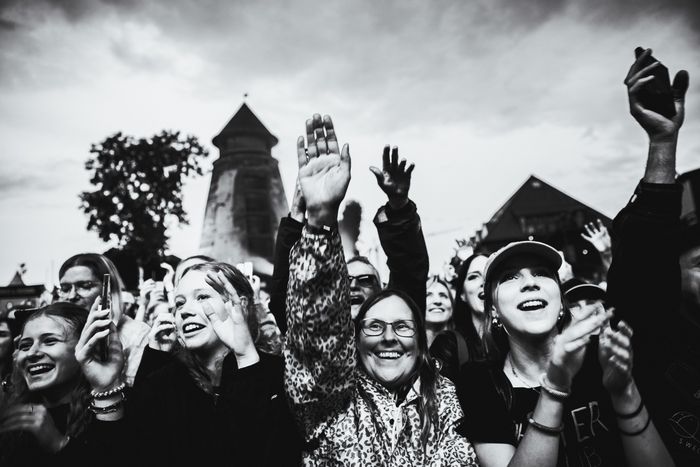
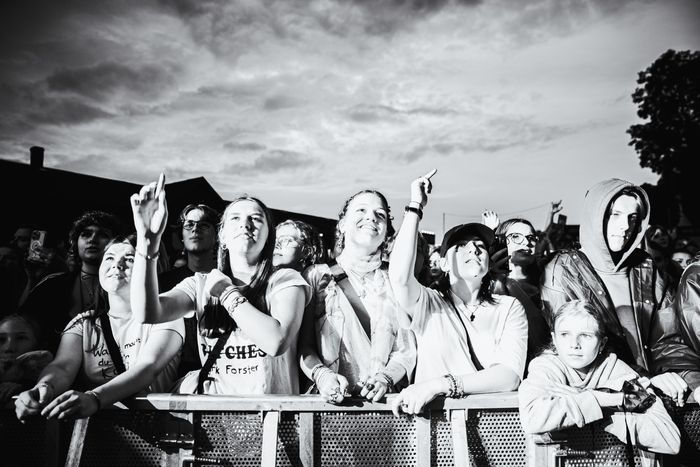
Forster seems to understand that his music does not need to become more complex on stage. It needs room to become larger.
That idea of togetherness took on a more serious meaning later in the evening when Forster introduced the “Forsti-Finger.” Instead of raising the more obvious finger, he held up his ring finger and let the joke lead into one of the clearest statements of the night.
He spoke openly against racism and sexism, against inequality and the far right, explicitly naming parties such as the AfD. He made it clear that he despised the hatred and division behind those ideas, while returning repeatedly to the opposite instinct: bringing people together. Stating that being hopeful was never about pretending that everything is fine, but about refusing to accept that the wrong things had to stay that way.
His speech, which was loudly applauded by the crowd, was then followed by "Sowieso".
A song built on the conviction that things will, somehow, always turn out alright. In that context, its relentless optimism felt less like a platitude and more like an extension of what Forster had just been trying to say.
For longtime fans, another moment arrived shortly afterwards with "Karton". The reaction was immediate, particularly among the people who recognised one of the older entries in his catalogue before everyone around them did. The biggest hits may generate the loudest response, but older songs have a different kind of pull. They carry history with them, and the fans who had been listening long before some of the later radio staples clearly relished getting this one back.
Fireworks lit the sky soon afterwards, before Forster turned the attention away from himself and towards his band and the crew behind the show. With "We Built This City" by Starship playing, the people responsible for constructing the evening received their own applause.
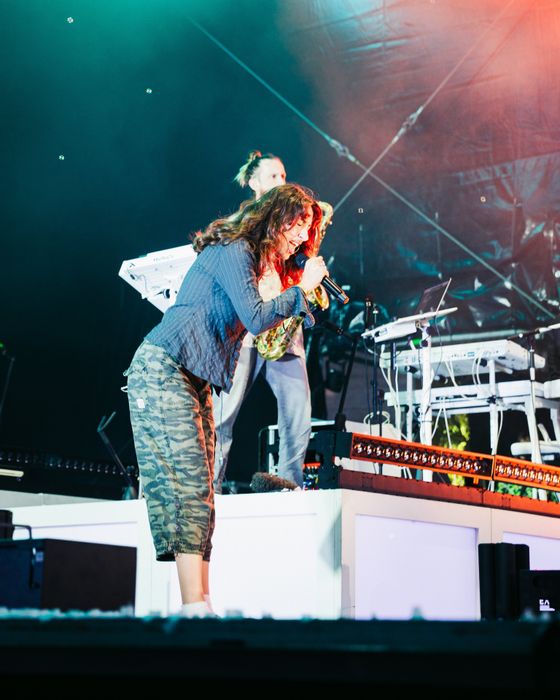
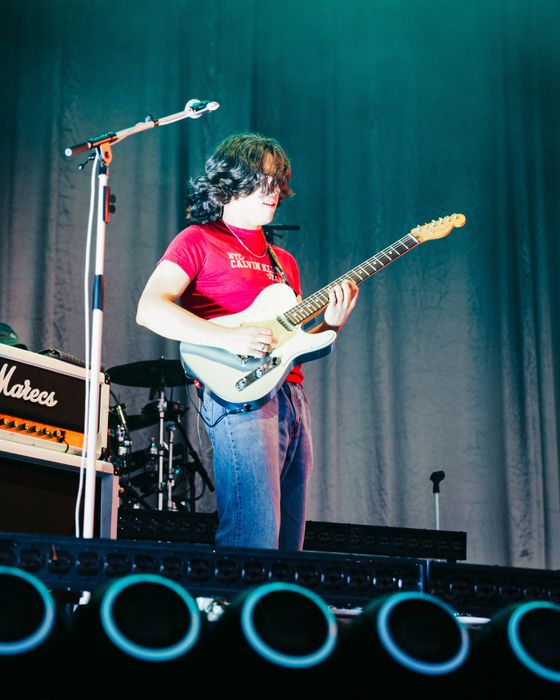
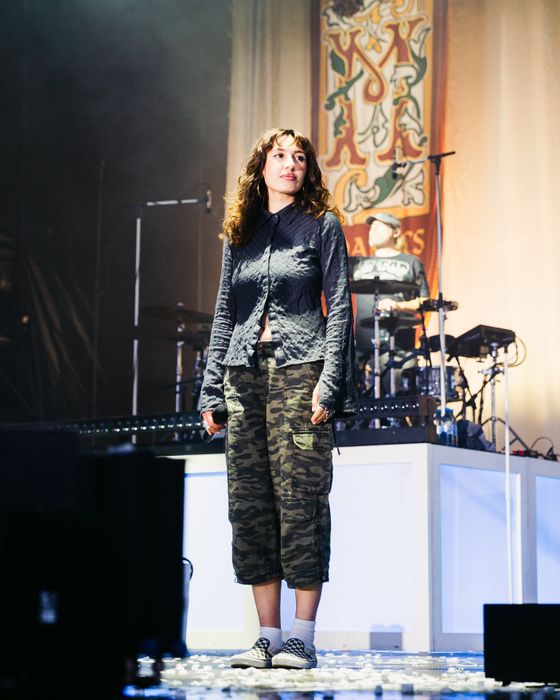
Four chairs were brought onto the stage, and the band sat down. The giant outdoor pop show briefly became something closer to a living-room session, at least as much as anything can feel like a living room with several thousand people watching.
"Was Du Nicht Tust", introduced as an older song, unfolded beneath thousands of phone lights and swaying arms, followed by "Für Immer Forever", whose vulnerability suited the quieter arrangement perfectly.
The intimacy lasted until a ladder appeared.
Forster explained that an orange heart had been placed somewhere among the audience. Once the spot was identified, the ladder quickly went crowdsurfing towards it, followed by Forster, who also made his way away from the stage and into the centre of the venue, eventually arriving among the people he had spent much of the evening talking to from a distance.
Somewhere along the way, he acquired a fan’s phone.
The phone belonged to Rita and her husband Wolfgang, who were spending the evening together at the concert. Their tickets, he learned, had been a gift from Rita’s daughter Ann-Christin, which was apparently reason enough to give her a call.
What began as an improvised conversation quickly became part of the show. Forster asked Ann-Christin how far away she was and whether she could still make it to the Kulturwerft that evening. Then came the invitation: would she come down and sing "Chöre" with him on stage? After some hesitation, the crowd quickly convinced her, and she agreed.
Suddenly, a spontaneous phone call had created a plan for later that night.
Forster, meanwhile, remained out in the crowd and moved into an acoustic version of "Übermorgen", singing from the ladder before slowly making his way back towards the stage through the audience.
"Flash Mich" and "Auf Dem Weg" pushed the energy back up, with the crowd dancing along as the evening moved towards its final stretch. For "Stimme", Forster once again let thousands of voices take over parts of the song, pausing along the way to bring the musicians sharing the stage with him into the spotlight.
By the time "Wir Sind Groß" began, little encouragement was needed. The crowd knew when to sing, when to move and when to simply let the song carry them. Towards the end, the arrangement stripped back into an acoustic finish, leaving thousands of voices to fill the space where the instruments had been only moments before.
"Au Revoir" brought the main set to a close, though the pause was only brief.
Forster soon returned for an encore, opening with "Kogong" before moving into "Ein Lied". Its lyrics appeared across the screen behind him, and the sold-out Kulturwerft needed little prompting to sing them back, turning yet another song into something shared between stage and crowd.
The encore also brought back a familiar name from earlier in the night: Ann-Christin had made it to the Kulturwerft and was now standing beside him on stage.
On stage, Forster soon discovered another detail worth picking up on: Ann-Christin was a teacher, and some of her students happened to be somewhere in the audience. He played with the revelation for a moment, joking with his newly arrived guest before the pair finally moved into the song that had brought her there in the first place.
Together with the crowd, they sang "Chöre", and the final stretch of the evening took on the kind of energy that only comes when everyone knows there are only a few songs left. Arms went up, voices grew louder, and the audience seemed determined to hold on to every last minute. With Ann-Christin beside him and thousands singing back from below the stage, "Chöre" became less a duet than one final collective moment between Forster and the crowd before the night began to draw to a close.
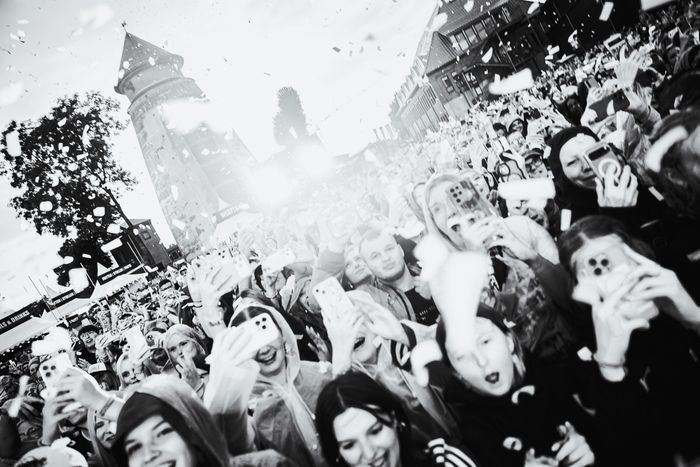
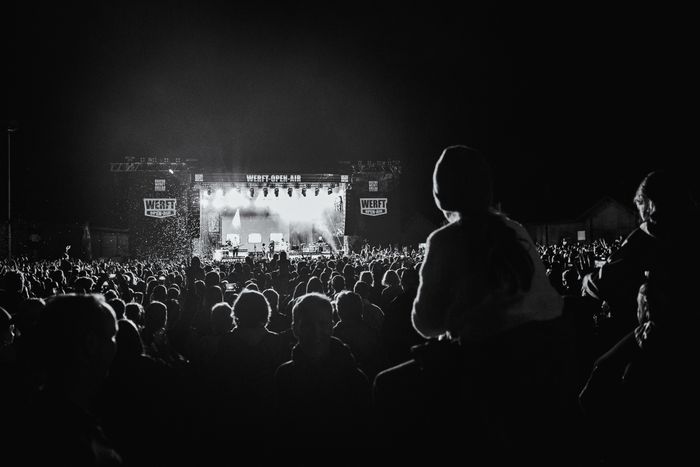
Forster eventually closed the night with "Bauch und Kopf", bringing the evening back to one of the songs most closely associated with him. Thousands of voices followed him through the final chorus, ending a show that had repeatedly found its biggest moments not simply in what happened on stage, but in everything that passed between it and the people standing in front of it.
And perhaps that is what lingered most once the final notes of "Bauch und Kopf" had faded. Forster had spent the night performing to a sold-out crowd, but rarely made them feel like spectators. By the end, they had sung, recorded, joked and, in one case, quite literally found their way onto the stage.
For one summer evening in Lübeck, the songs did not simply fill the Kulturwerft. They moved through it, passed from stage to crowd and back again, until it became difficult to say exactly where the performance ended and the audience began.
WRITTEN BY
Michelle
I write about the stories and emotions that shape music, culture and conversations. While exploring the impact of media and pop culture, I like to put a particular focus on the voices of women and their evolving place in the industry. I am especially drawn to interviews that go beyond the surface, uncovering the perspectives and personalities behind the work.
PICTURES BY

Nora
Throughout 2022 and the beginning of 2023 I started to photograph with my phone at shows I went to, in April of 2023 I got to photograph with my camera at a show for the first time and have been doing it since. I love that it´s possible to combine (live) music and photography!
Excited to see what the future will bring!