'Hamnet' Hurts, And That Is A Good Thing

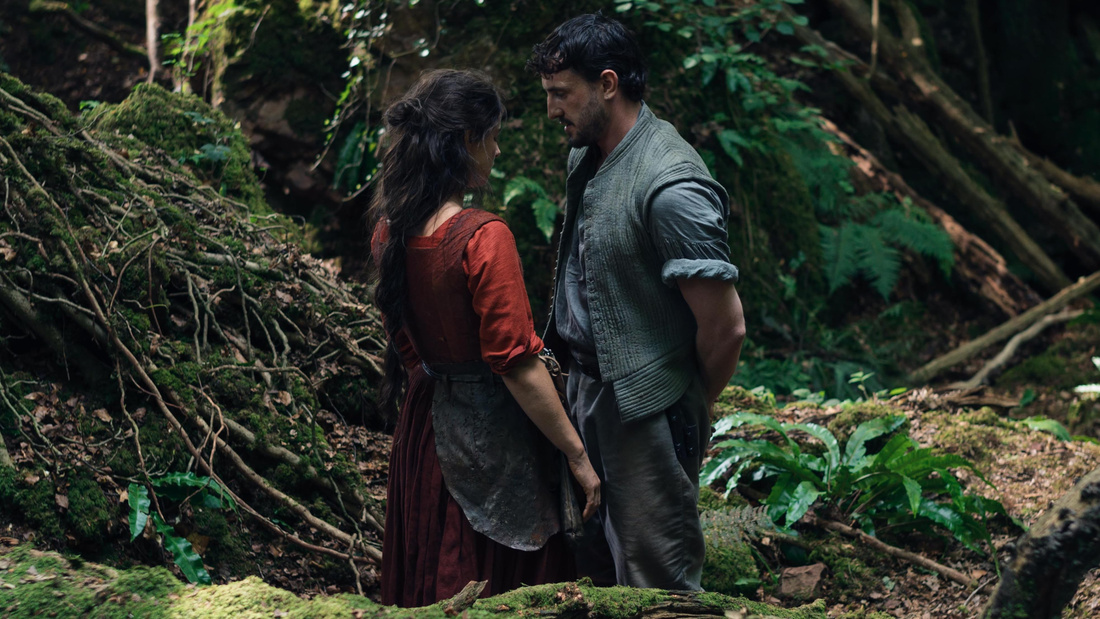
Over the last week, it was almost impossible to avoid social media without coming across the movie ‘Hamnet’ – I was overwhelmed by videos of people filming themselves before watching the movie, and then afterwards: most of them bawling their eyes out. Furthermore, the movie has received widespread media attention, and its marketing has been outstanding over the last few months. Which is not surprising, as ‘Hament’ was directed by Oscar-winning director Chloé Zhao and stars Paul Mescal and Jessie Buckley. These alone set a high standard for the production, but the movie is based on the best-selling novel by Maggie O’Farrell, which has swept the internet and legacy media with critical acclaim. The fictionalized story follows William Shakespeare, who is not named once in the novel and is portrayed by Mescal, and his family. How he meets his wife Agnes, portrayed by Jessie Buckley, and how they have three children, until one day their son, Hamnet, falls ill and dies. Eventually, it becomes a narration of the destructiveness of grief and its impact on the family and their lives. In his grief, Shakespeare writes one of his most famous plays, ‘Hamlet’, an homage to his son, as the names ‘Hamlet’ and ‘Hamnet’ were interchangeable in 16th-century England.
The tender, complex narrative of characters and human emotion, combined with the heightened expectations before the movie’s release, makes it almost impossible to meet anyone's expectations. It is reasonable to be skeptical – a story about grief and family does have the pitfalls of falling into old Hollywood clichés: big gestures, musical epics, and a resolution that finds a purpose for most unbearable experiences. And in a sense, 'Hamnet' is a Hollywood movie; it does not reinvent how grief or love is narrated. But what makes the movie outstanding is its bravery to allow complexity in their characters, the irreversibility and uselessness of death and that no grand purpose makes the loss bearable – it is a rawness of pain and a rawness in beauty in its little scenes and everything that is communicated in between the lines that make the movie one of the best movies of the year and of the genre.
In its narration, the movie has adapted elements of theater plays that underline and help it flow and communicate without words. For once, there is the screenplay itself, structured like a play in three acts: the love story of Agnes and Shakespeare, the illness, and eventually the aftermath of the loss. For a movie that works without big twists, it was the right choice to maintain the narrative flow while still helping the audience follow the storyline. Furthermore, like a classic play, it uses nature as its own character to narrate the sword of Damocles that is above the family – once noticed, nature becomes the one that draws the attention to itself and becomes its own actor: a storm that lingers even in summer and bright daylight, dark holes that seem to follow the family wherever they go. It not only adds a poetic element to the narration but also demands attention to the characters, the plot, and the environment in which they live. It fills the room, and even after 24 hours, the landscape's images are burned into my memory.
Embedded in the setting are Paul Mescal and Jessie Buckley, and, with the movie’s narrational and technical perfection, they bring it to life and make every scene their own. Both characters have a presence on screen that pushes everyone around them to the background, even in the quietest scene, a look bears importance and makes the movie their stage. For once, this is due to the undoubtable chemistry Buckley and Mescal have as a couple, in their devotion and understanding for one another – moment when they simply look each other in the eye, hold hands, sit next to each other has a naturalness of belonging that captures the essence of their love story that is the core of the first half of the movie. Even though their chemistry is part of the movie’s brilliance, the individual strengths of the characters and actors are also captured. In its symbolic narration, the characters are interwoven. Shakespeare and Agnes are harmonized but, in some respects, complete opposites.

She is the earth, portrayed in red and earth tones – she is close to nature, clear in her expression, and loud in the emotions she takes up, filling physical and emotional space. He is the sky, portrayed by wearing blue, the quite intellectual, whose emotions are not always clear immediately. He is stable in his love and devotion, but there is also a restlessness about him; it is fascinating to watch how Mescal masters the tension between being a devoted father and husband while incorporating the restlessness of an artist, which is captured in the movie's constant movement. Capturing these details is also due to the great camera work beyond their color scheme. Jessie Buckley is mostly captured in full body or in close-up. While Mescal is more often filmed in a headshot, it gives his face and eyes greater narrational emphasis. Both have a safety about them, the safety of each other and the safety that they present for their children. By functioning like heaven and earth, they serve as pillars in their children's lives and remain ever-present in interactions among all characters in scenes depicting their daily lives.
What is astonishing is how stable the narration and the characters remain as the movie shifts from a love story and family life to the portrayal of grief. It has been criticized that the movie is emotionally manipulative and maybe even what is now called a ‘trauma porn’ – I think rather the opposite is true. Much too often, the depiction of grief and sadness comes along with dragging on emotional scenes and remains with the situation of the trauma. ‘Hamnet’ doesn’t do so. Sure, in the emotional parts of the movie, the music underlines the tragedy, but eventually, this is an element of movies themselves. After Hament dies, the movie chooses to show the grief of the parents right after the death, only in two scenes – one for Buckley and one for Mescal. Afterwards, their grief lingers with them as life carries on, depicted in a camera shot of Hamnet’s grave while the sun shines and the family spends time in the garden. This is the real tragedy: life carries on.
Additionally, the movie remains brave, raw, and subtle, avoiding grand gestures or scenes, and, once more, underpinning the tragedy the audience already knows. What captures is the feeling of death's irreversibility and senselessness, which makes the movie emotional. Even as the years go by, nothing normalizes or even returns to normal; no purpose is found. Everyone grieves on their own, and the love between Shakespeare and Agnes has grown dim because of their different griefs. The audience is a witness to parents who have also been irreversibly changed. Not only is the life of their son grieved, but also the past lives that everyone in Shakespeare’s family had before. One of the strengths of the movie is its ability to present several truths at once, especially in the final scene.
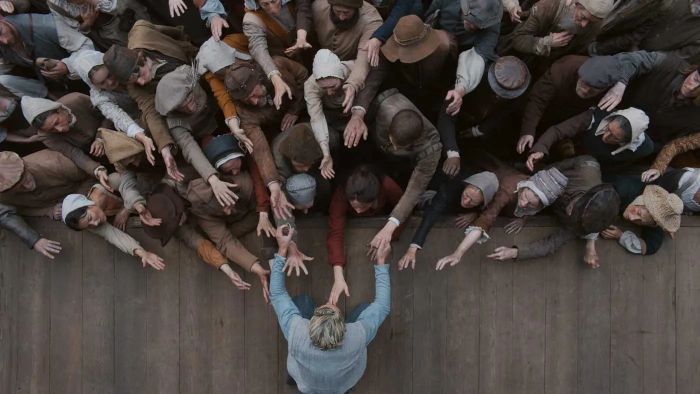
In its final 15 minutes, the movie dares to ask whether hope and connection are possible. Torn apart, Shakespeare and Agnes spent years isolated from one another. Until Shakespeare, in one of his darkest moments, chooses resistance -without big pathos, he recites “to be or not be.” He chooses to be with the grief, which becomes his act of resistance that results in the play ‘Hamlet.’ When Agnes chooses to see the play in London, she becomes part of her husband’s life again and begins to understand his grief – he has chosen an actor who is the age of their son to portray Hamnet, dressed the way their son was when he died. In his attempt to make their son’s wish come true to become an actor, both characters find a glimpse of their connection. In this sense, the tragedy of Hamlet is not this big play that everyone must read in High School, but an attempt by a father to fulfill his son’s dreams and to never let the world forget, as each time ‘Hamlet’ is brought to the stage, the world has a rare glimpse of their son. While the movie could have ended on this note, it does not shy away from letting Hamlet die on stage, reminding us once more that memory does not replace or change reality. There is no sugarcoating, no redemption – this is reality now, and whether adjustment and acceptance are possible is a question left unanswered.
Although ‘Hamnet’ is not a reinvention of movies about grief, its portrayal of the complexity of grief and human connection makes it such an important movie. It is radical in the sense that it does not try to resolve the burden of grief from the audience; the burden that Shakespeare and Agnes carry is for life, and there is no purpose in it. The movie is clear about that and shares it with us. This burden also becomes our burden while watching the movie. Eventually, this feeling is what remains after I left the cinema. I shared the bad moments, but I also got to see the beautiful ones, a reminder that the burden of pain is also a reminder of the capacity to love in the first place. Two days after, the reminder of the movie also means that the pain has not left me, but it has reached a point of feeling like a Catharsis. This is why I recommend seeing the movie in the theater, to share a good cry with an audience – anyone who has seen the last scene will understand why.
Written by

Annabelle
As long as I can remember, I have been absolutely obsessed with literature and cinema - for me, both have been a way to not only explore different lives and experiences, but what moves contemporary society. Therefore, I love to explore how literature and cinema connects to societal developments and the green light it can offer to understand ourselves and our surrounding.