Reunion Tours Can’t Save the Venues That Made Them


Few years have been as unprecedented for live music as 2025, and with whirlwind reunion tours and record-breaking ticket sales, it was a year that no fan wanted to miss.
Global stars such as Taylor Swift, who made over £1.6bn on her Eras tour and even prompted a six-part documentary, continued to reap high financial rewards.
Yet for smaller artists and venues, the situation looked remarkably different.
With stadium tickets now topping £150, many fans are forced to choose one big show over a year’s worth of smaller gigs, and the emergence of the ‘supertour’ with excessively high ticket prices sap vital money from smaller venues and artists.
For emerging musicians in London, the pathway that once seemed inevitable – from small clubs to packed arenas – is increasingly harder to reach.
The Oasis tour of 1994 was a significant moment in British music history, not just for the band themselves but for the venues that hosted them. Their highly anticipated return to the stage with their Live '25 reunion tour drew huge audiences, yet less than one third of the grassroots venues that featured on their original tour are still standing. It's a sobering statistic that represents the perilous state facing the current live music industry.
Over 150 grassroots venues have shut down since 2023, with an average of two closing every month across the UK. The venues that remain are operating on thin profit margins, with nearly half reporting losses.

In a recent interview with The Guardian, Ben Lovett from folk-rock band Mumford & Sons said, “Back when many of the venues where we had cut our teeth, including the Luminaire in Kilburn where we played our first headline show, had started closing down,” referring to their debut in 2008. “This trend has only continued, in London and across the country.”
These consequences have repercussions far beyond individual venues or artists. For the first time in over two decades, no British artist appeared in the global top 10 singles or albums in 2024. It's an alarming sign that the infrastructure which once helped Oasis, Radiohead and The Rolling Stones reach fame is now under severe strain.
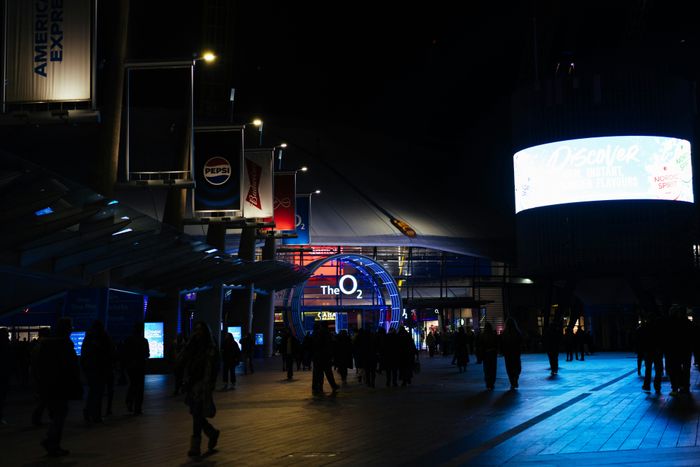
However, the picture isn’t entirely bleak. In 2024, London’s O2 Arena announced plans to allocate a percentage of its proceeds to support smaller venues nationwide.
Music Venue Trust charity (MVT) has partnered with the 20,000-capacity venue in a campaign for arena operators to support smaller artists before they rise to fame.
Whilst precise figures have not been disclosed, the O2 has committed to an initial six-figure contribution to MVT, alongside additional donations when new artists perform at the venue. As the country’s second-largest indoor concert venue, this is a significant intervention.
MVT itself has taken direct action through its Music Venue Properties scheme, acquiring freehold ownership of grassroots venues and transforming them into community ownership models where fans and supporters can invest and receive returns on their support.
Arts Council England remains the backbone of public support, offering National Lottery Project Grants ranging from £1,000 to £100,000 for projects by artists and organisations across England. The threshold is modest enough that early-stage artists aren't immediately excluded, although competition remains fierce.
Other funds include the PPL Momentum Music Fund, run by PRS Foundation in partnership with PPL and devolved arts councils. This offers grants of £5,000 to £15,000 for UK-based artists at a "crucial tipping point" in their careers. Notable recipients have included Little Simz, Sam Fender, Kae Tempest and Knucks, with the fund generating over £22 million for the UK music industry since its launch in 2013.
Help is not limited to organisations alone, but individual artists are also stepping in. Coldplay pledged to donate 10 percent of their tour earnings to MVT, whilst Sam Fender donated his entire Mercury Prize winnings to the charity.
For now, small artists still have some room to manoeuvre. Funding bodies are in place, limited money is available and the doors remain nominally open. But in a sector where venues are closing faster than funding is coming in, the real question is whether grassroots performances will still hold their ground down the line.
REVIEW BY

Nicole
I love writing about music venues where artists first started out and the rich histories behind them. London is full of iconic spots that musicians performed at earlier in their careers, which have inspired cover bands and lots of new artists hoping to follow in their footsteps.