From Pain to Power: DELA on Becoming a Warrior

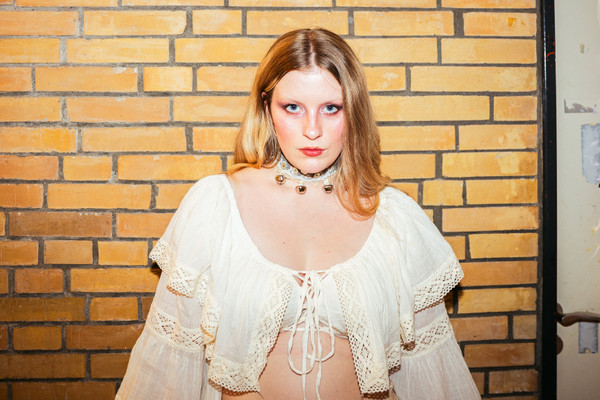
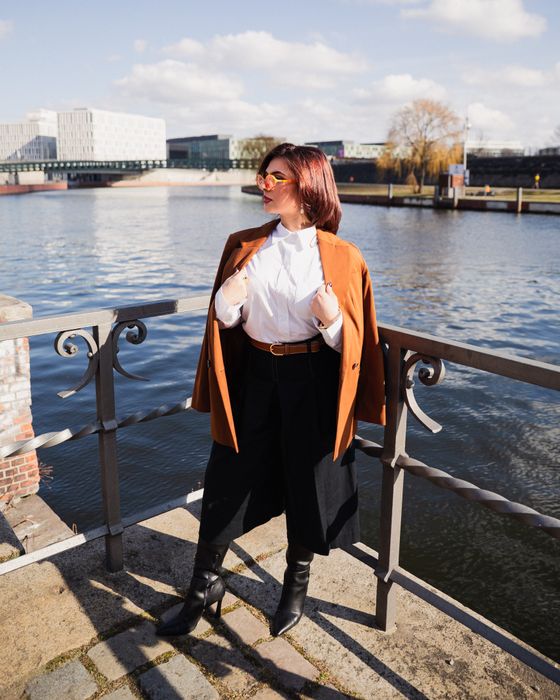
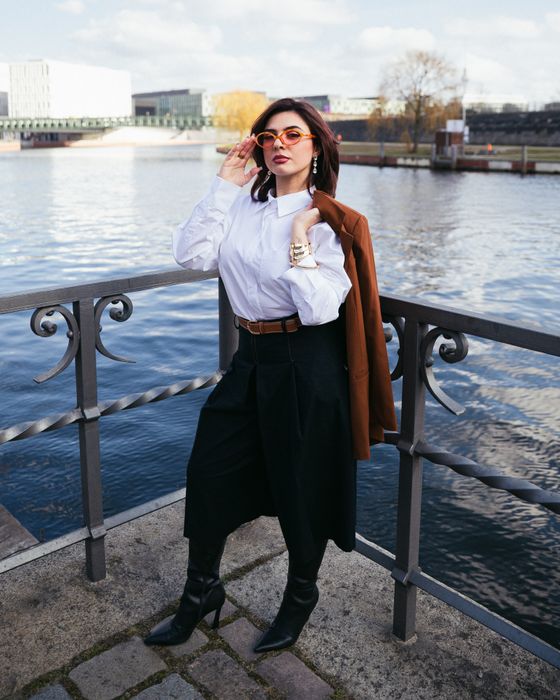
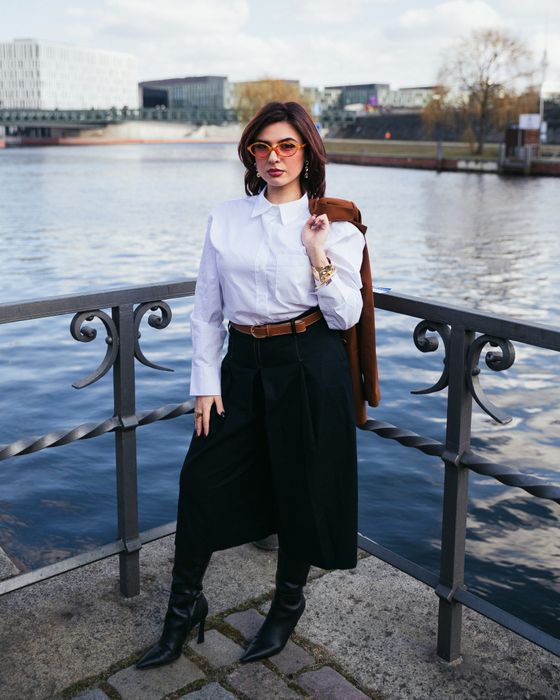
Get to know DELA, the powerhouse vocalist whose single “Krieger” showcases what epic,
emotional pop can sound like. Blending Italian roots, English pop influences, and German
lyrics, she turns vulnerability, healing, and self-worth into big, cinematic songs that stay with
you. In this intimate interview, DELA talks about her journey from law school to the studio,
the alter ego that helped her find her voice, and why she wants her music to remind people of
one thing above all: you are not alone.
HERE'S THE FULL INTERVIEW
Thank you for meeting us! Let’s get straight into it: Can you describe who DELA is in three words?
DELA: Authentic, epic, and family-oriented. Family-oriented because I recorded a song with
my dad and I love talking about my mom in my songs and the advice she has given me. Epic,
because I want my songs to sound big, I love “big songs”. Authentic, because that is exactly
what I want to be in my music.
When you are not making music, where can people find you?
DELA: I love going for walks with my headphones on or having coffee with my girls and my
family. When I am not doing music, I really cherish that time to myself.
If you could write your own headline, what would it say?
DELA: “The Voice of Germany Talks About Her Career and Her Future.” I do not want to
sound arrogant, but I am truly convinced that I have a God-given voice. That would be my
dream headline.
You recorded a song with your father. Would you say that music runs in your blood?
DELA: Yes, 100%. My dad is very musical, my mom, and I say this with love, not at all. We
listened to a lot of music together on the way to school, but my dad was the key influence:
Tupac, Michael Jackson, Whitney Houston, and Amy Winehouse. My biggest inspirations
come from him. He has a God-given voice, too, but sadly never did anything with it. I definitely
inherited it from him. And I recently found out that my grandmother, whom I am named after,
also sang very well and loved to sing. So yes, it runs in the family.
You have Italian roots but sing in German. Where do you feel most at home musically?
DELA: Very much in Italy too. I often come to the studio with Italian references, because the
arrangements, productions, and vocals there are very big. German is also a home to me because
I live here and speak the language. But German is quite a hard language, while Italian is very
poetic. For one German word, you almost have six ways to say it in Italian and can describe
your emotions much more precisely. I also feel very at home in English, because I grew up
listening to both English and Italian music.

What does a typical studio day with DELA look like?
DELA: I walk into the studio and first think about the direction I want to go with the songs.
Most of the time, it turns out completely different in the end. Recently, I was about ten weeks
into a situationship and wanted to create something “warrior-like”. Then I sat in the studio and
thought: No, I want to talk about this situationship. So, we sit down, talk about how I feel, often
with songwriters in the room. Then we start with beat production; after that, we work on the
toplines and melodies, and then it is writing, singing, and performing. For me, it is always:
feelings first, then the beat, and from that we decide on the song's genre.
Your latest single is called “Krieger” (“Warrior”). How did this song come about?
DELA: The inspiration came strongly from Italian music. I wanted to create something
Germany had not really heard before, epic, but still very easy to grasp. I play a lot with my
voice in this track, with harmonies, with big choirs. I went into the studio with the motto:
Today, we are going full Viking vibes. It also matched how I was feeling at the time, but the
song was not necessarily about a man; it was actually about a female friend. I was in this
mindset: "It is okay if you are not there; I am strong on my own." I love working with mood
boards: I bring in a specific image that captures the vibe, and my team, who thankfully know
exactly how I work, builds on that.
What do you want people to feel when they listen to “Krieger” or to your music in general?
DELA: Freedom. I would add “free” to the three words from earlier. I want people to think, “I
am not alone,” when they hear my songs. That is my motto. No matter what feelings you carry
around, you are not the only one. I want people to feel understood. Francesca, my private self,
really needed that feeling growing up. That is what DELA is supposed to give now.
Would you say you are also healing your inner child through music?
DELA: Yes, 100 percent. That is also true for my stage performances. I was ten years old when
I first stood on stage in front of a thousand people. It was during a one-man-band show; they
called me up and I sang a song. I felt all the attention on me and thought,
“This is my life.”
Hannah Montana honestly shaped me a lot. That moment on stage was my first turning point.
Later, I studied law and made music on the side. At some point, I got to a place where it was
either-or. My heart beats for music, so it was pretty easy for me to decide to leave law behind
and do music full-time.
Did Hannah Montana shape you musically or more as a person?
DELA: Not so much musically. But as a character, yes. The idea of living in two worlds is
very familiar to me: Francesca in private and DELA as an artist. Also, the way she stopped
caring about what others think and did what felt right to her, whether it was always “right” or
not, is another question. That attitude really shaped me.
How did the separation between Francesca and DELA evolve, and why did you choose a stage name?
DELA: It took time. I first had to find the right songs and the right genre to make that separation
possible. Only for about one to two years have I truly known who DELA is. Before that, my
first songs still sounded like I was figuring things out. DELA is what Francesca was never
allowed to be. The name is a mix of my last name and the “A” from Francesca. So, it still feels
personal, but it clearly separates my private self from the artist.
So, you separate between your private self and your artistic persona. Are there any boundaries for you in what you share through music? What does that mean in practice?
DELA: For me, music is entirely intimate; that is exactly where I can let everything out.
Francesca is a very sensitive person; she used to be the pushover, the girl who said yes to
everything to make people happy. DELA is the stronger version of her. In my songs, DELA
says what Francesca never felt allowed to say. That is why I do not set any limits for myself in
music.
Is there a specific lyric from one of your own songs that you are especially proud of?
DELA: From “Krieger”: “Ich danke Gott für jeden Tag, den du nicht bei mir warst” (“I thank
God for every day you were not with me.”). That line really describes me. Someone claimed
to be there for me but was not. And I am still grateful, because I grew through it. The line right
before that is, “Ist schon okay, war dir zu viel, ich bin alleine stark” (“It is okay if it was too
much for you; I am strong on my own.”) Those two lines are very me.
What is the best part of making music for you?
DELA: People’s reactions. When someone tells me, “Your song saved me,” or “You spoke
straight from my soul.” Or when someone tells me they managed to leave a toxic person thanks
to one of my tracks. I love writing my feelings, but the most beautiful part is realizing that I am
helping others by doing so.
What would you like to tell people who are reading this?
DELA: Never stop believing in yourself. Fight for yourself, but only as long as it benefits you.
The moment you realize something is hurting you, let it go. That does not just apply to romantic
relationships; it also applies to friendships and family. That is often where the biggest issues
lie, because it is hardest to walk away. I am someone who took that step and from that moment
on, my life got better. It hurts and it takes courage, especially when you have experienced a lot
of rejection. But do not give up, and do not let toxic people or situations define you.
For our THE UNSEEN playlist, we ask each artist to submit five tracks. Which songs have shaped you and absolutely need to be in there?
DELA: “Krieger” by myself. I still listen to it a lot because it makes me feel strong. Then
“Back to Black” by Amy Winehouse, which I adore. “Where’s My Husband” by Raye is
another favorite. I also listen to “Frieden” by KAYEF a lot. And then anything by Ultimo, an
Italian artist I love. I could put all his songs in your playlist.
Frederike: Great, thank you so much for taking the time to talk to us!
DELA: Thank you!
LISTEN TO DELA'S NEWEST SINGLE “KRIEGER” HERE:
LISTEN TO OUR ARTIST RECOMMENDATION PLAYLIST HERE:
INTERVIEW BY

Frederike
Pop culture is my passion, and concerts are my second home. At Unseen Magazine, I dive deep into underground scenes, uncover unheard voices and bring new artists into the spotlight. I aim to showcase Berlin's vibrant music scene and what the mainstream bubble hasn’t discovered (yet).
PHOTOS BY

Nora
Throughout 2022 and the beginning of 2023 I started to photograph with my phone at shows I went to, in April of 2023 I got to photograph with my camera at a show for the first time and have been doing it since. I love that it´s possible to combine (live) music and photography!
Excited to see what the future will bring!