Sunrise on the Reaping Is a Devastating Return to Panem

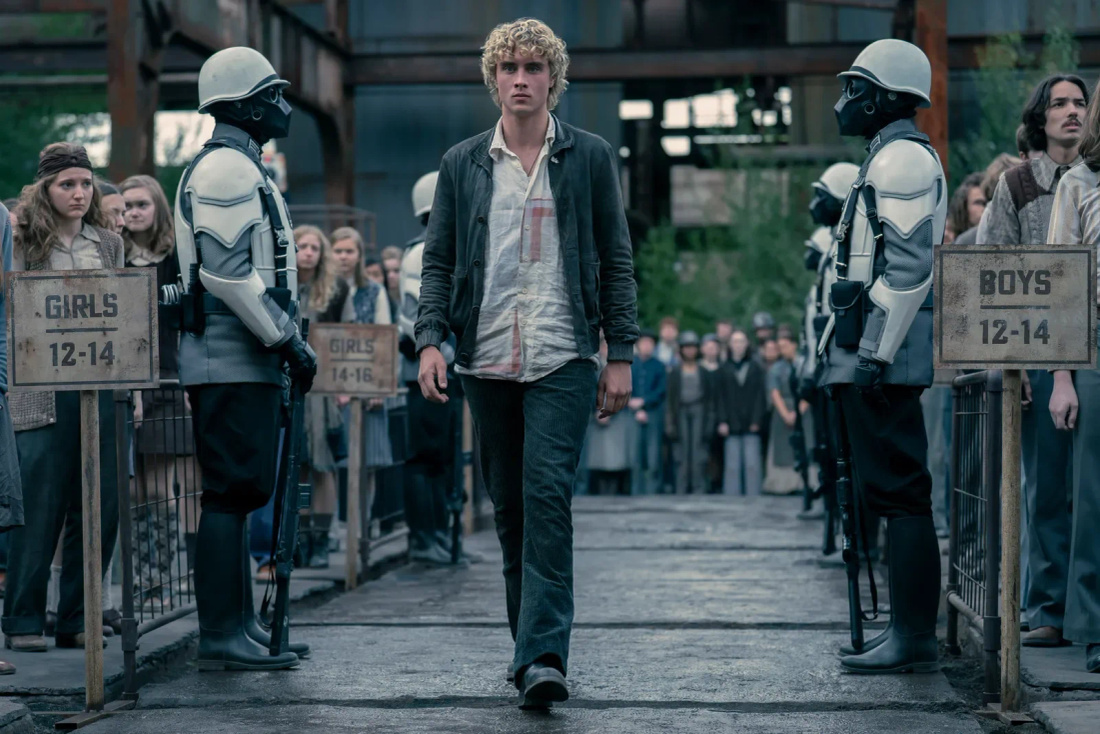
On November 4, we had the opportunity to attend an early press screening of The Hunger Games: Sunrise on the Reaping, and I have to admit that keeping my thoughts to myself while most people have yet to see the film has been a little more difficult than I anticipated. Not necessarily because there is anything I desperately want to spoil, but because I have spent the past week and a half thinking about what I watched, and there is only so much you can say about a film when practically nobody around you has seen it yet.
For those unfamiliar with Suzanne Collins's latest addition to The Hunger Games universe, Sunrise on the Reaping takes us back to Panem 24 years before Katniss Everdeen volunteers for her sister at the reaping. This time, however, we follow a 16-year-old Haymitch Abernathy as he is selected to participate in the 50th Hunger Games, otherwise known as the Second Quarter Quell. To mark the occasion, the Capitol doubles the number of tributes, meaning that instead of the usual 24, 48 children are sent into the arena to fight for their lives. Most of us already know Haymitch as the rather cynical, perpetually drunk mentor who eventually guides Katniss and Peeta through their own Games, but Sunrise on the Reaping introduces us to a version of him we have never really gotten to know. Before he became the man we recognize from the original trilogy, Haymitch was simply a boy from District 12 who loved his family, his girlfriend, and the people around him, and whose life was irreversibly changed by a system that was never going to allow him to win, even if he survived.
I remember holding the book in my hands for the first time a little over a year and a half ago, finally getting to read a story I had been curious about for years. I had always wondered what exactly had happened to Haymitch during his Games, and although we were given glimpses of his past in the original trilogy, there was something about finally getting to experience the entire story from his perspective that made it particularly difficult to put down. I remember the book feeling strangely heavy in my hands, and in many ways, it continued to weigh on me long after I had finished reading it. So when I sat down in the theater and the lights began to dim, I was already painfully aware of what was about to happen in front of me, yet I don't think I was quite prepared for how different it would feel to actually watch it unfold.
The film begins much like the novel, with Haymitch being woken up by his younger brother Sid on the morning of his birthday, which also happens to be reaping day. Almost immediately, I found myself thrown back into the world of Panem, accompanied by that familiar feeling of dread that comes with knowing exactly what awaits these characters. I think there is something particularly devastating about watching a story unfold when you already know how it ends, because even the most ordinary moments suddenly become reminders of everything that is about to be taken away. In terms of the adaptation itself, I genuinely struggle to think of anything significant from the novel that didn't make it into the film. Of course, certain scenes play out a little differently, and there are moments I would have liked to spend more time with, but overall, I was incredibly impressed by how faithfully Francis Lawrence translated Collins's work onto the screen. Having directed several previous installments of the franchise, Lawrence clearly understands the world he is working with, and I think that familiarity becomes especially apparent in the way the film manages to capture both the spectacle of the Games and the cruelty that exists beneath it. Rather than spending too much time discussing how closely the film follows the book, however, I want to focus on the performances and the moments that stayed with me, because those were ultimately what made the experience so memorable.
First and foremost, Joseph Zada was absolutely phenomenal as Haymitch Abernathy, and I genuinely cannot imagine anyone else portraying him quite the way he did. I remember watching him play Johnny Sinclair in We Were Liars and being completely taken aback by how raw and instinctive his acting felt, particularly in scenes where his character was experiencing something emotionally overwhelming. There is a certain quality to his performances that makes even the smallest expressions feel incredibly significant, and I think that ability served him especially well in Sunrise on the Reaping. What I appreciated most was that he never lost sight of how young Haymitch actually is, even when the circumstances around him force him to behave in ways that are far beyond his years. We are so accustomed to seeing Haymitch as this bitter, emotionally distant man that watching Zada portray him as a teenager who is still capable of being hopeful, affectionate, and genuinely happy makes everything that happens to him considerably more difficult to witness. What I hadn't anticipated, however, was becoming so emotional within the first 20 minutes of the film, particularly during the scene in which Lenore Dove attempts to say goodbye to Haymitch as the train leaves District 12. Standing on top of a metal bridge, she is crying uncontrollably and repeatedly apologizing to him because she believes his reaping was her fault, desperately trying to reach him when there is absolutely nothing either of them can do to change what has happened. Whitney Peak portrayed that desperation so convincingly that I found myself crying much earlier than I had expected, which, looking back, should probably have been an indication of how the rest of the screening was going to go.
I was equally impressed by Mckenna Grace as Maysilee Donner, whose performance was everything I had hoped it would be after reading the novel. Both Grace and Peak managed to bring their characters to life in ways that felt remarkably close to how I had imagined them, and I honestly cannot think of a single casting decision that left me disappointed. There is something incredibly satisfying about watching characters you have spent so much time imagining finally appear on screen and realizing that the actors understand them in much the same way you do. That being said, I do think that having experienced the story through Haymitch's first-person narration in the novel made certain moments in the film feel slightly different. In the book, we are constantly aware of what he is thinking and feeling, even when he is unable to express those emotions to the people around him, which creates a level of intimacy that is understandably difficult to replicate on screen. Although Zada does an extraordinary job of communicating those feelings through his performance, there were moments when I found myself missing the additional emotional context that came with being inside Haymitch's head.
This became particularly noticeable once the Games began, which brings me to what is probably my only substantial criticism of the film: the pacing inside the arena.
While I thought the first part of the film allowed us to spend enough time getting to know Haymitch and the people around him, I felt that things began moving considerably faster once the tributes entered the arena. I remember reading the novel and feeling as though the Games were stretching on for an eternity, with each passing hour becoming increasingly unbearable as Haymitch struggled to survive while watching the people around him die. There was a particular sense of exhaustion that came with reading those chapters, almost as though time itself had slowed down, and I think that was an important part of what made the experience so disturbing. In the film, however, I found myself struggling to process certain deaths before the story had already moved on to the next event. Louella dies before the games, of course, but then Wyatt dies, and so does Lou Lou, and before you have really had the opportunity to sit with what has happened, Haymitch has already discovered and destroyed the water tank, which follows Amperts' death. I don't necessarily think that these scenes needed to be longer in terms of showing more violence, because the last thing I wanted was to spend additional time watching children suffer, but I do think the film could have benefited from allowing the audience to experience more of the time between those moments. In the book, the horror of the arena doesn't come exclusively from the deaths themselves, but also from the constant anticipation of what might happen next, and I missed some of that feeling while watching the adaptation.
I felt something similar about Haymitch and Maysilee's relationship, although this is something I am a little more hesitant to criticize because it has been a while since I last read the book. Their relationship develops beautifully in the film, and I thought Zada and Grace worked incredibly well together, but I remember their dynamic feeling slightly more sibling-like in the novel. There was a certain familiarity and trust between them that I found particularly endearing, whereas in the film, Maysilee occasionally seemed to expect Haymitch to leave her behind at any moment. That isn't to say that their relationship wasn't convincing or emotionally significant on screen, because it absolutely was, but I would have appreciated a little more time watching that bond develop before we were forced to say goodbye to it.
And speaking of saying goodbye, Maysilee's death was without a doubt one of the most difficult scenes for me to watch.
What made that moment so devastating was the fact that, unlike some of the earlier deaths in the arena, the film actually allowed us to witness Haymitch's desperation as he tried to prevent it from happening. He fights so hard to keep her alive, and even though I knew perfectly well what was coming, I still found myself hoping that somehow he would manage to save her. Watching him realize that there was nothing he could do, only for her to die right beneath him, was genuinely heartbreaking, particularly because we had spent so much time watching their relationship develop and knew how much she had come to mean to him. I think that was one of the moments where the film came closest to recreating the emotional intensity I remembered from the novel, because it allowed the audience to experience not only the loss itself but also the helplessness that preceded it.
What I found especially disturbing, however, was everything that happened after Haymitch won the Games, because while the violence inside the arena is obviously horrific, the Capitol's treatment of him afterward reveals an entirely different kind of cruelty. Throughout the Games, we watch Haymitch repeatedly attempt to protect the people around him, even when doing so puts his own survival at risk. Yet the version of events presented to the citizens of Panem is almost the complete opposite, with the Capitol portraying him as someone who abandoned his allies, betrayed the people who trusted him, and ultimately fought only for himself. Reading about that manipulation in the novel was already infuriating, but there was something particularly unsettling about seeing it happen on screen, because we as the audience know exactly how far removed that portrayal is from the truth. We have watched Haymitch desperately try to keep people alive, and we know how deeply their deaths have affected him, yet we are forced to sit there and watch the Capitol turn him into someone he never was. What makes it even more disturbing is the realization that this version of events is the one the rest of Panem will remember, regardless of what actually happened inside the arena. Haymitch has survived an experience that has already taken almost everything from him, and now he is being deprived of the ability to tell his own story, which I think is one of the most effective ways the film illustrates just how much control the Capitol exercises over its citizens.
I also have to mention Ralph Fiennes's portrayal of President Coriolanus Snow, because I genuinely don't think he could have been cast any better. There is something so deeply unsettling about the way Fiennes portrays him, particularly because his cruelty rarely requires him to raise his voice or even appear particularly threatening. Instead, he manages to make Snow seem almost disturbingly composed, even when he is doing the most horrific things, which somehow makes his character all the more disgusting to watch.
There were, however, two moments following Haymitch's victory that I would have liked to see portrayed a little differently, particularly because I remember them being among the most emotionally overwhelming scenes in the novel.
The first takes place before Haymitch even returns to District 12, when he is waiting for the train to depart the Capitol. In the book, a Peacekeeper informs him that the train cannot leave yet because they are still waiting for his friends, which initially confuses Haymitch because, as far as he is concerned, he doesn't have any friends left. It is only when three coffins containing the bodies of Louella, Maysilee, and Wyatt are brought onto the train that he understands what the Peacekeeper meant. I remember this scene being particularly difficult to read because Haymitch is so completely overcome by grief that he can barely hold himself together, and the image of him breaking down inside the train has stayed with me ever since. When he eventually arrives in District 12, he approaches the coffins and touches Louella's name, a small gesture that I found especially heartbreaking considering how long he had known her and how desperately he had wanted to protect her. In the film, this entire sequence felt considerably more restrained, and although I understand that grief doesn't always have to be expressed through uncontrollable crying to be convincing, I would have liked to see more of the desperation that made this moment so memorable in the book. I think what affected me most while reading it was that Haymitch had spent so much of the story trying to keep himself together, even when everything around him was falling apart, and seeing him finally reach a point where he could no longer contain what he was feeling was incredibly painful.
I felt something similar about the funeral scene, when District 12 gathers to bury Haymitch's mother and Sid alongside Louella, Maysilee, Wyatt, and Wyatt's father. There is a moment in the novel when Haymitch catches sight of Maysilee's twin sister, Merrilee, and for a brief second genuinely believes that Maysilee is standing in front of him. He calls out her name before realizing his mistake, and I remember finding that moment almost frightening because it illustrated just how deeply his grief had begun to affect his perception of the world around him. After spending so much time with Maysilee in the arena and watching her die in front of him, he suddenly sees someone who looks exactly like her, and for a moment, it is as though he has forgotten that she is gone. The film includes this moment, but Haymitch's reaction is much quieter, with him almost whispering Maysilee's name as Merrilee turns toward him and takes a frightened step back. While the scene is still incredibly sad, I remember the encounter feeling much more unsettling in the novel, particularly because of how abruptly Haymitch seems to lose his grip on what is happening around him. I would have liked to see a little more of that emotional intensity on screen, not necessarily because the film needed to be more dramatic, but because I think these moments are important in understanding just how profoundly the Games have affected him.
Of course, as anyone who has read the novel will know, Haymitch's suffering doesn't end with his return home, and I think the final part of the film is particularly difficult to watch because it completely dismantles any remaining hope that surviving the Games might have meant he could return to some semblance of his former life.
His house is burned down, killing both his mother and Sid, and when he eventually finds Lenore Dove again, she has just been released after being imprisoned and deprived of food for several days. The scene in which Haymitch feeds her gumdrops, unaware of what is about to happen, was genuinely one of the most disturbing moments of the entire film for me. There is something so cruel about the fact that he is simply trying to take care of someone he loves, offering her something to eat after she has been starving, only for that act of affection to become the very thing that kills her. Knowing that Lenore is unable to save herself because of how severely she has been weakened makes the scene even more horrifying, and watching Haymitch realize what is happening while being completely powerless to stop it was almost unbearable. What made it worse was seeing Clerk Carmine running toward them afterward, demanding to know what Haymitch had done to her, because by that point the Capitol had already succeeded in portraying him as someone capable of betraying the people closest to him. Even in a moment when he has just lost the person he loves, he is confronted with the consequences of a narrative that was deliberately constructed to destroy him.
What I also appreciated about the final part of the film was the way it allowed us to follow Haymitch through the years after the Games. We watch him grow older, increasingly dependent on alcohol and determined to distance himself from practically everyone who still cares about him, including Burdock Everdeen and his wife, who continue trying to be there for him despite his attempts to push them away. I thought this was portrayed incredibly well, and it was one of those moments where the film felt almost exactly as I had imagined it while reading the book. There is something particularly heartbreaking about watching someone who has already lost so much actively push away the few people he has left, especially when we understand that his behavior comes from the fear of losing them, too.
But what affected me even more was watching the years pass as Haymitch continued to mentor the children selected from District 12, only to see them return home in coffins, year after year. I think this is something that becomes even more disturbing when you consider everything we have just watched him experience, because we know exactly what those children are being sent into, and we know that Haymitch understands it better than almost anyone else. He has already survived the arena himself, lost the people who entered it alongside him, and spent years living with the consequences of that experience, yet he is forced to return to the Games over and over again, knowing that the children he is supposed to protect are almost certainly going to die.
Especially cruel is the repetition of it all, particularly when you think back to the three coffins that accompanied him home after his own Games. At the time, we watched him return to District 12 as the only survivor, completely devastated by the people he had lost, and now we are watching him spend the following decades witnessing that same loss from an entirely different position. He is no longer the boy being sent into the arena, but he is still just as powerless to prevent what happens inside it, and I think that is perhaps one of the most heartbreaking aspects of his entire story. The Games might have ended for Haymitch when he was sixteen, but in many ways, he never really got to leave them. I also think these scenes add so much to the Haymitch we eventually meet in the original trilogy, because although we have always known him as someone who drinks excessively and appears almost indifferent to the tributes he is supposed to mentor, Sunrise on the Reaping makes us understand just how much grief exists beneath that indifference. Watching him grow older while repeatedly losing children he has been tasked with keeping alive makes his reluctance to become attached to Katniss and Peeta all the more understandable, and I think there is something incredibly sad about realizing that, by the time we first meet him in The Hunger Games, he has already spent decades expecting every person he mentors to die.
I was also very impressed by Jesse Plemons as Plutarch Heavensbee, whose performance I thoroughly enjoyed, especially during the scene toward the end of the film when he visits Haymitch in the Victors' Village. By that point, Haymitch has lost practically everything, and there is something incredibly moving about Plutarch reminding him that although most of Panem will never know what he attempted to do during the Games, there are still people who know the truth and will make sure his efforts weren't entirely in vain. He essentially tells Haymitch that even if he wasn't the person who managed to put an end to the Games, there are people who will continue what he started until someone eventually comes along who finds themselves in the right place at the right time to finish it. Knowing, of course, that this is an allusion to Katniss and everything that will happen decades later made the scene particularly meaningful to me, because it reminds us that the rebellion didn't begin with her, even if she eventually became the person who brought it to its conclusion. I think it was a beautiful moment to include, especially after everything we had just watched Haymitch endure, because it gives his actions a significance that extends far beyond his own story.
And now, one final spoiler warning, because I cannot possibly finish this review without talking about the epilogue.
As Suzanne Collins herself announced, the film brings back Woody Harrelson, Jennifer Lawrence, and Josh Hutcherson for its epilogue, allowing us to return to Haymitch, Katniss, and Peeta years after the events of the Second Quarter Quell. I had been looking forward to seeing them together again. What makes the epilogue so beautiful to me is that we have spent the entire film watching Haymitch lose people, and then spent its final moments watching him continue to lose them for years afterward, until we finally arrive at a point in his life where that cycle has come to an end. Seeing Woody Harrelson step back into the role after spending the past few hours watching Joseph Zada portray a much younger Haymitch was already emotional enough, but seeing him alongside Katniss and Peeta, knowing everything that had happened between the boy we met at the beginning of the film and the man standing in front of us now, made the entire experience feel even more overwhelming.
Haymitch, who spent so many years pushing people away because he was terrified of losing them, eventually finds himself surrounded by people who care about him and who have survived the very system that took almost everyone else from him. Katniss and Peeta cannot give him back his family, Lenore Dove, or the children he lost over the years as a mentor, but their presence represents something he had spent most of his life believing was impossible: the idea that the Games finally come to an end.
And after watching him spend decades living through one reaping after another, it was incredibly moving to hear the promise that the sun would never rise on another reaping day again. By the time the credits began to roll, I had cried more times than I could reasonably count, which is almost ridiculous considering that I had walked into the theater knowing exactly what was going to happen. But I suppose that is also a testament to how well this story works, both as a novel and as a film, because even when you know the outcome, there is something about watching these characters experience it that makes you wish, however irrationally, that things might turn out differently this time.
Final Thoughts
Francis Lawrence has once again delivered an adaptation that feels incredibly faithful to Suzanne Collins's work, and although I would have appreciated a little more time inside the arena and a few more moments to fully experience the relationships between certain characters, I genuinely cannot think of much else I would have wanted from this film. Joseph Zada's performance alone makes it worth watching, and together with an incredibly talented supporting cast, he manages to bring a version of Haymitch to the screen that feels both familiar and entirely new. What stayed with me most, though, was the realization that The Hunger Games has never really been about who wins or loses, because surviving the arena has never guaranteed anyone a life worth returning to. Haymitch's story is perhaps one of the clearest examples of that, and it is particularly devastating to finally understand the full extent of what happened to a character we have known for so long.
I went into Sunrise on the Reaping knowing how it would end, and somehow, that knowledge made the experience even more painful rather than preparing me for it. It is an incredible adaptation of a story that has stayed with me ever since I first read it, and I have a feeling it will be quite some time before I stop thinking about what I watched that evening.
10/10. I would recommend it to absolutely everyone, but I don't think I ever want to watch it again.
Good luck on November 20, and, as always, may the odds be ever in your favor.
WRITTEN BY

Ilayda
I’ve spent most of my life looking for pieces of myself in places they probably don’t belong. In stories written long before I was born, in songs that seem to remember things I’ve forgotten. I’ve always liked the idea that someone, somewhere, might have found the words for something I’ve spent years trying to understand. I suppose I hope to do the same, on the off chance that something I put into words might feel familiar to someone else.
Read next

- 01 The Trap: Caught Between Mind and Reality SERIES / Shaila
- 02 "I Love Change": Nieve Ella on Her Debut Album, How Long Will It Take? INTERVIEW / Andy
- 03 What to Watch This Halloween (And What to Wear) LIFESTYLE / Will
- 04 "Do You Have a Smoke?" – Stations by Louise Kennedy Book Review LIFESTYLE / Philine