The Trap: Caught Between Mind and Reality
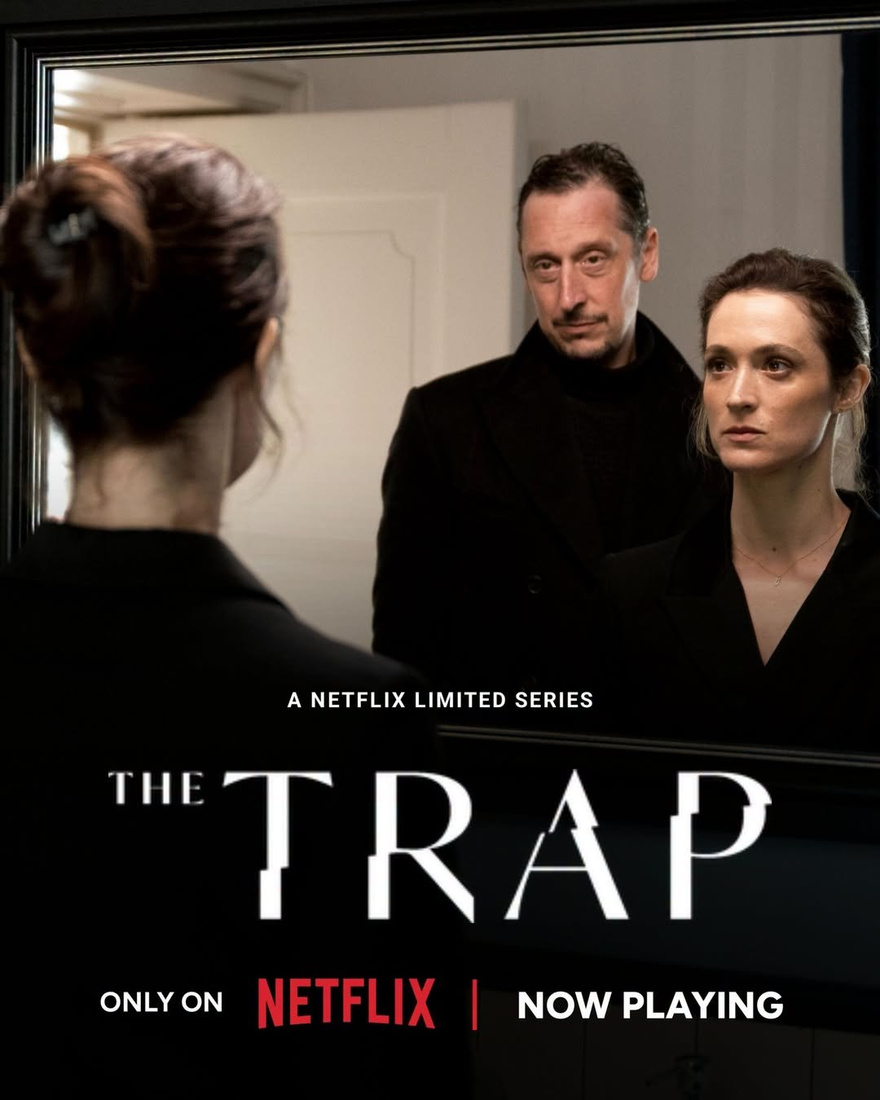
On October 13, the show The Trap premiered on Netflix. Inspired by Melanie Raabe's novel, the title already promises: you will get trapped by its storyline.
The show is about a woman named Lisa, who lives with agoraphobia in her publisher's house. Ten years ago, her sister Anna was murdered, and Lisa hasn't left her house since then, publishing books under the pseudonym Lisa Konrad. Ten years later, still living in her house and haunted by memories of her sister, she recognizes her sister's killer: an investigative journalist, Robert Lenzen, whom she once saw. The memories that have been running through her head suddenly stop and bring clarity: she is sure it was he who ended her sister's life. Lisa has one plan: to catch her sister's murderer and make him confess.
Double Interpretation of the Title
The title “The Trap” is quite interesting and has an absurd depth. At first glance, the trap is the plan in which Lisa wants to invite the journalist and potential killer of her sister to prove his guilt. She develops this plan for weeks, pushed by thoughts of her sister and her unconditional love for her. She trains for weeks and sweats her way up to the point where she can protect herself from potential aggression. Somehow, Lisa is lulled into this parallel world, where fear, anger, and perseverance collapse together. But the trap might also be her life. Suffocated between her four walls for ten years, the viewer sees the agony in every glance she takes. The constant regret over coming too late to her sister’s house haunts her, and fear penetrates her skin with every movement.
This double interpretation is interesting because while one gives Lisa the power to act and control over capturing the Lenzens' DNA, the other leaves her trapped, and she enters a passive role, condemned to live in the past every second of her present.
Reality vs. Imagination
Another aspect that really intrigued me was the thin line between reality and imagination, a duality we see in our daily lives as well. We look at the world through our eyes, shaped by conversations, losses, and places. When people come together, hundreds of realities clash and reveal a new reality, a new truth. So, is there even a single truth if we all have different perceptions of it? And who gets to name one of the millions as the absolute reality? These questions keep appearing in one's head while watching the show.
In Lisa's case, she keeps imagining the crime scene. When she enters her sister's apartment and finds her lying on the ground, covered in blood, all of her senses are on high alert. The song “Somebody That I Used To Know” whispers into her ear, and she meets some dark eyes behind the curtain of the room: the killer of her sister. However, moving forward, she starts to doubt her thoughts and feels as though they have trapped her in an imaginary world that isolates her from reality. At one point, she even starts questioning her own guilt when it comes to the death of her sister. Her doubts intensify and reach their climax when the journalist visits her and explains his perspective of the night, leaving her with a surprise she didn’t expect: She might be more involved in Anna’s death than she wishes to be.
Lisa's Character
There is something about Lisa and her vulnerability that is fascinating. Grief is something so hard to capture, so individually experienced. When someone's voice is so engraved in your brain, and their touch is a blanket for your chaos, it is hard to let go. You are hanging on to these strings of their last laughter, the sparkle in their eyes, scared that your weight might be too heavy to hold on forever. Lisa floats in memories of her sister, of them picking up flowers, hugging each other, and partying. Her unconditional love first seems very relatable. I have a sister myself and can really understand what it feels like to grow up with your best friend. Knowing that you shared your first steps together, that you both got excited when the tooth fairy came the next morning, and that you woke up on Sundays to play with your dolls creates a deep connection between you. You witnessed every life stage, every year of each other's lives, and walked through this scary life hand in hand. For Lisa, it is unbearable to continue this path alone. It seems like she can't find the balance and keeps stumbling and falling hard into this dark hole.
But as the episodes progress, the viewer comes to understand the complex relationship between Lisa and her sister. Her sister's thoughts are so repetitive and obsessive that she begins to glorify and romanticize their relationship. Eventually, you get glimpses of Anna's manipulative personality and her jealousy of Lisa's success as a bestselling writer. The image of the sisters' intimate, warm relationship begins to crack.
Questions That Stay With You
I think the beauty of thrillers lies in the questions that connect your synapses when you watch or read them. Who is it? How did they do it? What led to what? I normally like some small uncertainty in storylines. The gaps leave you room to fill them with thoughts, ideas, and blooming imagination. However, this show also portrayed some relationships and interactions that lacked development. For example, the police officer who helped with the investigation of her sister's murder. It seems that on some occasions a romantic relationship was developing between them. But that evolution never got more attention, and you wonder what those little hints that made you believe it were actually for. Also, when Lisa wants to do the interview with the journalist, her first interview in her career, her publisher is completely against it because it can change how Lisa sees him forever. The watcher never really learns his true motive.
The End
The end of the show is ideal. It gives you an understanding of Anna's murder but is still open enough to let you think about whether it was only one person. No empty promises or an ending that could mean everything or nothing at the same time.
Overall, I was very impressed by the show. Yes, it is a thriller, but not a classic one. It included so many different genres. I think it makes you really think about the complex relationships humans have, the power of our minds and what they can reveal about this world, and how we deal with topics like regret and responsibility for our own actions. The show doesn’t only make you question the figures and their actions but also makes you reflect on your own identity and life. Let your thoughts get trapped between these episodes and stream The Trap now!