The Mandalorian and Grogu or: Why I Don't Care Anymore

How do you bring life to a franchise that, ever since the end of its original trilogy, has been steeped in controversies and mixed reviews? How do you bridge the divide of a fan base that hasn’t seen eye to eye for a long time? The answer is, you don’t.
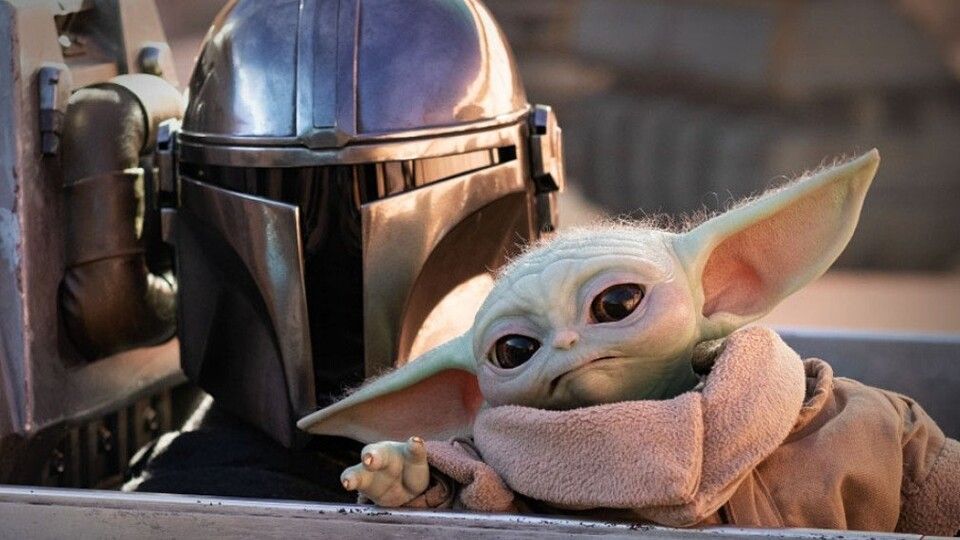
The Mandalorian and Grogu is the first Star Wars movie to hit theaters since Episode IX: The Rise of Skywalker, a movie so infamous for making virtually everyone angry and disappointed that it permanently blemished the reputation of the Disney era of this franchise. This review, however, is not a discussion of the Sequel-trilogy and its flaws. But to understand where we are, we need to know where we came from. Because after the release of Episode 9, the franchise was in desperate need of something new, something fresh, and along came a show called The Mandalorian. Starring the internet daddy himself, Pedro Pascal, it revolved around the titular Mandalorian Din Djarin, who makes his living as a bounty hunter, who soon finds himself accepting a job for the Empire, which, five years after its defeat by the New Republic, is scattered and desperate. He is to track down a child and bring it back. That child is Grogu, or as it is widely known, Baby Yoda. Finding it not in himself to leave this child to be experimented on by imperial scientists, Din rescues it and finds himself not only on the run, but also on a quest to bring the child to somebody who can teach the child, a Jedi.
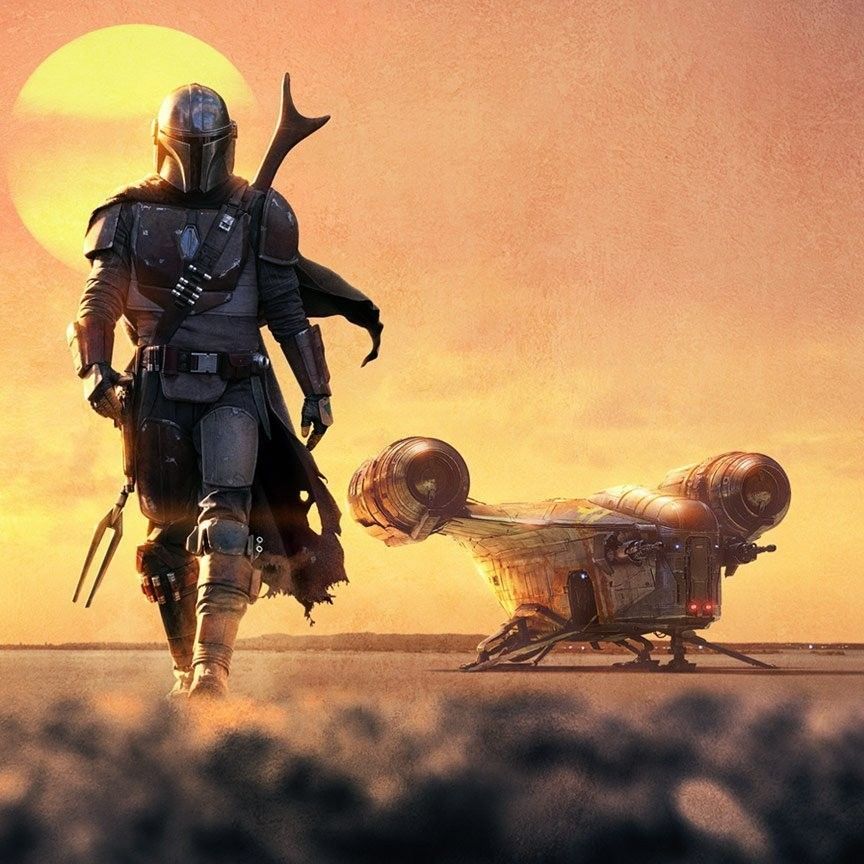
The Mandalorian was at one point the flagship show of the newly established streaming service Disney+ and received universal acclaim. Like the movie, it was produced and written mainly by Jon Favreau and Dave Filoni. Favreau is a heavy hitter for Disney and is responsible for movies like the first Iron Man and the box office-breaking Lion King remake. Dave Filoni, on the other hand, is a Star Wars legend, having served as the showrunner for the animated series Star Wars: The Clone Wars and Star Wars Rebels. He is also, as of 2026, one of the new CEOs of Lucasfilm, the production company behind the franchise. The point of this show was to tell a story apart from the Skywalker Saga. Set in the Outer Rim, it opened up the possibilities to explore places in the galaxy not yet seen in live action. It was also made to draw in fans who weren’t familiar with the other shows, books, and comics. But that soon shifted. In what is called the Mandoverse, there is now a concerted effort to interconnect the different shows to slowly build up to a grand finale, just in the vein of Disney's other major property: the MCU.
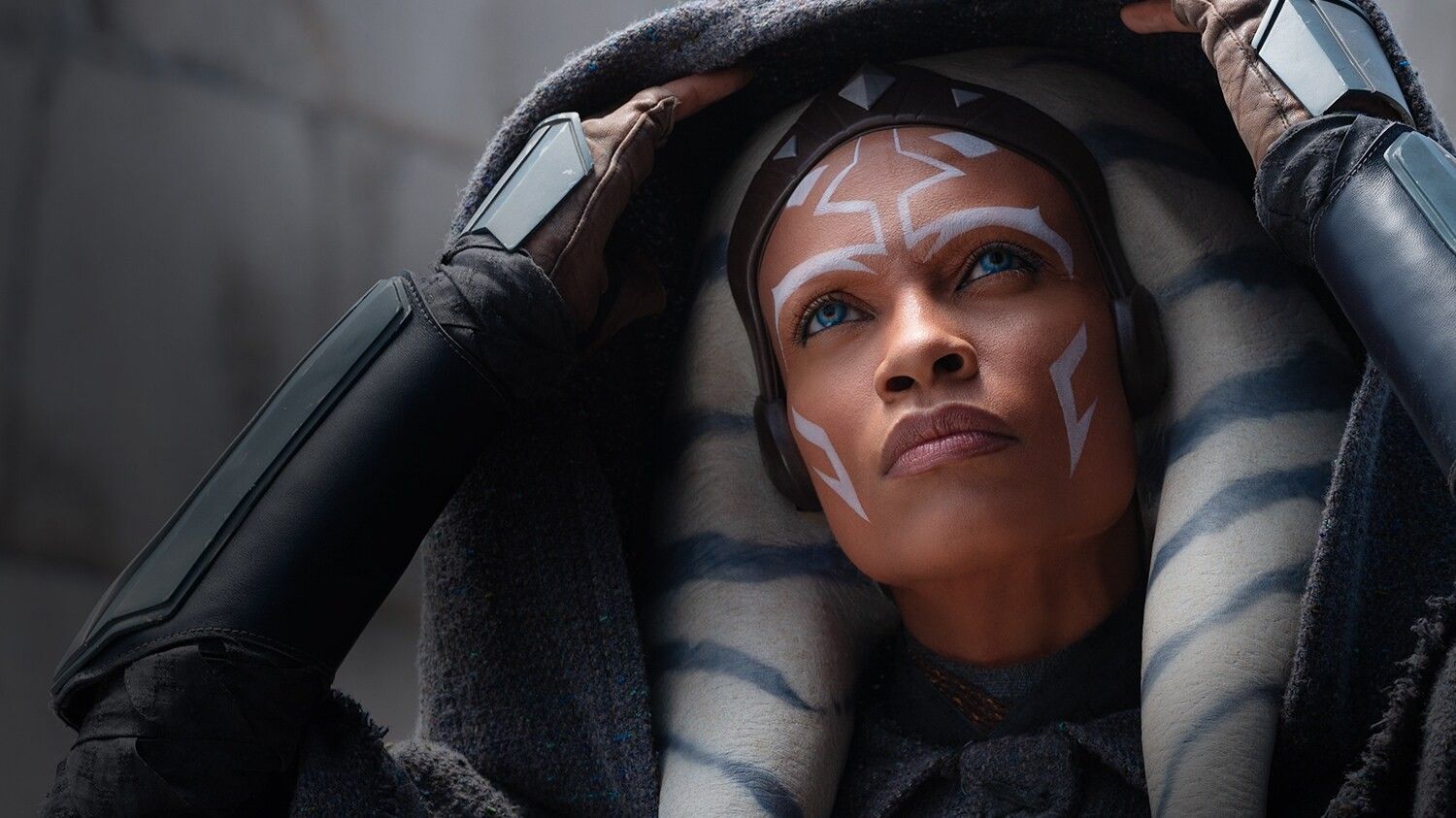
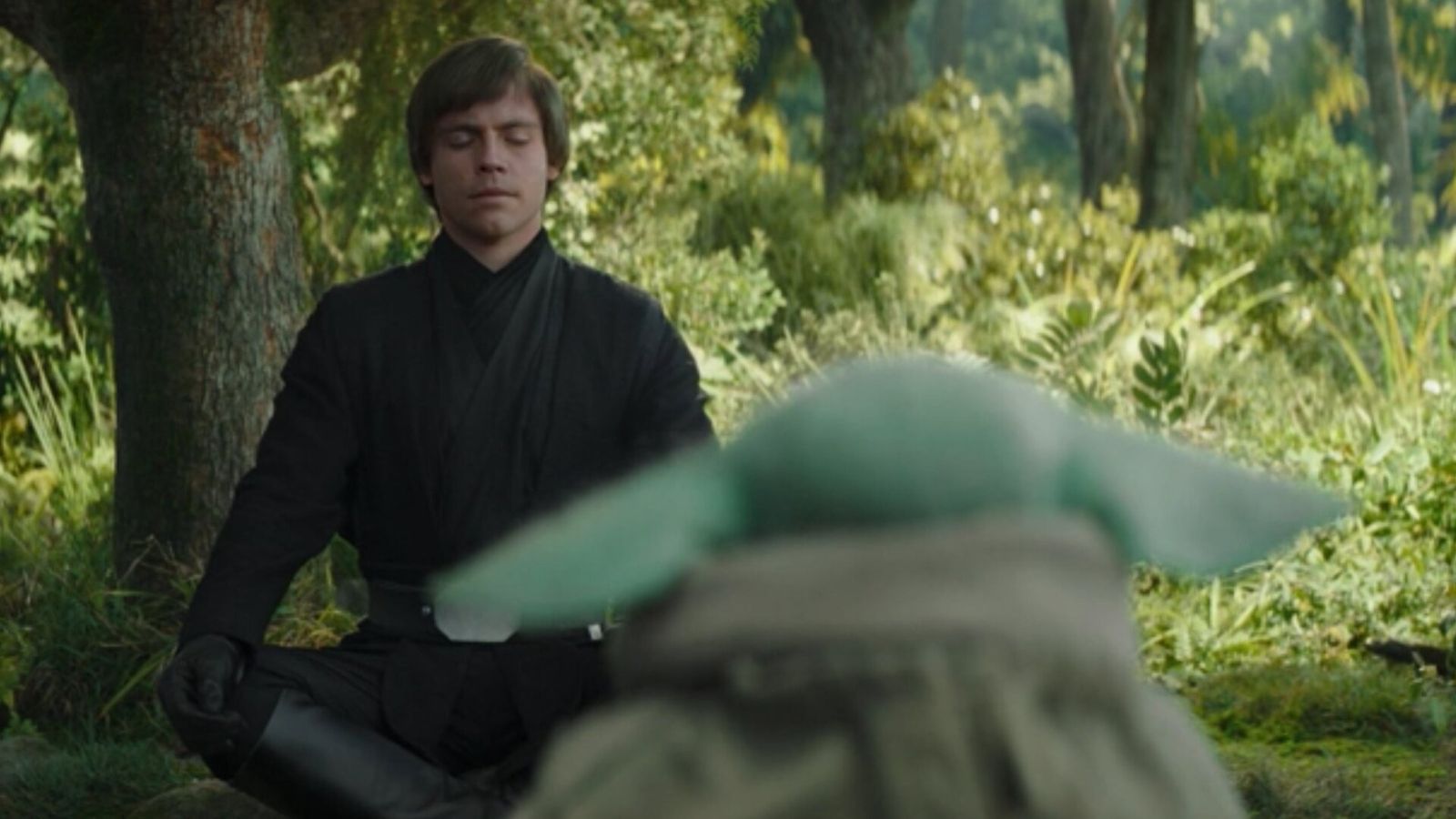
When season two of this show came out, we were slowly introduced to characters who were already established and soon became the main focal points of the show. First came Boba Fett from the dead, then came Bo-Katan and Ahsoka Tano, who were introduced in The Clone Wars and had their stories continue in Rebels. In the season finale, we then met a deep-fake Luke Skywalker who takes on Grogu as the first apprentice for his newly established Jedi order. Or does he? Because, in what one can only describe as one of the most baffling writing decisions of all time, this plot point gets resolved in the unrelated show The Book of Boba Fett, in whose first season the show gets hijacked by Mando and Grogu for two and a half out of six episodes just so Grogu can be back with him in the third season. All these things foreshadow the problems of this movie. The resistance to letting things change, and the return of characters who have appeared throughout the franchise but have nothing to do with this story, all to gain some points for fan service.
There, of course, is a reason for this: money. Bringing Grogu back for season 3 means having probably the most marketable Star Wars character ever back for the entire season. This, however, comes at the expense of actual storytelling and the disregarding of an actual arc for the Mandalorian, who, for the first time, has been alone, banished from his people for violating the creed and having given up the child. That all this, however, never happened, and instead we got a lackluster season three that rehashes plot points of season 2 (and also Star Wars Rebels) by splitting focus now on Bo Katan as the new ruler of Mandalore by getting the Darksaber, a legendary laser sword that was won by Din in the season 2 finale and only transfers to her by some technicality in order for the show's plot to move along. It gets hard not to rant about this, but at this point, it will stop because we truly need to talk about the movie. But what needs to be said is that there is a clear precedent for this character's story, as well as for the larger TV-show universe, to make awful decisions.
The Mandalorian and Grogu is a 2026 action-adventure film set in the Star Wars universe and serves as a sequel to the first three seasons of The Mandalorian. It is also the first movie to come out in theaters since 2019. What was striking in the time running up to the release was a peculiar lack of interest. As of now, the movie is actually projected to be the lowest-grossing release of the franchise. There wasn’t much fanfare for the movie, which can be attributed to a number of things, like the decline of the TV shows, the varied receptions of other installments in the franchise, and one more thing: Who is this movie for? Who will watch it? One of the things I asked myself constantly was, would my father enjoy this? My father, who is a Star Wars fan in the sense of having only exclusively seen the movies and nothing more. He doesn’t know what happened in the Mandoverse; he doesn’t even have a Disney+ subscription. Would the movie be inclusive enough for all the people who engage in Star Wars on a more surface-level basis?
The third and final season ended with Din and Grogu entering the services of the New Republic. As bounty hunters, they work to find renegade imperial officers and warlords who still terrorize the remote territories of the galaxy. One of these jobs leads both of them to seek out Rotta the Hutt, son of the deceased crime lord Jabba the Hutt, to gain information and favor with the Hutt clan, a powerful crime syndicate that has, over centuries, carved out its own sphere of influence in the universe.
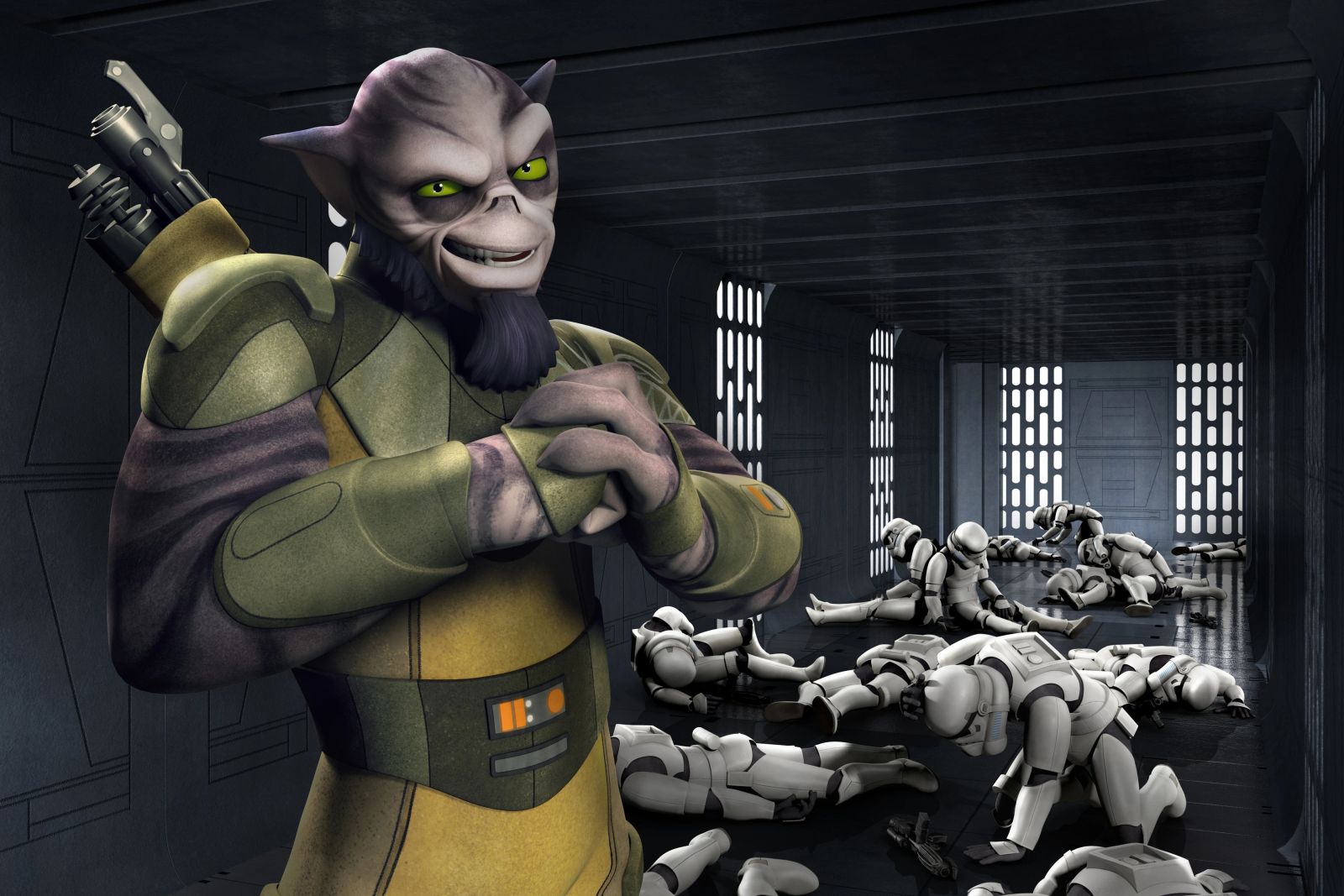
This is as precise as one can put it. My immediate problems with the movie are put on full display in the first ten minutes, when we get introduced to Zeb, the main partner for the duo for most of the runtime. Zeb is a Lasat and a veteran of the rebellion, having aided in some of the most crucial events and battles of the Civil War. The film never tells you this; instead, it expects you to have seen the animated show Rebels, in which he is one of the main protagonists. On the other hand, you have Embo, a bounty-hunter legend, pitted against the Mandalorian and serving as the secondary antagonist of the movie. Embo himself fought many times against Jedi such as Anakin Skywalker and Obi-Wan Kenobi. The movie doesn’t tell you this either; it expects you to have seen The Clone Wars television show to have any emotional reaction. Embo is even more egregious in that he serves as a foil to Mandalorian, a bounty hunter with no moral qualms whatsoever, yet throughout the entire runtime, he has no spoken dialogue.
The only implementation of previously used characters in this movie that works well is Rotta the Hutt, played by Jeremy Allen White. Rotta first appeared in the 2008 Clone Wars movie, where he was kidnapped and then rescued by Anakin Skywalker and his apprentice. You don’t have to have seen this movie to get his character; he gets portrayed fairly well, and you understand what his motivation is. It is, however, also just a retelling of the Clone Wars movie. Once again, we need to appease the Hutts by rescuing the son of Jabba the Hutt. While the movie does bring its own spin on this, it’s still just the same thing again.
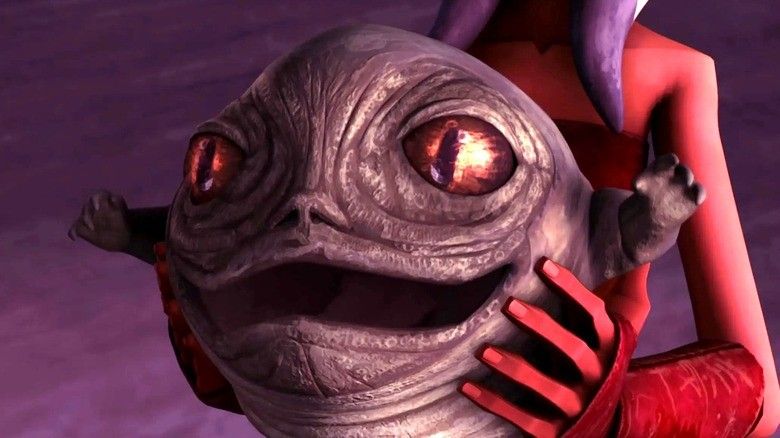
The similarities don’t end there, however. The Clone Wars movie is pretty infamous for being not a real movie with its own structure, but rather the first few episodes of the show hastily stitched together and then put in theaters. Most of that show consisted of its own closed-off arcs of around 3-4 episodes, each telling one of the many stories of the Clone Wars. The Mandalorian falls into the same trap: the longer you watch it, the more apparent it becomes that it's just several episodes of the original show taped together. You notice when one episode ends and the next begins. This leads to pacing that’s just very inconsistent, because they do not contribute to a single overarching plot but rather several smaller ones. This works for the series, but not for a movie, because there are several moments in The Mandalorian and Grogu where the movie stops dead in its tracks for what would have been the beginning of a new episode.
As for its main protagonist, one of the more baffling choices this movie makes is to give them no real character development. Where they start off in the beginning is not fundamentally different from where they end up. This you can contribute to the "Adventure of the Week“ feeling this movie has, and the structural storytelling it borrows from the show. Anything the Mandalorian does is something he already did before, and Grogu, by merit of being a non-verbal toddler, doesn’t do much besides getting down to his usual shenanigans. This was a problem in the show already, because his biggest personal choice was leaving Luke Skywalker's academy in favor of returning to Din Djarin. This personal choice, however, was made in The Book of Boba Fett, and what was left in season three was a prop and an advertisement for merchandise, with no real additions to the overarching story. This film doesn’t do much more with him either. It tries at points, but it doesn't succeed. There is a sequence in the latter half where it wants him to mirror Master Yoda with the subtlety of a sledgehammer.
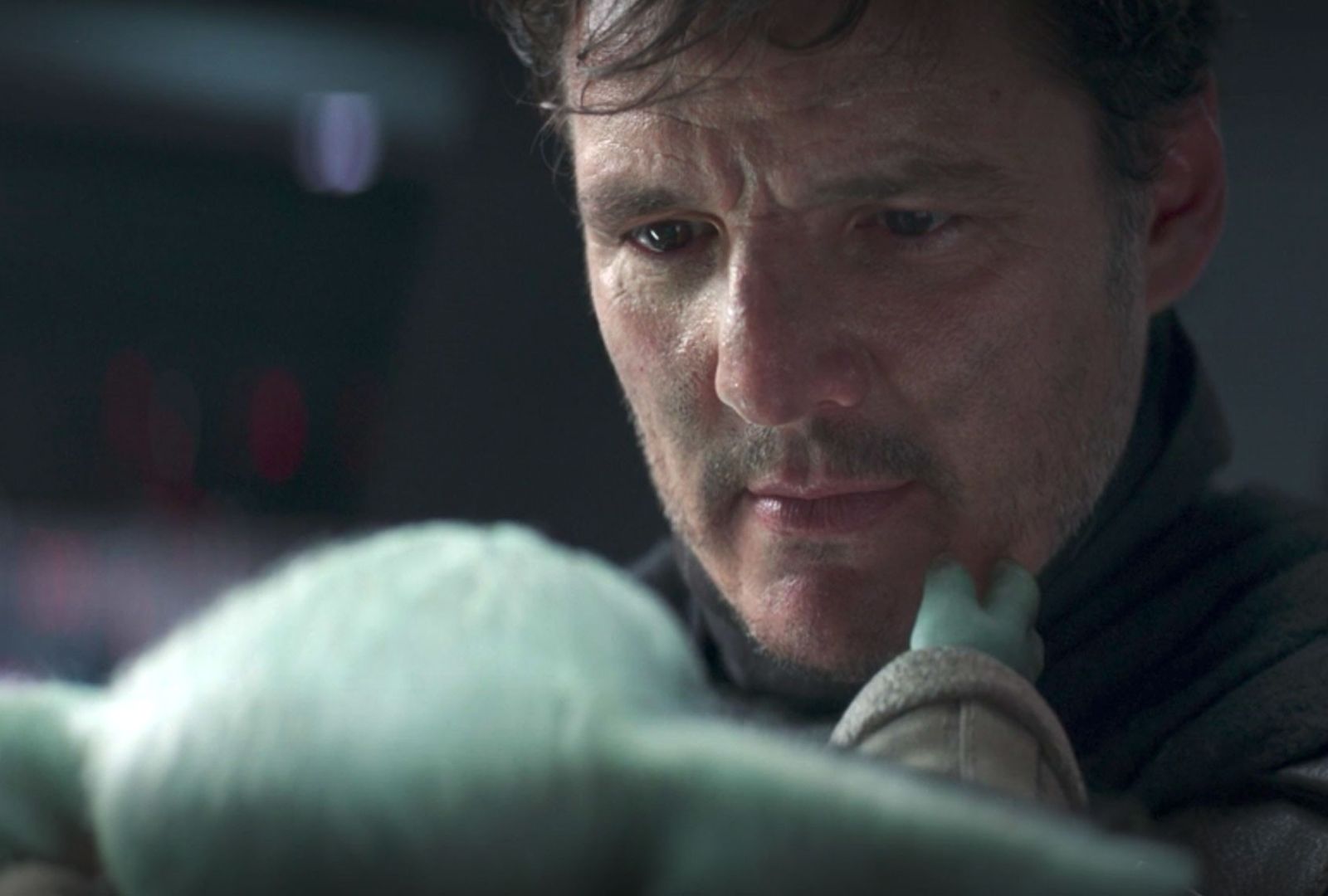
With Din Djarin, it's a whole other matter. When the second series of The Mandalorian ended, it left him in a narrative gold mine. For the first time in his life, he was on his own. Grogu was gone, and he had broken the creed of the cult he grew up in multiple times, thus leading to his banishment. He was also, by virtue of having the Darksaber, the legitimate heir to the throne of Mandalore. But once again, this storytelling potential was squandered because, without going into too much detail, the show did its absolute best to return to the status quo. And the movie, as a result, does not do anything to move it even a few inches. One of the most beautiful moments in Din's story is his departure with Grogu; in a moment of defiance to his religion, he puts down his helmet and, for the first time, looks Grogu in the eyes. Earlier in the season, he removes his helmet in a room full of Imperials in order to find Grogu. What could have set him on a path of self-discovery ends with him atoning and returning to his tribe, never once questioning the very cult that strips him of his face and identity. Din does not remove his helmet for the entirety of this movie; Grogu doesn't see his face even once. He doesn't get to be his own character; he's still only part of a collective, and any emotional connections he might have are erased. At this point, you’ll notice how one keeps coming back to the shows instead of just talking about the movie, but you simply can’t, which is frustrating. I can’t look at this movie as its own standalone project, because it isn’t, and it never was. It is a frustrating mess of creative decisions made years ago, and it subsequently doubles down on every single one of them.
If we set aside the storytelling and look at the technical aspects of this film, it is truly a mixed bag. It’s not a pretty film apart from a few shots. Unlike previous Disney installments like The Last Jedi or Rogue One, this movie lacks a visual identity. Its composition is poorly done; the CGI and choreography often feel stiff and forced, and, way too often, it is just a special-effects overdose. Back in Return of the Jedi, Jabba the Hutt was a real-life, fully scaled puppet, controlled by multiple people to make him feel as real as possible. Every single one of the Hutts in this film is a CGI monster. Their movements do not feel real, their expressions are uncanny, and their fight scenes are clunky. Not on account of them being giant slugs, but rather because the transition of this concept into live-action just does not feel convincing.
The one aspect I’ll give this movie credit for is its score. Just like the show, it is composed by the three-time Oscar winner Ludwig Göransson (Black Panther, Oppenheimer, Sinners), and you can feel it. With talent like his, there wasn’t any way the movie would miss the mark.
The Mandalorian and Grogu, at the end of the day, is a frustrating watch because it feels creatively bankrupt. It’s an undeserved entry for theaters and the culmination of years of mismanagement of both these characters and the franchise as a whole. I used to love Star Wars, and while I still do, I can’t bring myself to care for these new installments.
WRITTEN BY
Lars
Being brought up under deaf parents, as a partially hearing child, I have always struggeled with my search of identity. Inspired by far-distant worlds like middle earth and the tunes of Lord Huron, my goal is not only to tell great stories, but also to understand other people and their tales.
Read next

- 01 Avengers: Doomsday is Probably Going to be Bad, Right? THE WATCHLIST / Lars
- 02 Montell Fish Is Bringing "The Nest Tour" to Europe This November CONCERT FORECAST / Ilayda
- 03 In Conversation with Alex Spencer! INTERVIEW / Nora
- 04 The Grandeur of Our Emotions: Paris Paloma on "The Fatal Flaw" INTERVIEW / Andy