A Place All For Himself: Iskander Moon About The Fictional Salt Moon City

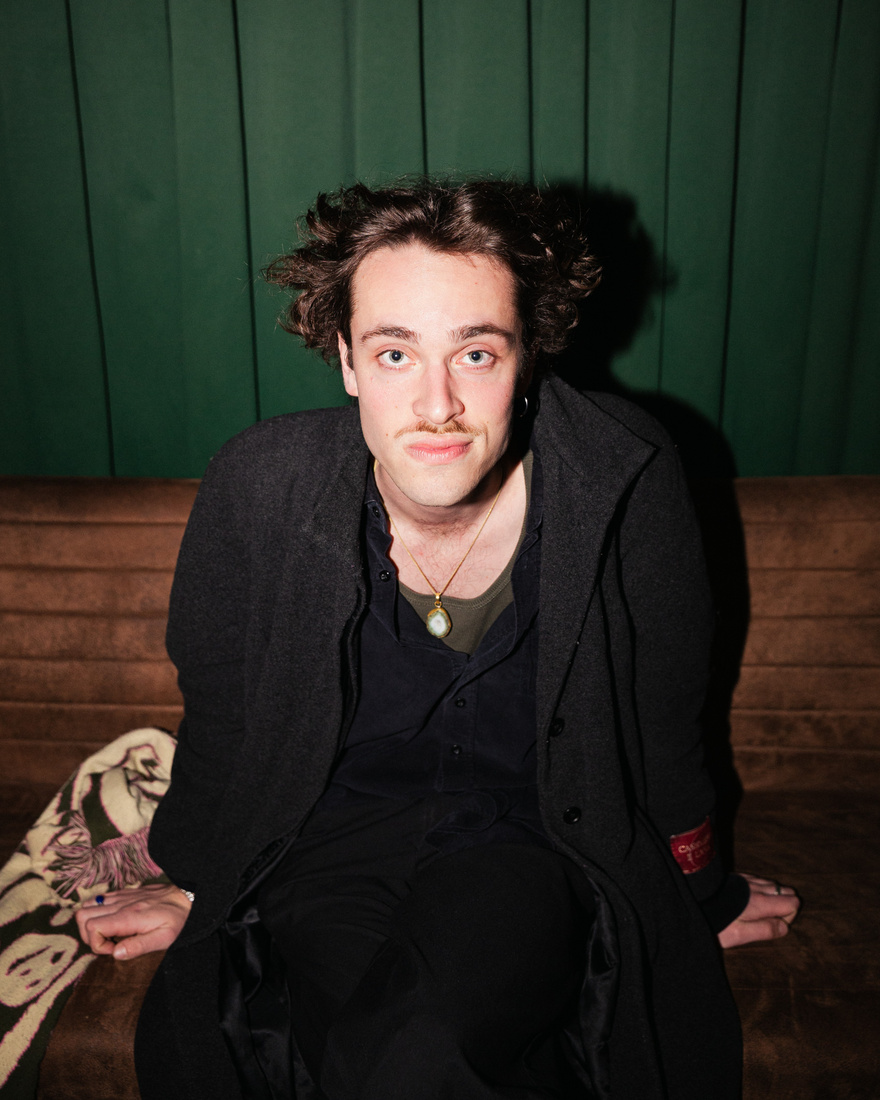
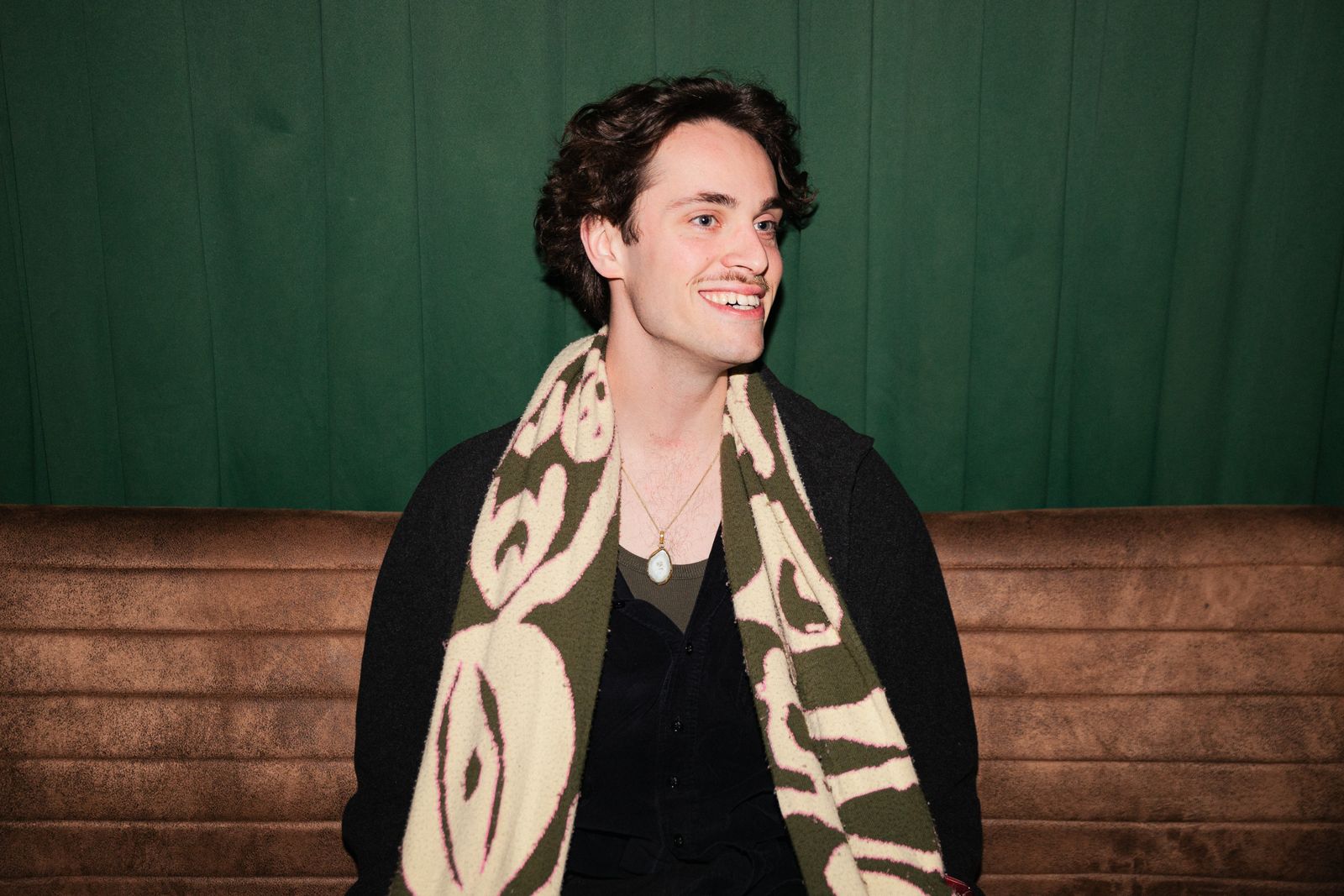
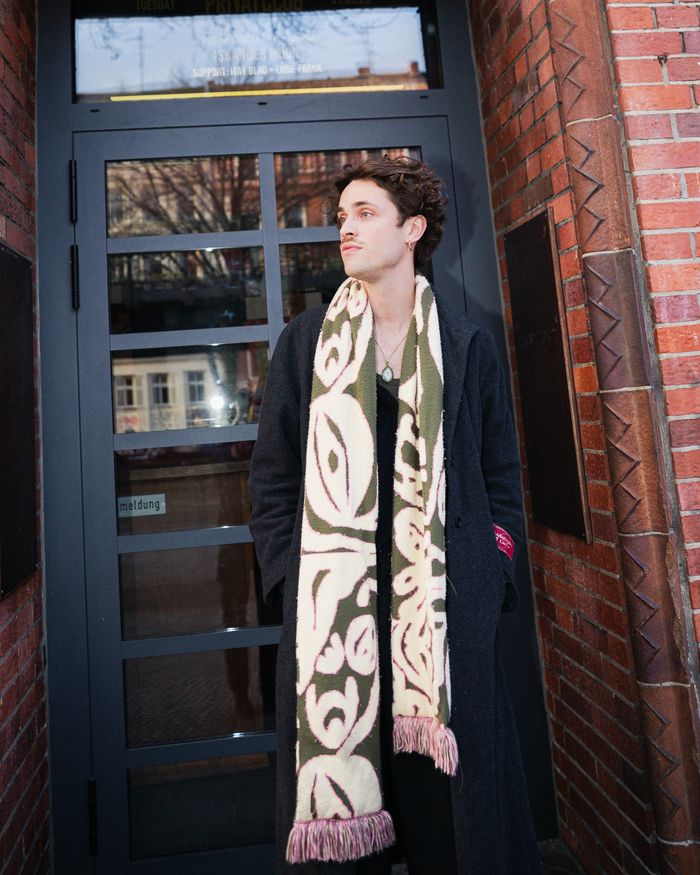
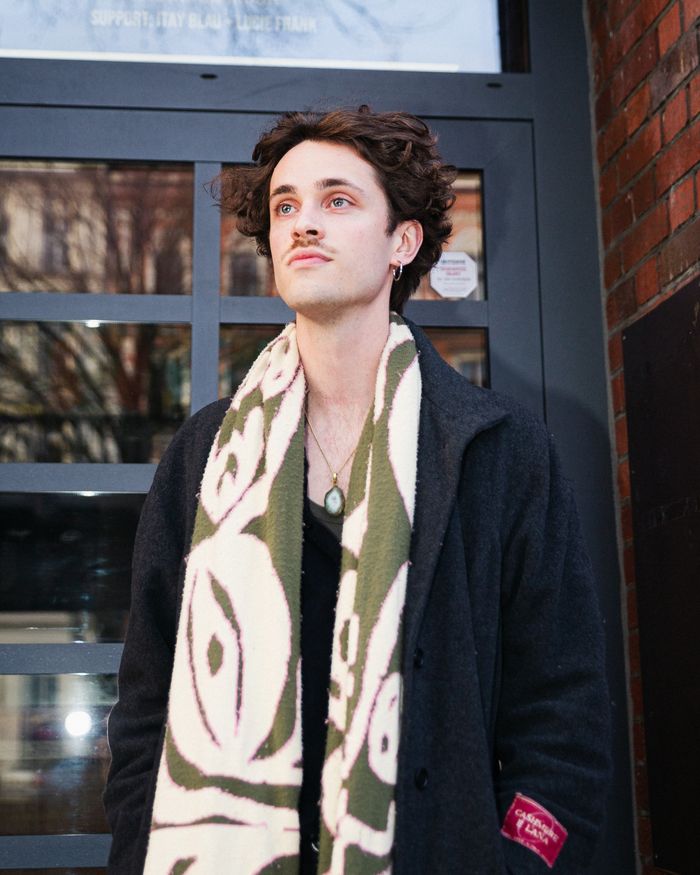
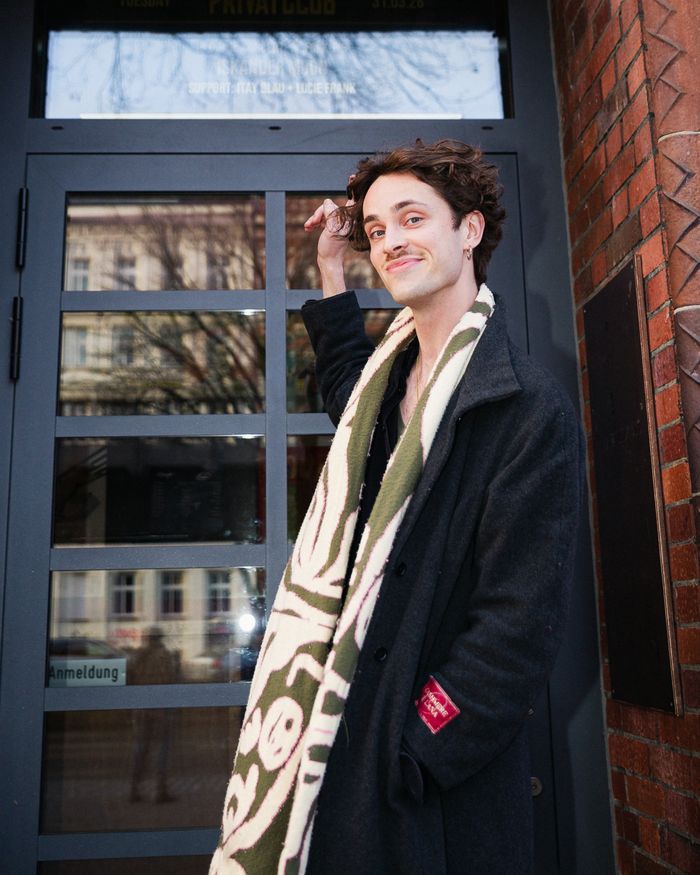
After releasing his first album "Salt Moon City", Belgian singer-songwriter Iskander Moon is now on tour, taking his music on the road through Europe. We sat down with him and talked about all that is happening currently in his life, how the release went, which places inspired him and how he turns his ideas into music.
You released your first full album on the 20th of February, so I just wanted to congratulate you on that. How long have you been working on it now?
Iskander Moon: The first song I wrote for that album was almost five years ago, so that album is more like an encapsulation of a lifetime rather than the last moments, you know, or the last months. But I started the recording process in February of last year, so it took me about 12 months until it was there. But the songwriting itself, I mean, I spent a couple of years. I’m a songwriter who writes quite a lot of songs quite regularly in different places. But as a first record, it's like I said, an encapsulation of a whole lifetime rather than one moment, so I think it really started three years ago when I went to Sweden. Then I found the idea of Salt Moon City as, like, a physical place that doesn't exist for my favorite songs that I have written and made the album about that.

So the name is Salt Moon City, something reminiscent of Salt Lake City. Is there any connection to that place, or is the origin a different one?
Iskander Moon: I grew up in a little town in Flanders near the Dutch border called Zelzate, which is translated as Salt City, and it used to be a storage place where boats would come to pick up salt and drop off huge piles of it. And I grew up near the canal where these ships went. And yeah, my last name is Moons, so I thought it would be fun to make that connection between the city I grew up in and put Moon in there. Then I found myself in this nonexistent place, where it was so much fun to envision it as a place where all these songs live and these little tales have meaning, you know.
You yourself are from Belgium, and you wrote and spoke in the past about traveling through Europe, like living in Sweden. As far as I can tell, you also lived in Berlin. Is that correct?
Iskander Moon: That’s right.
Yet, your new album is very folky, with an American influence that extends into the titles and subject matter. Have you been to the US often, or where does this aesthetic come from?
Iskander Moon: The first time I went to New York was in 2022, which led me to write “New York City 22". I spent some time there on the East Coast, then I traveled a bit towards Canada. My first experiences in the US were in New York, and then Minnesota, too, where “Minnesota Wildflower” was written, focusing on the night escapades and how the city changes. There are a ton of cities and places I went to that influenced me in some way, and then they got a little song. I see these cities and songs as postcards of a memory of what I did there, and whom I met there, and that’s kind of the anchor.
Given that you travel a lot, what would be your favorite road trip idea, if you’d ever go on one?
Iskander Moon: I love driving around in Italy. It’s been a couple of years since I spent time there. But if I were to choose a place for a road trip right this second, I think it would be Ontario. I think it would be really nice to drive around the big lakes, see bears, and be up north. That kind of interests me because I’ve been spending time in Sweden, and I think it could have similar escape vibes. There is something about taking the car and driving, you know?
With all the places you’ve been to, is there anything Belgian within your music or your sound? Something that has been given to you from your homeland besides the Salt Moon City origin?
Iskander Moon: For sure, I mean, I’m 25, so I’m pretty young. I spent my whole life here and just kind of went away to get a perspective on where I come from. The album for me feels really like a gratification, maybe, to be grateful for where I come from. And the song “Borderline” on the album is about my hometown, growing up near a border, feeling like a 20-year-old, and exploring all the possibilities of where you can go. I feel grateful for where I come from. However, I’m in Brussels now, the capital, and this place also feels like home. I’m a curious young soul who’s curious about what's going on and what the world looks like. But at my core, I love to be here in Brussels, to play here, and I love the musicians here. It's a really fun place. Belgium, in general, is a small country and a small dot on the map, but it’s fascinating.
Is there a place in Belgium you’d want people to travel to, like a favorite city?
Iskander Moon: Ghent was the city where I studied; I did my conservatory studies there. I studied music production at the conservatory. Ghent is a wonderful place. People always go to Bruges because it's medieval and has so many castles, but Ghent also has one castle, beautiful rivers, and amazing clubs. Charlotte de Witte, the world-famous techno DJ, is from there. Soulwax, world famous, just did a rave in Abbey Road. They are pioneers in electronic and rock music, and so many musicians are still in that little town. They are working there and drinking coffee, so that's a spot people should check out.
In your Spotify bio, you mention Bon Iver, Tom Odell, Jamie Cullum, and James Bay by name as to what to expect from your music. Are these also the artists that motivated you to make music, or does the desire come from a different place?
Iskander Moon: The first singer-songwriter that I really got attached to was Jack Johnson, the wine guy, my dad showed him to me. And then I studied classical music before I studied music production, so I came from studying piano, I listened to a lot of impressionist music like Debussy and baroque music like Bach. That mix kind of made me curious about writing songs, because classical composers were also improvising a lot, and I was really interested in improvising. I found a lot of freedom in songwriting because it's just about your story; it's not about what's on the page or any rules, so I tried to combine that at first. But Bon Iver has been a huge inspiration for sure, Jack Johnson, I would say, started the fire for writing songs in general. His songs are perfect for campfires, and I always imagined it to be nice to have this freedom as an artist to go anywhere with your guitar and play this song you wrote that tells a little story you’ve been thinking about. That's the dream.
Adding to that, are you a person who writes all the time or only when you are inspired? What is your songwriting process?
Iskander Moon: Pretty much all the time. I would say I write 4-5 times a week. It’s never absent, really. I’m always traveling around with a booklet, and it’s always next to me. I always keep pages of songs and drawings with me. And when I’m behind the piano, I pick the texts up, and I sing. That's how my songs come to life. I’m always writing down ideas because I think it’s important to keep noticing things in life and not forget them. It’s a training with the craftsmanship behind it, and then the pure inspiration and creativity kick in, and it becomes a song. It's something I don't look for; I just let it come to me. You have to be open to it, not be like, “Oh, what's wrong with me?” That's not how it goes. It's a combination of craftsmanship, noticing things in life, and waiting for the music to arrive. Play with it.
Speaking again of your debut album, is there a song you’re particularly proud of or a song that you’d love for people to hear coming out of this interview?
Iskander Moon: Of course, all these songs are very dear to me, and it's hard to choose one. There is a song called “The City” that I wrote in Berlin; it was very simple. One guitar and one vocal; I wrote the demo in a day and recorded it. Then in the studio, there was somebody who said, “Remember that song?” I didn’t want to put it on the record because I thought it was just boring, but then we played drums on it. I brought out the bass guitar; I wrote string ensemble. We recorded violins on it because I was curious about what would happen. It became a very alive song, and that's a surprise on the album. A fun fact is that the vocals and the guitar you hear, the main vocals even, are just from the day I wrote it. Its. practically just the demo vocal. I never sang it twice because I thought it was okay. I didn’t pay too much attention to it. I find that very interesting when I hear music, and I feel like they were just in the room, trying things out and playing, not trying to be perfect. I try not to be too perfect and just let things happen, experimenting. Writing “The City” was a pleasant surprise, for sure.
Are you already working on more music or other projects? Or is that something you’re going to think about in the future?
Iskander Moon: There is definitely a second album being written right now; I’m working on it. I was recording two documentaries, one in Italy about a road I was making music for. Now, of course, I’m so happy that I get to perform. I’m coming to Berlin; I play in Paris next week and after that in Amsterdam. I get to do some Belgium shows as well. That's what I look forward to: just playing this record live, and then, in the summer, playing festivals. But for the new album, I won’t wait five years; I’ve already got plenty of ideas.
Are there any cities you would wish your path to lead to?
Iskander Moon: I don’t know. I’m thinking Hyde Park, because so many legendary artists like Simon & Garfunkel and Neil Young played there, so that would be really cool. I love big parks; we don’t really have that in Belgium, big spaces where you do open-air concerts; that would be fun. Of course, there are countless venues I’d like to play in, like the Sydney Opera House or classical institutions I love. Just give me a piano, and I’m very happy, so that would be my dream as well.
Do you have any topics or themes you write or sing about that would describe you best?
Iskander Moon: My inspiration mostly comes from a sense of belonging and longing. I was thinking about this the other day, which I wrote down: the presence of absence. Sometimes I write about things that are no longer there, or that came to me. There is a lot of romantic and melancholic movement in the album. There is also a strong sense of belonging and a feeling of trying to find my place in this world. So a lot of it is the presence of absence or sometimes the void. There are a lot of empty spaces, and I’m happy about that, because it's nice to fill them and not be overstimulated about everything, and once again, Salt Moon City for me is a place where I can slow down and where time doesn’t really exist. My putting those songs in that nonexistent town, in a way, makes them slow down a bit. That's what I want with this album. It’s not the most intimate folky album; there are a lot of strong elements, including horns and celebration. In a way, I really wanted it to be a slow burn.
Can you give us an insight into what you plan for in your live shows? Are there any onstage interactions you’re going to have with them that fans can look forward to?
Iskander Moon: We’ve been rehearsing with the band for the past few days, and we even did a little tryout with the full band. I envisioned the stage to have white curtains behind us, and it’s all going to look like a snowy landscape, where I’ve kind of stumbled upon the album title in Sweden. I've been sitting at this lake for a couple of years, and there I found the name of the album. I want the stage to look like that, a bit more snowy, icy, wintery, and white. For the music, it’s going to be drums and bass, saxophones and trumpets, and me behind the piano. It’s going to be groovier for sure and to the point, whereas in the past I’ve been dreamier and more melancholic on stage.
If you had an unlimited budget, what would your ideal music video look like?
Iskander Moon: That's a good question; I never thought about it. I don’t know; I might try to visualize Salt Moon City as a huge, moonscape-like landscape with rocks and a frozen, icy fog, and create a town that doesn’t exist. Really make it physical, what I’m musically trying to explain to you with this album. I think that would be cool. But generally, I like to work on a small budget. I’m a small artist, and I work with the least. That also keeps challenging me; it's not always easy to have a small budget as a small artist. It puts me in a place where I have to be creative and think about solutions to problems. That's usually where good things happen, honestly.
Is there one artist, big or small, that if you had the chance of collaborating ever, you’d love to?
Iskander Moon: It would be Justin Vernon from Bon Iver. I heard he might be quitting Bon Iver, the project. He said that in some interviews. He’s actually a really amazing producer, and he produced some albums that aren't very well known that I really like. I think it would be nice to have a pizza with him and listen to some music.
You released the album, you got the feedback, and got people talking about it. Are there also certain messages you feel like people overlook while listening to your music?
Iskander Moon: No, I think with my music, when you listen to the lyrics and everything, you couldn’t really understand easily what I’m trying to say. It’s not super cryptic, but I also don’t intend to be. But if there are things that I think are overlooked, which I have, I would really feel like I am not the person to explain, because I like it when people have their own little understanding of my music. For everyone, it means something different. Everything is up for interpretation, and that's what I like about music: the audience can decide what it means to them and what it’s about.
At The UNSEEN, we have a playlist where artists share their three favorite songs for people to listen to. Which three songs would you like us to add to that playlist?
Iskander Moon: Hey, that's funny. I'll open up my list of songs I wish I'd written. The last song I put in there is "A Million Dreams" by Itay Blau. Itay Blau is an artist based in Berlin. He's a dear friend of mine, and he's one of the greatest songwriters alive. He wrote 11 albums in his 25 years. He's really amazing. But his song is called "A Million Dreams." And it's just piano and Itay Blau. And then there's "Emily's Song" by Daniel Caesar, which is another song I would put in there. It's on his last album, "Son of Spurgy". And I love that. Then let me see a third song I would choose. Now it's hard, you know. Maybe what I've been listening to. "Without You" by Tobias Jesso Jr. He is a songwriter. He's in LA. He wrote for a couple of artists, like Harry Styles and Adele, you know. But he has a solo album called "Goon", G-O-O-N. And there's a song called "Without You" on there. The whole album is really cool, actually. Okay. Yeah, or like, "Can't Stop Thinking About You" is actually even better. That's the opening track of that album.
Lars: Thank you so much for taking the time to talk to us today!
Iskander Moon: Thank you!
LISTEN TO OUR "ARTISTS FAVORITES" PLAYLIST HERE:
Iskander Moon Interview
INTERVIEW BY

Lars
Being brought up under deaf parents, as a partially hearing child, I have always struggeled with my search of identity. Inspired by far-distant worlds like middle earth and the tunes of Lord Huron, my goal is not only to tell great stories, but also to understand other people and their tales.
PHOTOS BY
Nora
Throughout 2022 and the beginning of 2023 I started to photograph with my phone at shows I went to, in April of 2023 I got to photograph with my camera at a show for the first time and have been doing it since. I love that it´s possible to combine (live) music and photography!
Excited to see what the future will bring!
Read next

- 01 Avengers: Doomsday is Probably Going to be Bad, Right? THE WATCHLIST / Lars
- 02 Montell Fish Is Bringing "The Nest Tour" to Europe This November CONCERT FORECAST / Ilayda
- 03 In Conversation with Alex Spencer! INTERVIEW / Nora
- 04 The Grandeur of Our Emotions: Paris Paloma on "The Fatal Flaw" INTERVIEW / Andy