The Physical Burden of the Past: Fatherhood in Guillermo del Toro's Frankenstein

It is no news that Hollywood has mastered the art of recycling old stories for modern times. Inevitably, it has been only a matter of time until Goth would make its big comeback to the big screen. For the past two years, many high-ranking directors have announced their version of the biggest classics of Gothic literature. This year, Robert Eggers published his version of Dracula; Emerald Fennell will bring her version of Wuthering Heights to the movies; and this November, Guillermo del Toro brought his version of Frankenstein to life.
Hollywood has proven time and time again its willingness to buy into analogies from the past to make a point about today. Especially with Frankenstein, it was easy to assume that director del Toro would follow the rather traditional path. Frankenstein is the chosen story to present the dangers of when men try to play God, as it is a long-revealed secret that the true monster of the story is not the creature but its creator, the scientist, the human. The book, written by Mary Shelley in 1818, focuses on the transcendental aspect of the creature and the creator, and on the godly elements that accompany it. Inevitably, the story often becomes a warning about the limits of human inventions and the fear of human creation.
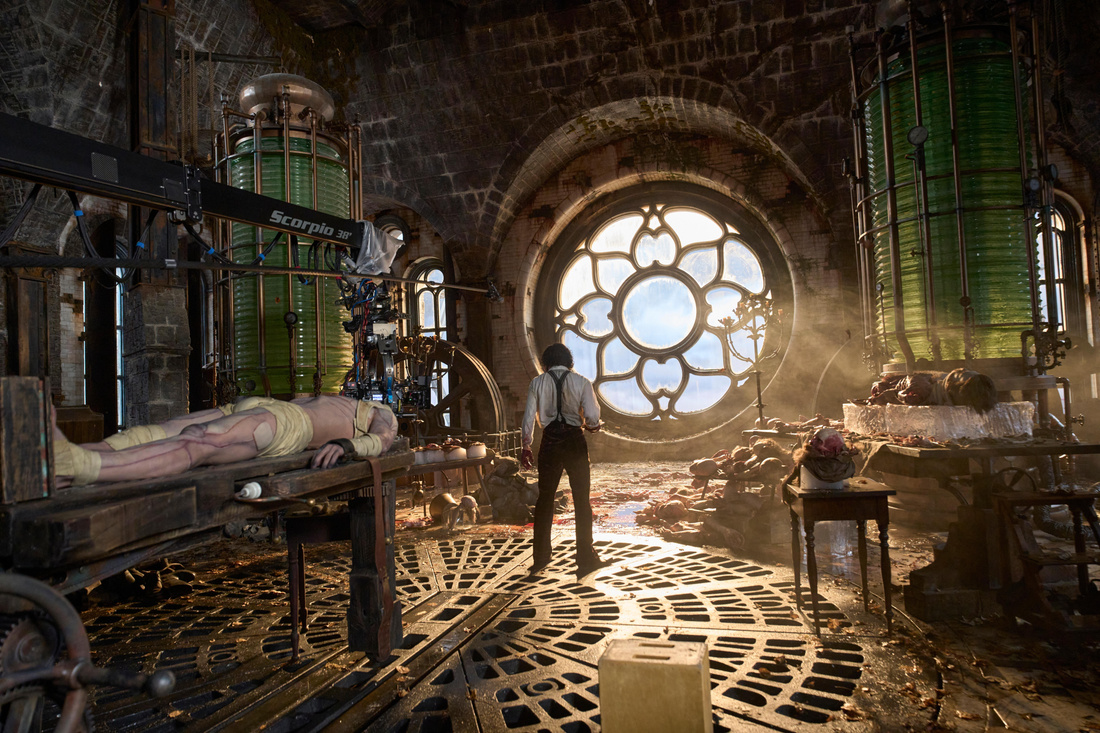
However, this Frankenstein, so big in its pictures, is so soft and quiet in its message, in its universal and timeless motif. The movie dares to break with the urge to comment on modern developments and chooses to convey inward to one of the core human experiences: how our parents shape who we are, how being a child means living with the shadow of past decisions that never have been made without consent, but become your burden anyway. Frankenstein asks the question of whether we can be free of what we have inherited. Therefore, del Toro presents a story about fatherhood, responsibility, and the suffering that transgenerational trauma can cause. Even though the story focuses more on the novel’s psychological aspects and less on the transcendental, it remains the structural basis of the narration. Eventually, the movie is structured around the number three. The three characters that dominate the narration and path of every character, Frankenstein senior, Victor Frankenstein, and the creature, build the centerpiece of the story. Three sets that shape the story: the tower in which the creature is made, a farm on which it learns to become, and the Arctic, where Frankenstein and the creature must confront one another and themselves in the choices they have made. And, eventually, three motifs of fatherhood that build the core of the story.
Part I: Doomed to the Repetition of Past Sins
Through Victor Frankenstein, del Toro explores the inherited pain of how a father can shape a son who is shaped to become the product of his own father. Frankenstein is the representation of how trauma is inherited and inevitably shapes who he becomes as a person and his understanding of emotional obligations to the people surrounding him. His childhood is marked by an authoritarian father who is emotionally distant and driven by his wish that his son carry on his legacy as a surgeon. In addition to emotional neglect, Frankenstein is also confronted with rejection because of his looks: he has dark hair and dark eyes, while his younger brother has light eyes and light hair, which makes him their father’s favorite son. Therefore, the key to Frankenstein’s understanding of fatherhood is deeply rooted in his childhood, and he sees fatherhood as shaping a legacy rather than fostering intimacy.

His understanding of his role as his father’s son becomes ever clearer: throughout his adulthood, he is not striving to find love in other human beings, but rather to pursue perfection in his field, which cements his and his father’s legacy as surgeons. Through his unawareness of the emotional neglect he has encountered, Frankenstein is unaware of the patterns that have been established in his family. As long as Frankenstein is presented as a scientist who is driven by his quest to create human life, his own inherited patterns are only present in his quest for perfection, which makes him, in this sense, a one-sided character, a little cold, but still upholds the picture of a man who has mastered his field to perfection. However, as soon as Frankenstein is forced into fatherhood by the creation of his creature, his character almost painfully collapses into imperfection when he confronts his own shortcomings. Frankenstein invests all his energy into the creation of the creature, but immediately falls into the patterns he inherited by being present at the “birth” of his creature. The creature is born on its own while Victor is asleep, and it wakes him in the morning by standing at the foot of his bed.
Almost from the beginning, the duality is presented in the expectation and the striving for perfection. Frankenstein also projects onto his creature, and the creature's inability to fulfill these expectations. Frankenstein is unwilling to provide fatherly guidance to the world and instead hopes to shape the creature according to his wishes. At the beginning of the movie, the creature is presented as a newborn; however, Frankenstein expects the creature, like him, to learn and communicate as quickly as possible. When the creature cannot do so, Frankenstein is unable to invest further in his son's emotional development and labels his experiment a failure that must be hidden in the basement. His answer to a child’s dependency on their parents is not patience or affection, but correction.
What began as emotional neglect, which he also encountered as a child, shifted towards physical violence that he also had to endure. Noticeably, he also does not hit his hands, unlike his father, who never did to ensure his legacy as a surgeon. Eventually, as the spiral of violence becomes more present in the movie, he does hurt the hands of the creature repeatedly, as well as his own – showing the disinhibition of boundaries and that with the tightening of the conflict, he becomes unable even to try to protect what was once perceived as the most crucial key to his family’s legacy. His will to preservation now turns into the will of destruction. The character of Victor Frankenstein clearly shows that his failures are not a moral anomaly but the logical outcome of the hardships he has endured as a rejected son who forcibly becomes a father without knowing how to be one. The confrontation with his own inherited shortcomings does not lead to a reflection. Still, it makes him hunt down his own creation in a desperate attempt to deny his responsibility or face the consequences his own trauma has on his actions and environment. His quest to destroy his creation is an attempt to erase the visual brokenness of his own and his father’s legacy, which culminates in the creature.
Part II: The Father ate the Sour Grapes, The Son got the Bitter Teeth
The creature is, in the end, the symbolic and physical culmination of the failures of past generations. For the creature, the first thing that he experiences is the rejection by his father, Frankenstein. This rejection becomes the guiding motif of his life as his search for guidance and recognition culminates in a tragedy. The creature cannot escape the consequences of generational failure and the bearing of responsibility without agency. In the stage of an infant, his need for affection is met by Victor’s urge to correct and perfection. Victor is appalled that the creature can only speak his name, which presents his affection for Victor, but this is met with disappointed expectations. In contrast to Victor, the creature’s first impulse is not a retreat into coldness, but rather vulnerability, as he tries to understand where he comes from and the emotional connection between humans. Through the encounter with rejection as the first emotion, the creature from now is on a quest to understand his belonging and to seek human affection, a refusal to run from the past, and a confrontation that lays bare transgenerational failure and a lack of emotional agency. If rejection marks the creature’s emotional inheritance, his body is forced to carry its physical form.
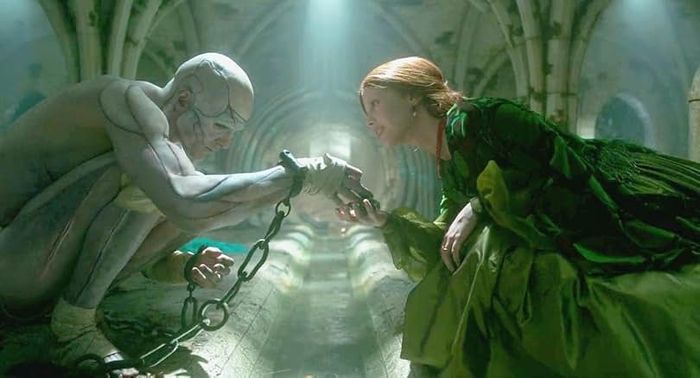
As the creature is made from corpses, he is the product of all the past trauma and experiences that have been endured before him, making the burden of past decisions and consequences, which he did not consent to, his flesh. He is the son who becomes the vessel and representation of failures and runs through generations. In contrast to previous movies, the creature nevertheless holds an odd aesthetic to him – the skin in the color of porcelain, the stitches neatly done, and the skin patches arranged in almost symmetrical order. In this sense, the creature is the opposite of the abnormality he is so often portrayed as. It shows the effort Frankenstein put into his creation, as he chose only the body parts he considered perfect and brought his creature to physical perfection. Therefore, the creature is theoretically designed to be the ideal son, which shows that his rejection is not the result of who he is, but of the environment he was born into, which is simply incapable of fostering intimate emotional relationships.
The scars, where patches of skin have been knit together, symbolize how impossible it has become to hide the neglect and how impossible it has become to heal. The creature’s body is the trauma caused by the past, which he is unable to outgrow or leave behind.
This ties in with del Toro’s choice to make the creature immortal, whereas in the novel, it is not eternal. Therefore, this artistic choice is especially noteworthy, as immortality is usually associated with strength. Still, the inability to die shows that there is no escape, no forgetting, and no erasure of the past. The creature is doomed to live with the failures of his ancestor and carry moral debts, not made by him. In his inability to die, the creature reexperiences rejection again, unable to escape it; instead, he is forced to be reborn without any relief from the weight he must carry. Furthermore, it is a direct link to patriarchal societies, in which the son is often seen as the legacy of their fathers, making them immortal. By making the son immortal, del Toro reverses this tale, by leaving a visual representation of Frankenstein’s failures alive – if the body cannot disappear, there is no erasure of the past.
Part III: The Ambiguity of Recognition
However, with this movie, del Toro chooses to go further and dares to ask the question of whether there can be redemption and if the cycle can be broken, and if so, how? In the final chapter of the movie, the creature seeks recognition from the very person who is incapable of giving love, which becomes the emotional core of a hunt in the Arctic, where it never becomes clear whether Frankenstein hunts the creature or the creature hunts Frankenstein. Precisely in this chase, the power balance begins to shift, and their relationship becomes confrontational. In the need for destruction to erase moral agency, and the creature’s quest for recognition, both fall into a spiral of violence that once more exposes not only Frankenstein’s emotional shortcomings, but also that the trauma of the creature has led to him becoming a predator as well, as he kills innocent people who are standing in his way. In this very moment, del Toro dares to expose how action leads to counteraction, and they are not always guided by moral clarity, even when a victim is committing them. Therefore, the creature is not only a product of his family but also an active result of it. His agenda to receive recognition thus leads him to affect his environment negatively as well.
Next to the development of the creature as an active participant in his own life, the chapter centers around conflict resolution – the creature cannot let Frankenstein be free, and the other way around if Frankenstein does not acknowledge his failures as a father. What makes this confrontation so special is that del Toro’s sensibility does not let the creature ask Frankenstein for love. Instead, he demands of Frankenstein that he accept moral agency as a father and that he has failed the creature. At the end of the road was not revenge, or love, but simply the acknowledgment that the burden of the creature is not his fault. When Frankenstein gives this reassurance to the creature and even calls him a “son,” it seems like the creature's forgiveness grants absolution. However, forgiveness only means that the creature can escape the cycle in the future. What remains inescapable is the past: the duality of living with a history that is not his and the possibility of creating its own future.
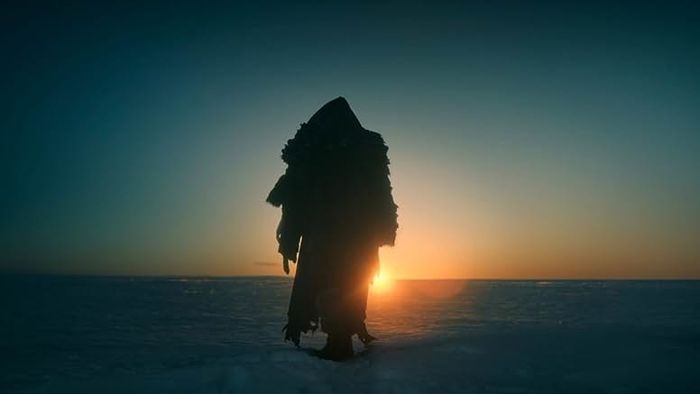
It does not promise healing, but the fragile hope that the cycle may end. In the final scene, the creature walks towards a sunrise, resembling the one on the day he was born.
WRITTEN BY

Annabelle
As long as I can remember, I have been absolutely obsessed with literature and cinema - for me, both have been a way to not only explore different lives and experiences, but what moves contemporary society. Therefore, I love to explore how literature and cinema connects to societal developments and the green light it can offer to understand ourselves and our surrounding.