Under Her Eyes — Film Festival FrauenWelten Berlin

TRIGGER WARNING: Content about sexual abuse and sexual violence. Please only read if you feel like you're emotionally stable enough. Lots of love <3
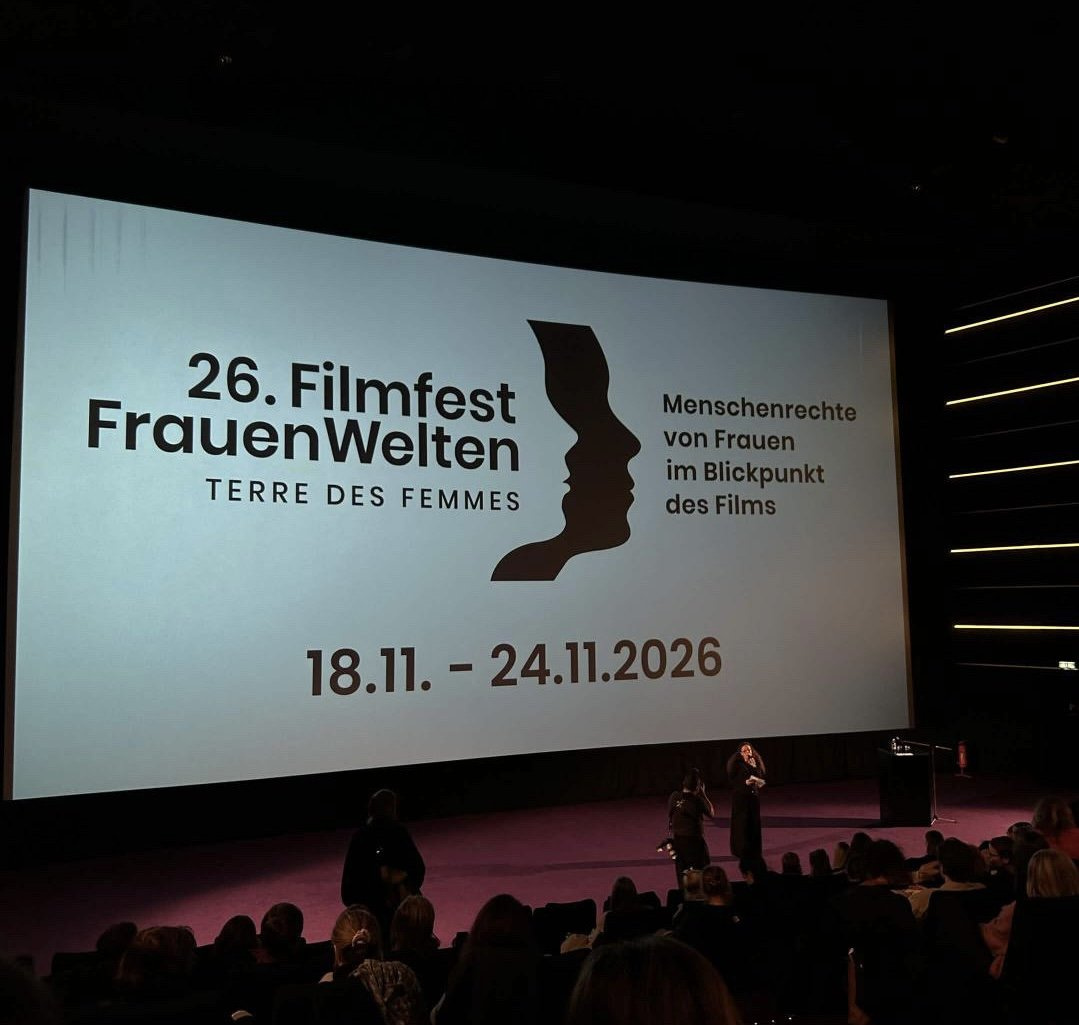
Can we fully understand each other’s languages when we don’t speak it? When my words bounce off your body, instead of nestling in between your two heart chambers. When my glance is denied entry from your dark pupils. Is it possible to understand each other when one heart has been shrunk while another has never tasted blood on its lips? Especially in art, it is important to find people who have experienced the same, who can relate and capture that feeling only you can understand. The film festival FrauenWelten Berlin (Women's Worlds) did exactly this: It gave a space to visualise and express women’s fear, despair and rawness by the ones who would understand it best: other women.
The annual festival was founded by women’s rights NGO Terre des Femmes in 2001 and shows exactly why we need to shift society’s view on women and bring their perspectives into this world. Unfortunately, all kinds of atrocities are still happening all over the world: Wars, dictatorships, poverty. These films built a bridge between tragedies humans experience and suffering that weighs heavy especially in women’s hearts like assault, sexual exploitation and stigmatisation. This year's focus was on women as a weapon of war.
In movies from more than 20 countries, we see women lead with determination, fierceness and hope. The ground they were standing on was taken away from them, they suffered from double and triple discrimination, were deprived of their own humanity and moulded into an object; but still, somehow, survived, somehow conserved their soul with seeds of resilience.
In a World under Men's Lenses
We grow up in a world that rips out our eyes and view on the world and pushes male lenses into our hollow eye sockets. Looking in the mirror, we don’t see a reflection of our ancestors, of the experiences that tattooed themselves on our body but rather a target to aim whenever we don’t feed hungry eyes. And suddenly, our belly that provoked many endorphin doses in our veins is reduced to its curviness. Our legs that carry our most valuable treasures like our heart that constantly pumps love, our brain that connects deepest dreams with past heartbreaks is reduced to their thickness. And you look at the reflection in front of you, wondering if beauty is just an illusion, just another invention of men to asphyxiate your body with bondages.
When we are on the train and another gaze slips under our skirt, when a woman’s 'no' suddenly dissolves into different interpretations in political discussions or when our voice is getting choked by the vocal cords of his deep voice, we notice that we are constantly watched, judged and boundaries are being crossed. We feed the world little pieces of ourselves that are not even savoured on their tongues but just swallowed, devoured. These movies showed in the most intimate way different realities of women: some relatable, others unimaginable for a woman growing up in Germany. This combination created a unique space of getting confronted with atrocities and also partly feeling them flutter in our heart as well.
Movie: Strawberries
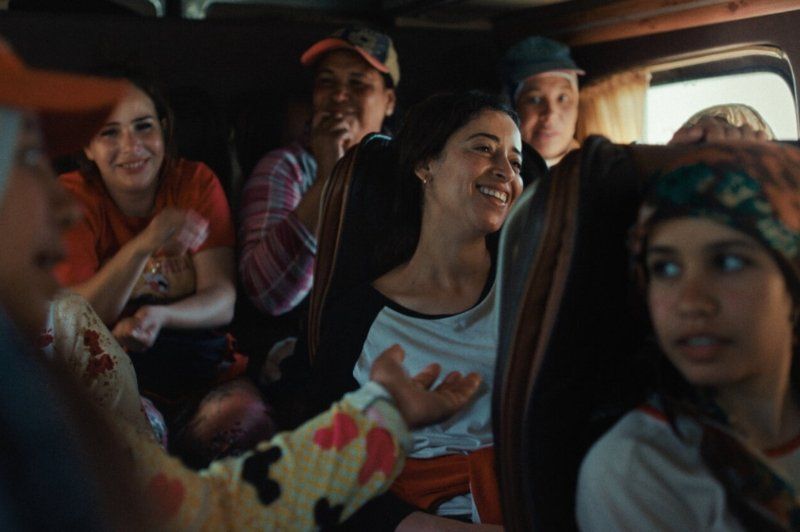
What happens when you give your life away for your loved ones? When you sacrifice your dreams, your opportunities and, in some way, yourself? It’s like you are bending to the world forever.
In these movie, Moroccan women decide to leave their country and their home to work in a strawberry field in the south of Spain. While the sweat drips down their forehead and their muscles tremble from their efforts, these women’s power lays in their mind. Strawberry by strawberry, they pick up more than just a sweet fruit of temptation. In the red of the berry they see the unconditional love for their children. The same children they promised the world to, their world. When they touch the fruits, they feel the skin of their mother, as if they could hold on time and be that silly little girl again.
However, the colour red also represents the devastation that nibbles on their skin while at the camp, the blood that runs down their eyes once they close them and are exposed to their minds. From the moment they arrive, these women are just seen for their working hands, their agile fingers and their desired bodies. They have to deal with being spat at, harassed, intimidated, being theirs. However, you also see this beautiful community of these women in the shared melodies they sing, the gentle touches they share and the intimate words they exchange. A community that gives them hope and power to speak up.
Movie: Muganga
"Muganga" is set during the war in Congo and the sentence "Wars are written on women’s bodies" follows you throughout the whole movie while also confronting you with raw evil. Rough hands that squeeze out women tears, heavy bodies that suck out the humanity of the women and smash their heads until gazes break. Instead of weapons, women are the object and target at the same time. Every body part of a woman is being stolen by a man, little girls bodies are used and stretched out like they are dolls that you can entertain yourself with. And all to create fear in society, to push women on this minefield and let them walk on it daily.
But you also see hope. Dr Denis Mukwege, a Congolese surgeon founds the Panzi Hospital in Bukavu, where he treats women of sexual violence and genital mutilation. He is called "Muganga" by the women, “the one who treats” and you can see this title in every hand he holds. Dr. Denis Mukwege and his altruism are inspiring. He doesn’t see these women who have suffered the biggest cruelties as 'impure' or 'used' like the rest of the town. These women, who in this society are defined by the amount of cruelty male hands have created on their bodies, as if it lays under their responsibility. He says that in every pair of eyes he looks at, he sees his wife, his mother and daughter, and that it is his duty to put a blanket over them while the rest of the world undresses them ‒ physically and metaphorically.
Hold on to it
When watching these movies and learning about lives and pain in other countries, in other parts of the world, it is important to not just take these impressions with you into the dark night and let this thought escape your mind afterwards. We need to capture it, hold on to it and make something out of it. No matter if it is by spitting out the thought and letting someone else have a bite of it or trying to use these thoughts as impulses to go into action. Let this impression grow in you.
I think that the movie title “Muganga” is something we should all strive for, it should be a flame we all want to enlighten in us. To burn for and with others. To feel the warmth, the pain, the little ashes. As Dr. Denis Mukwege said at the end: "We can change hate by love." The question is: How do we contribute to that?
Find more info about the festival here:
REVIEW BY

Shaila
Growing up in two countries, culture has always played a huge role in my life. I found culture not only in languages and different traditions, but also in the way we express ourselves, in midnight conversations, in sparkly eyes and in melodies that make my body tremble. Over the years, I experienced what it feels like to express my deepest wishes and thoughts with a piece of paper and a pen. I would find myself between the lines and get hugged by words and expressions. Words have always been able to lull me into a calm heartbeat. As a writer for this magazine, I would love to share the depth of this world and reveal nex truths with my texts.
Read next
- 01 Why We Should Prioritise Friendships in Our Lives: An Interview with Ubin Eoh INTERVIEW / Philine
- 02 Sunrise on the Reaping Is a Devastating Return to Panem FILMS / Ilayda
- 03 The Trap: Caught Between Mind and Reality SERIES / Shaila
- 04 "I Love Change": Nieve Ella on Her Debut Album, How Long Will It Take? INTERVIEW / Andy